



Nepal as the Pivot: Why Kathmandu’s Alignment Choices Matter for All of South Asia
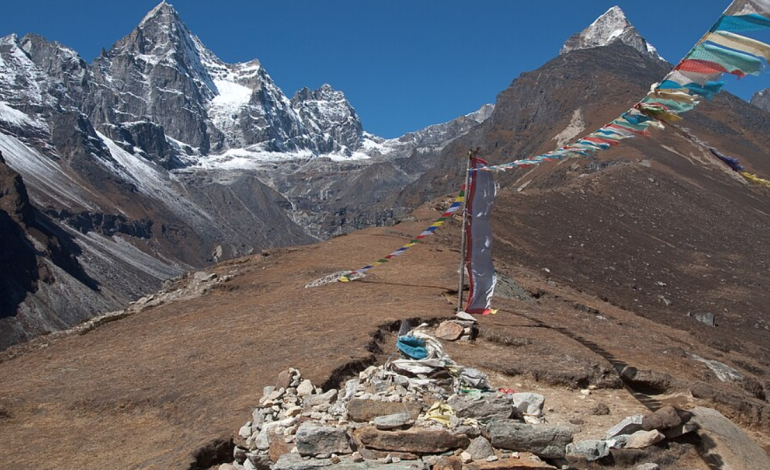
Kyajo Ri, Nepal Himalayas. (Image courtesy: Wikimedia)

Geopolitics is usually told as a story of giants. Yet some of the most consequential decisions in South Asia are made not in New Delhi or Beijing, but in Kathmandu. Nepal, long described as a “yam between two boulders,” sits at a junction where the security calculations of two rising powers meet. To treat it merely as the subject of bilateral relationships is to miss its real significance: Nepal is a pivot on which the regional order turns.
A Buffer with Strategic Weight
Nepal’s location gives it outsized importance. Wedged between India and Tibet, it functions as a Himalayan buffer that shapes border stability, water security, and connectivity corridors across the subcontinent. Its long open border touches five Indian states and sits just above the Siliguri Corridor, the narrow “chicken’s neck” that links India’s mainland to its northeastern states.
That geography ensures Nepal’s choices are never purely domestic; they reverberate through the security architecture of the entire region. As scholars increasingly emphasise, the modern buffer state is not a passive spectator but an active participant that continually reassesses its position between larger powers.
Ripples Across the Region
When Kathmandu acts, the effects travel. Nepal’s pursuit of an equidistant foreign policy, maintaining warm ties with both neighbours while widening its international engagement, has become a template that other small South Asian states study closely. The clearest illustration is energy. In January 2024, Nepal and India signed a 25-year agreement envisioning the export of up to 10,000 MW of Nepali power to India over a decade. Later that year, in October, Nepal, India, and Bangladesh signed a trilateral agreement allowing
Nepal to sell electricity to Bangladesh for the first time, routed through India’s grid. Exports began in 2025, with Nepal supplying Bangladesh during the monsoon season through the Indian transmission network, a volume that has since expanded. A single Himalayan country thus became the hinge of a three-nation energy market, proof that Nepal’s decisions shape outcomes well beyond its borders.
India’s Enduring Stake
As China expands its regional footprint, India’s interest in a stable, friendly Nepal is both natural and deepening. The two share civilisational, cultural, and economic bonds reinforced over seven decades, and India remains Nepal’s largest trade, investment, and development partner. Rather than resting on history, the relationship is being modernised. Recent years have brought the interoperability of India’s UPI digital payments with Nepal’s own payment system, new cross-border transmission lines, and joint ventures to build power corridors.
This is the logic of partnership rather than mere influence: India’s connectivity, market access, and grant assistance give Nepal tangible reasons to anchor itself in a shared neighbourhood. For New Delhi, a prosperous and confident Nepal is the surest guarantee of a secure northern frontier and a cohesive region, an interest best advanced not through anxiety but through generosity and follow-through.
The Platforms that Frame the Choice
Regional institutions amplify Nepal’s pivotal role. The South Asian Association for Regional Cooperation (SAARC) is headquartered in Kathmandu, a fact that lends Nepal symbolic and convening authority across the subcontinent. With SAARC summitry stalled since 2014, Nepal has positioned itself as an advocate for revival even as it participates energetically in BIMSTEC, the Bay of Bengal grouping that India increasingly favours. Nepal also helped pioneer the sub-regional BBIN initiative, Bangladesh, Bhutan, India, Nepal, which advanced connectivity when wider consensus proved elusive.
By staying active across all these platforms, Kathmandu keeps multiple diplomatic doors open and ensures that no single forum, and no single power, monopolises South Asia’s cooperative agenda. Its choices about which platform to energise carry weight precisely because it hosts the region’s oldest institution and sits in everyone’s strategic line of sight.
The temptation is to read Nepal through bilateral lenses, Nepal-and-India, Nepal-and-China, as if it were merely reacting to larger forces. The more accurate picture is of a country whose alignment choices set the parameters for others. A Nepal that builds cross-border grids reshapes regional energy security. A Nepal that champions SAARC or invests in BIMSTEC nudges the balance among competing visions of integration. A Nepal confident in its partnership with India strengthens the entire neighbourhood’s stability.
That is why Kathmandu deserves a seat at the centre of South Asia’s strategic conversation, not at its margins. The region’s future will be written not only in the capitals of its giants, but in the calibrated decisions of the state that sits between them. Nepal is the pivot, and how it turns will help determine the direction of South Asia as a whole.