




Passport services to get costlier from July 1 as government revises application fees
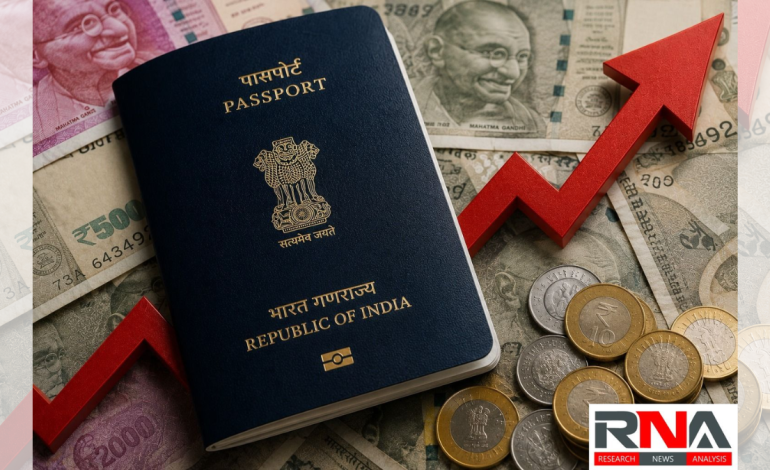

New Delhi: The government has announced a major hike in passport application fees. The revised rates will come into effect from July 1 under the Passports (Amendment) Rules, 2026. The Ministry of External Affairs (MEA) notified the changes and they will be applicable to fresh passport applications, re-issuance, Tatkal services and replacements of lost or damaged passports.
Under the revised fee structure, applicants seeking a fresh 36-page passport or reissue of an existing passport will have to pay ₹2,500, up from the current ₹1,500. The fee for obtaining the same document under the Tatkal scheme has been increased to ₹5,000 from ₹3,500.
The cost of a 60-page passport has also been raised. A fresh application or reissue of a 60-page passport will now cost ₹3,500, compared to the existing ₹2,000 fee. Under the Tatkal scheme, applicants will be required to pay ₹6,000, up from ₹4,000.
The government has also revised charges for replacement passports issued in cases of loss or damage. A replacement 36-page passport will now cost ₹5,000, while applicants seeking a replacement 60-page passport will have to pay ₹6,000.
The MEA said the amended rules have been framed under the powers conferred by Section 24 of the Passports Act, 1967 and will come into force from July 1, 2026.
The ministry also reiterated the validity period of passports. Ordinary passports issued to adults will remain valid for up to 10 years. For minors, passports will be valid for five years or until the holder attains the age of 18 years, whichever is earlier.
In a relief for certain categories of applicants, the government has retained a 10 per cent discount on passport fees for fresh applications filed by children up to the age of eight years and senior citizens above 60 years. The concession, however, will not apply to passport reissue applications.
The fee revision comes days after the MEA clarified that an Indian passport is primarily a travel document and not conclusive proof of citizenship. In a recent clarification highlighted by RNA, the ministry said that passports are issued to facilitate international travel and establish identity abroad, while citizenship is determined through separate legal processes and supporting documents.