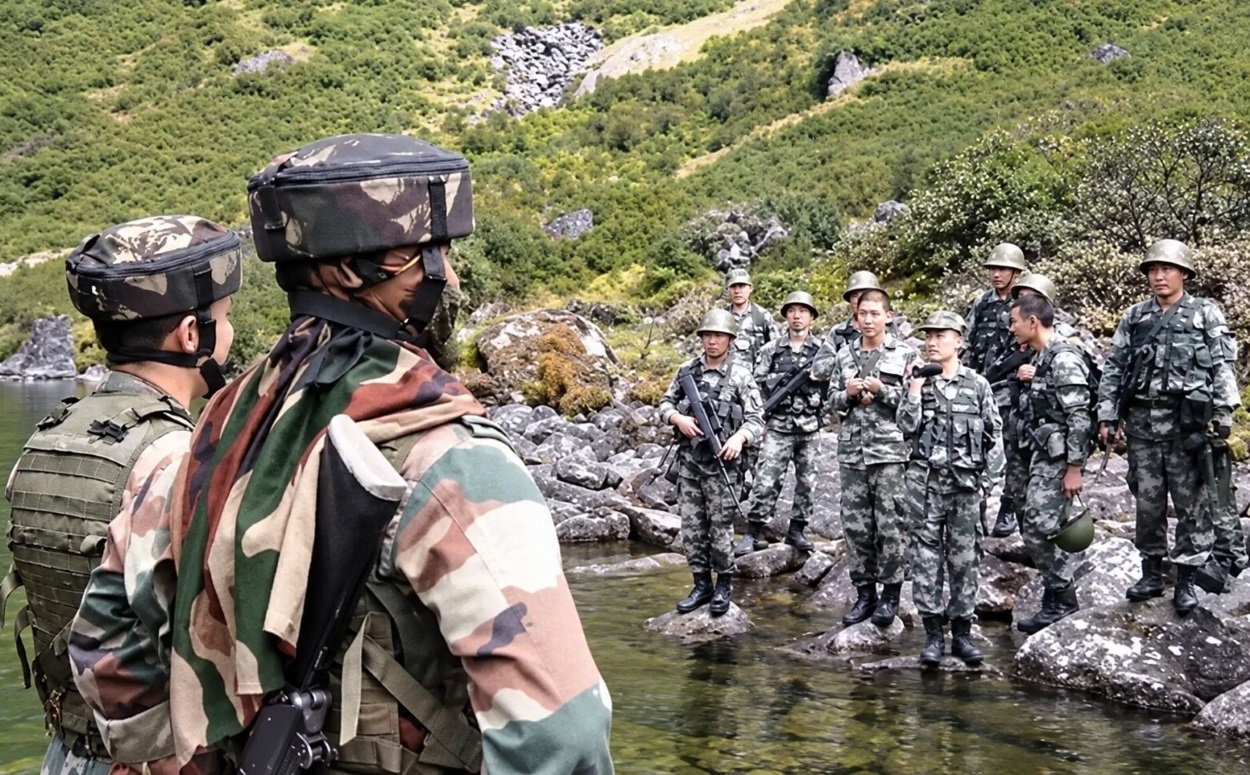


Agniveer issue: Nepal’s Khanal signals willingness to talk as Gorkha recruitment impasse drags on
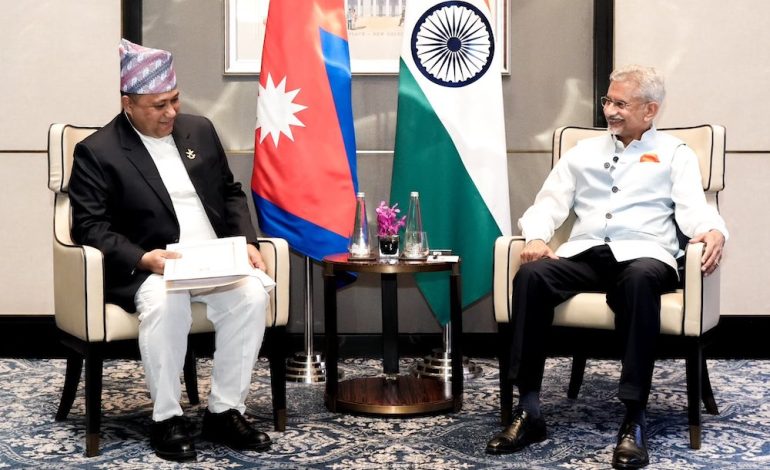
Foreign minister S Jaishankar (R) with his Nepalese counterpart Shisir Khanal in New Delhi, on June 6, 2026. (Photo: X/@DrSJaishankar)

New Delhi: Visiting Nepal’s foreign minister, Shisir Khanal, has signalled that Kathmandu is open to resuming dialogue with New Delhi over the contentious issue of Gorkha soldiers being barred from joining the Indian Army under the Agnipath scheme that recruits soldiers as Agniveers. However, he said it can happen only if India takes the initiative.
Responding to a reporter during his visit to New Delhi, Khanal said the two countries had not yet addressed the matter in their recent conversations. “When the government of India feels it’s necessary, again like any other issue, we are happy to sit at the table and take up these issues as well,” he said.
The remark carries considerable weight. Nepal suspended recruitment of its citizens into the Indian Army in August 2022, two months after the Agnipath scheme was launched, arguing that the programme’s four-year short-service model violates the 1947 tripartite agreement signed by India, Nepal, and the United Kingdom. Under that agreement, Nepalese citizens could be enlisted into the Indian Army on terms broadly equivalent to those of regular Indian soldiers – a continuity of the arrangement that predated independence.
Since the impasse, the Indian Army’s seven Gorkha regiments – the 1st, 3rd, 4th, 5th, 8th, 9th, and 10th Gorkha Rifles – have gone without fresh Nepalese recruits. The regiments, comprising roughly 39 active battalions with a total strength estimated between 32,000 and 40,000 soldiers, represent one of the Army’s most storied fighting traditions.
Nepal’s objections go beyond legal interpretation. Under the old system, Gorkha soldiers served a minimum of 15 years and retired with a lifelong pension – a financial lifeline that sustained hundreds of villages in Nepal’s poorest hill districts. Under the Agnipath scheme, 75 per cent of recruits are discharged after four years with only a lump-sum payment and no pension. For Nepal, this is not merely a bilateral treaty question but an economic one: the steady flow of remittances and pensions from Gorkha servicemen has long underpinned rural livelihoods across the Himalayan republic.
Kathmandu has also raised a domestic security concern, noting that thousands of weapon-trained young men returning home at ages 21 to 23 without stable employment could become vulnerable to radicalization or recruitment by external mercenary outfits.
New Delhi’s position has remained consistent: the Agnipath scheme is a universal policy applied uniformly to all recruits regardless of nationality, and there is no intent to carve out an exception. That position has left negotiations deadlocked for close to three years, with historic vacancies in the Gorkha regiments remaining unfilled. Khanal’s remarks suggest that while Nepal is not about to unilaterally reverse course, a door remains open – and that the next move, if there is to be one, lies with India.