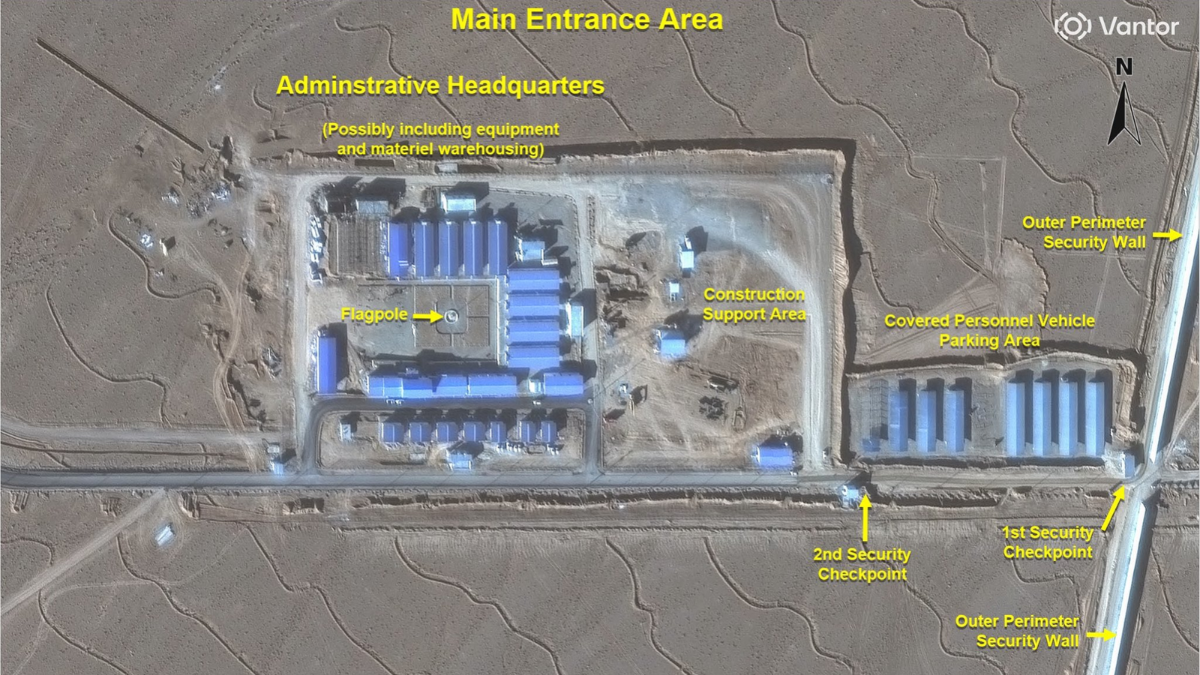

Ukraine takes war deep into Russia, claims strike on five jets at key hypersonic missile airbase
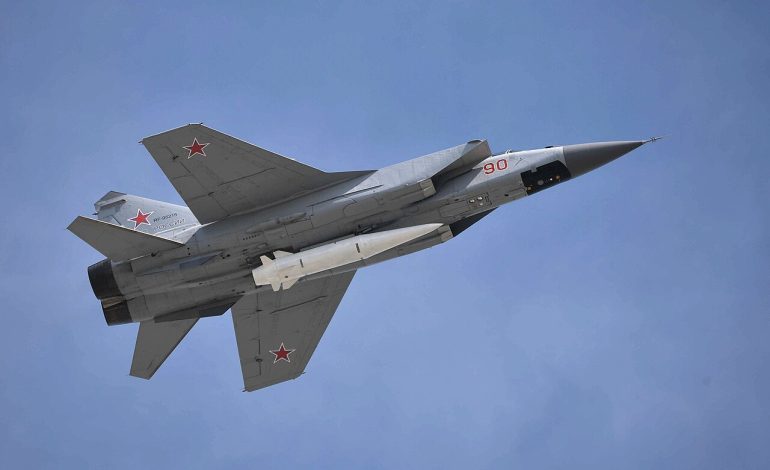
At Russia’s Savasleyka airbase, Ukraine claimed to have destroyed MiG-31s that could carry and fire Kinzhal hypersonic missiles, as shown in the photo. (Photo: Kremlin via Wikipedia)

New Delhi: Ukraine has claimed to have damaged five Russian combat aircraft in a major strike on the Savasleyka airbase, a key military aviation facility deep inside Russian territory. The attack marks an intensification of Kyiv’s campaign to degrade Moscow’s aerial strike capabilities as Russia steps up its offensive against Ukrainian cities and critical energy infrastructure.
The general staff of the armed forces of Ukraine said on Wednesday that preliminary assessments indicated damage to three MiG-31 fighter jets and two Su-34 fighter-bombers at the airbase in Russia’s Nizhny Novgorod region, east of Moscow. The Ukrainian military said the aircraft were likely to remain grounded for some time, although the extent of the damage was still being assessed.
Moscow did not immediately respond to the Ukrainian claims, and there was no independent confirmation of the condition of the five aircraft. Kyiv also did not disclose the weapons employed in the operation, which comes amid a series of increasingly ambitious Ukrainian strikes against Russian military, maritime and industrial assets.
Why the Savasleyka airbase matters
The Savasleyka airbase occupies an important position in Russia’s aerial offensive against Ukraine, particularly because it hosts modified MiG-31 aircraft capable of carrying the Kh-47M2 Kinzhal hypersonic air-launched ballistic missile. Russia has repeatedly employed the missile against Ukrainian targets since launching its full-scale invasion in February 2022.
Developed during the Soviet era as a high-speed interceptor, the MiG-31 was subsequently adapted to undertake long-range precision-strike missions. Its modified MiG-31K variant serves as a launch platform for the Kinzhal, which is capable of carrying both conventional and nuclear warheads.
According to the Washington-based Centre for Strategic and International Studies, the Kinzhal’s high velocity makes it particularly challenging for air defence systems to intercept. However, Ukraine has previously reported successful interceptions of the missile using American-supplied Patriot air defence systems.
The Su-34, meanwhile, is a twin-engine fighter-bomber developed from the Su-27 family of combat aircraft and has emerged as one of the principal platforms supporting Russian ground offensives. Its extensive employment of guided glide bombs has enabled Moscow to maintain considerable pressure on Ukrainian defensive positions and frontline settlements.
A recent assessment by the Royal United Services Institute, a British defence and security think tank, highlighted the central role of the Su-34 fleet in Russia’s sustained aerial bombardment of Ukrainian positions.
Missile Threat+2
Savasleyka has been targeted by Ukrainian forces before. On June 9, 2025, Ukraine’s military reported striking the same airbase, shortly after Kyiv’s Operation Spiderweb targeted several Russian military airfields housing strategic bombers.
Ukraine widens its long-range offensive
The latest attack forms part of a broader Ukrainian campaign against the military and economic infrastructure underpinning Russia’s war effort. With Russian forces maintaining pressure along several sections of the frontline, Kyiv has increasingly sought to impose military and economic costs on Moscow beyond the immediate theatre of combat.
In recent days, Ukrainian operations have extended to Russian maritime assets in Libyan waters and the Gulf of Finland. Last week, successive Ukrainian attacks also reportedly destroyed the road section of the Kerch bridge, which connects mainland Russia with the Crimean peninsula that Moscow annexed in 2014.
The bridge has considerable military, economic and symbolic significance for Russia. Its disruption complicates connectivity between the Russian mainland and Crimea, although Moscow has developed alternative transport corridors through occupied Ukrainian territory.
Ukraine’s defence minister, Yevhenii Khmara, also said this week that Ukrainian forces had struck 16 Russian ballistic missile launchers over the past several months. The campaign reflects Kyiv’s efforts to reduce the frequency and intensity of Russian missile attacks rather than rely exclusively on intercepting incoming projectiles.
The Economic Times+1
Energy infrastructure becomes a major battleground
Alongside military installations, Ukraine has intensified attacks on Russian petroleum infrastructure, which remains critical to both Moscow’s military logistics and government revenues. Industry sources cited by Reuters indicated that Russian refinery throughput had declined by around 45 per cent since late October following renewed Ukrainian drone attacks.
Ukraine’s Security Service also reported strikes on two oil refineries in Russia’s Samara region on Wednesday. Kyiv has maintained that it would discontinue attacks on Russian energy infrastructure if Moscow reciprocates by halting its bombardment of Ukraine’s energy facilities.
Russia, meanwhile, has renewed its campaign against Ukrainian electricity and gas infrastructure as winter approaches. Russian strikes damaged energy facilities across four Ukrainian regions on Wednesday, adding to concerns over the country’s ability to maintain essential services during the colder months.
The larger military implications
The reported attack on Savasleyka underscores a defining feature of contemporary warfare – the diminishing protection that geographical depth once afforded military installations. The proliferation of long-range precision weapons and unmanned aerial systems has considerably expanded the geographical scope of conventional conflicts.
For military planners worldwide, including those in India, the conflict highlights the importance of airbase survivability, hardened infrastructure, aircraft dispersal, layered air defence and the ability to sustain operations following an attack. The effectiveness of an air force depends not merely on the sophistication of its aircraft but also on the resilience of its supporting infrastructure.
Nevertheless, even if Ukraine’s claims are substantiated, the loss of five aircraft from active service is unlikely, by itself, to substantially alter the overall military balance. The cumulative effect of repeated strikes, however, could increase the operational and maintenance burden on Russia’s aerospace forces.
More than four years into Russia’s full-scale invasion, the expanding geographical reach of the conflict also presents additional complications for renewed American-backed peace efforts. With both Moscow and Kyiv seeking greater military leverage, there is little indication that the intensity of aerial warfare will diminish in the immediate future.