
India, New Zealand eye wider military exchanges and maritime cooperation over next 18 months
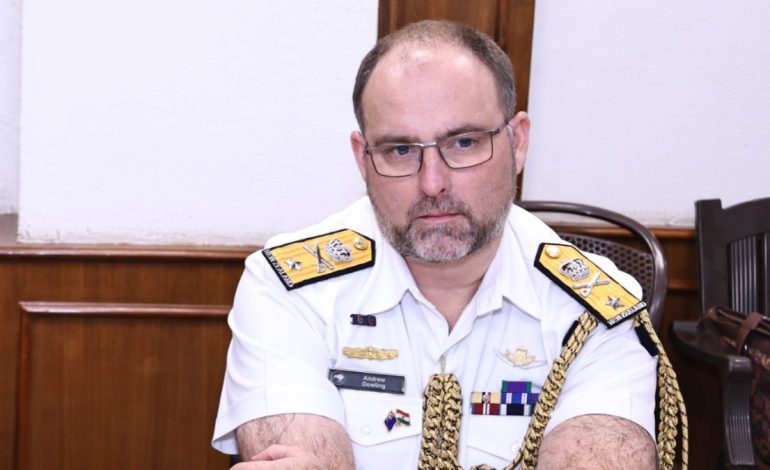
New Zealand defence adviser commodore, Andrew Dowling. (Image courtesy: X/@FisheriesGoI)

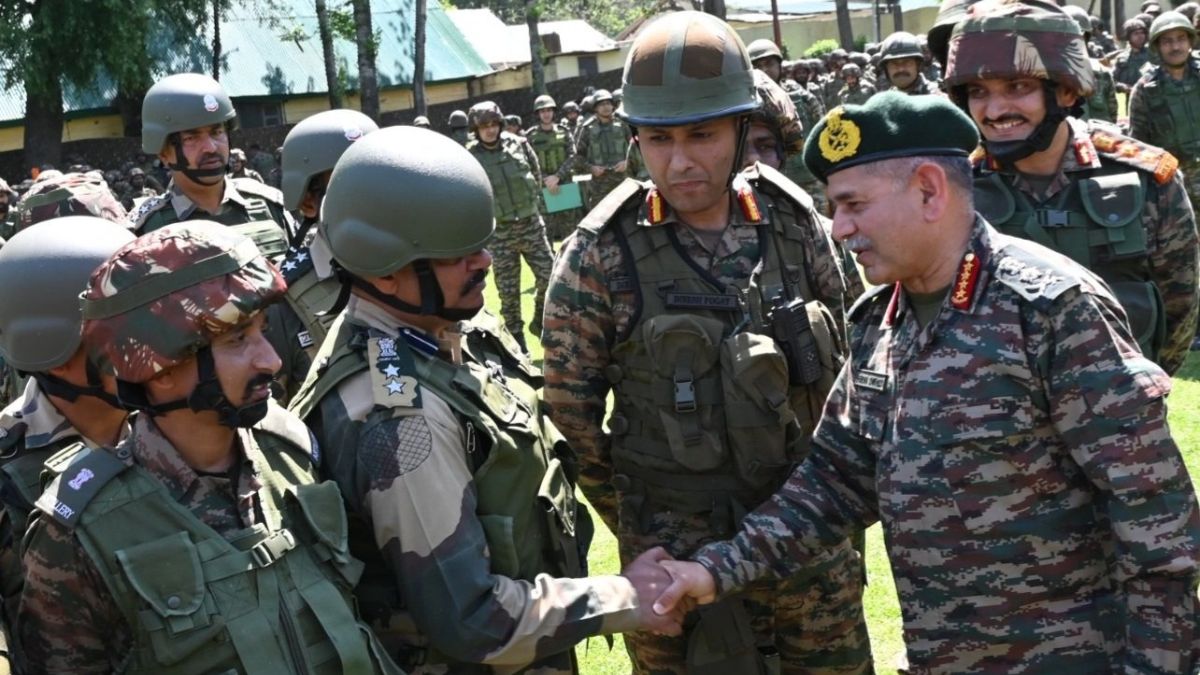
New Delhi: India and New Zealand plan to expand military exchanges, training opportunities and maritime cooperation over the next 12–18 months, building on recent defence engagements. The proposed activities aim to bring their armed forces into closer contact as both countries advance their strategic partnership and roadmap to 2030.
The New Zealand defence advisor commodore, Andrew Dowling, outlined the plans in an interview with ANI on Tuesday, identifying officer training, short-term exchanges and maritime engagement as priorities. “I think it will come. In the next 12 to 18 months, you will see more together,” he said.
Dowling acknowledged that geographical distance makes frequent deployments of ships and aircraft difficult, making shorter professional exchanges particularly valuable. “How we can further the relationship, I think, is with people. So taking some of those training opportunities, being able to do short-term exchanges, that to me builds trust. It removes the novelty of working together,” he told ANI.
Maritime cooperation takes priority
Dowling emphasized that maritime security connects the two countries despite their different geographical responsibilities. “We’re two ends of the Indo-Pacific spectrum when it comes to the maritime and we’re totally linked. We have to be talking to each other. We rely, both of us, on trade that comes from the sea. We rely on those lines of communication. So we’re completely vital to each other,” he said.
“We each face maritime security challenges,” Dowling said, pointing to opportunities to exchange practical experience. He indicated that several maritime activities were being considered for 2027, although exercise names, locations and deployment schedules have not been announced.
The July 2026 strategic partnership provides a framework for deeper naval cooperation through maritime activities, hydrographic collaboration and mutual logistics support. Its roadmap to 2030 also envisages bilateral naval exercises and an annual maritime security dialogue, although details of the proposed 2027 engagements remain unconfirmed.
Recent exercises and common platforms
Recent engagements include New Zealand’s observer participation in Exercise AustraHind, the bilateral India-Australia army exercise held in Thiruvananthapuram from October 19 to November 1. Dowling also referred to New Zealand’s involvement in the Indian Air Force’s multinational Exercise Tarang Shakti, which brought together seven foreign air-force contingents and 32 observer nations; neither exercise was a bilateral India-New Zealand drill.
Dowling identified C-130J transport aircraft and the P-8 maritime patrol aircraft family as areas for sharing operational experience. India operates the P-8I, while New Zealand operates the P-8A Poseidon; he also cited MH-60R Romeo helicopters, which India operates and New Zealand ordered in October 2026, with deliveries expected from 2030.
Defence dialogue gathers momentum
Dowling welcomed the inaugural India-New Zealand defence and security track 1.5 dialogue, which brings researchers and other specialists into conversations alongside official engagement. Unlike formal government to government talks, the format broadens the exchange of ideas, and he expressed hope that another edition would be held in 2027.
India and New Zealand signed a defence cooperation memorandum of understanding in March 2025 and held their first defence strategic dialogue that August. A second dialogue in Wellington examined military training, staff college exchanges and maritime cooperation, providing a foundation for the proposed expansion.
The next 12-18 months will offer an indication of whether the latest proposals develop into sustained exchanges across the services. Dowling emphasized practical engagements that the two countries can maintain over time, rather than one-off activities.