





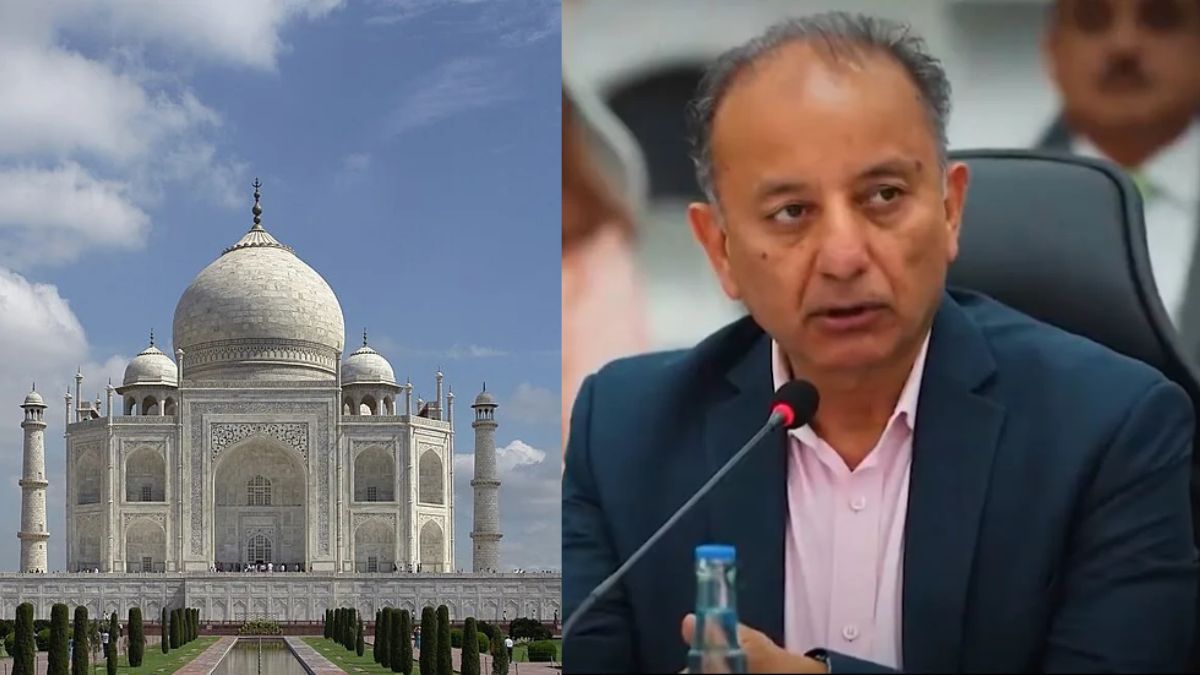
‘Look at India’: Trump blasts US Fed over interest rates, claims America could grow by 20%
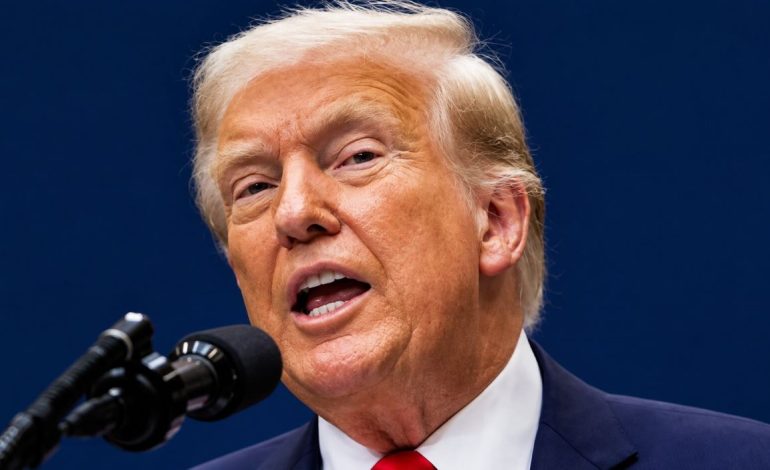
Donald Trump.

New Delhi: The US president, Donald Trump, has invoked India’s economic growth and monetary policy to launch another attack on the Federal Reserve, arguing that America’s central bank is holding back the world’s largest economy by keeping borrowing costs unnecessarily high. His remarks, made during a White House press conference on Friday, have also drawn attention to an important discrepancy in his comparison – India’s benchmark interest rate is actually higher than that of the United States.
Trump accused the Federal Reserve of allowing political considerations to influence its monetary decisions, claiming that strong economic performance should prompt lower interest rates rather than tighter financial conditions. Pointing to India’s growth of approximately 7 per cent, he suggested that the American economy could expand by an extraordinary 15–20 per cent annually if the Fed adopted a more aggressive approach to reducing borrowing costs.
“If you look at India, they have low interest rates, and they have a 7 per cent GDP,” Trump told reporters, before suggesting that the US could achieve growth approaching 20 per cent. He also maintained that America’s economic strength should entitle it to some of the lowest borrowing costs in the world, questioning why its central bank continued to restrict credit despite encouraging economic indicators.
The remarks came against the backdrop of Trump’s continuing disagreements with the Federal Reserve over monetary policy and its implications for economic expansion, investment and government borrowing. His latest intervention followed the central bank’s decision in October to maintain interest rates, reinforcing the administration’s frustration over what Trump considers an unnecessarily restrictive financial environment.
Trump’s India comparison contradicts official figures
Although Trump presented India as an example of an economy benefiting from comparatively inexpensive credit, official central bank figures tell a different story. The Reserve Bank of India (RBI) raised its policy repo rate by 25 basis points to 5.50 per cent on October 7, reflecting renewed concerns over inflation and economic stability.
By comparison, the US Federal Reserve maintained its federal funds target range at 3.75–4 per cent on October 28, following a quarter-percentage-point increase in September. India’s benchmark policy rate is therefore 1.50–1.75 percentage points higher than the corresponding American target range, although the two instruments operate within different monetary systems and cannot be treated as completely interchangeable.
The growth figures also require careful interpretation because India and the United States use different conventions when reporting quarterly economic expansion. According to India’s official statistical data, real gross domestic product increased by 7.8 per cent year-on-year during April–June 2026, whereas the US economy expanded at an annualized rate of 3.4 per cent during July–September.
India’s figure measures growth against the corresponding quarter of the previous year, whereas the American figure annualizes the change from one quarter to the next. Consequently, the headline numbers cannot be directly compared without accounting for their different statistical bases, although they underline India’s considerably faster underlying economic expansion.
Why Federal Reserve is reluctant to lower rates
The disagreement fundamentally concerns the relationship between economic growth, inflation and the independence of monetary policy. Trump believes cheaper credit would encourage businesses to invest, stimulate consumer spending and reduce the government’s debt-servicing burden, potentially producing substantially faster economic expansion.
The Federal Reserve, however, must balance economic growth and employment against the risk that excessive demand could reignite inflation. Its caution is supported by September’s inflation figures, which showed the personal consumption expenditures price index rising 3.6 per cent year-on-year, considerably above the central bank’s 2 per cent target.
The Fed’s October meeting minutes, published in November, further illustrated policymakers’ concerns about inflation and the appropriate direction of interest rates. A sustained reduction in borrowing costs without corresponding improvements in supply and productivity could stimulate demand beyond the economy’s capacity, potentially intensifying inflationary pressures rather than producing the exceptional growth Trump envisages.
India faces a different set of monetary challenges, with the RBI balancing relatively rapid economic expansion against domestic inflation, imported energy costs and financial stability. Its October rate increase, accompanied by a shift towards calibrated tightening, demonstrated that strong GDP growth does not automatically justify cheaper borrowing.
China holds lending rates steady as global policy diverges
Trump’s remarks also came shortly after China maintained its benchmark lending rates, illustrating the different monetary approaches being pursued by the world’s three largest economies. On November 20, the People’s Bank of China left its one-year loan prime rate unchanged at 3 per cent and its five-year rate at 3.5 per cent, extending a prolonged period of stability in those benchmarks.
According to Reuters’ assessment, Chinese policymakers have been weighing the possibility of further monetary easing against concerns about financial conditions and the effectiveness of additional credit stimulus. No specific official Chinese response to Trump’s comparison with India had emerged in the reports available by November 21.
For India, the wider significance extends beyond Trump’s favourable reference to its economic performance, particularly because US monetary decisions influence global capital movements, bond yields and currency markets. Lower American interest rates could ease pressure on emerging-market currencies and borrowing costs, but their benefits would depend on inflation expectations, international investor confidence and the broader outlook for global growth.
Trump’s suggestion that the US could achieve annual growth approaching 20 per cent remains a political and economic assertion rather than a forecast supported by current official projections. Nevertheless, his decision to highlight India has brought renewed attention to the country’s growth trajectory – even as the contrasting interest-rate figures demonstrate why monetary policies cannot be judged by GDP expansion alone.


