

What is Pax Silica? Why India signed new AI supply-chain declaration amid US-China rivalry
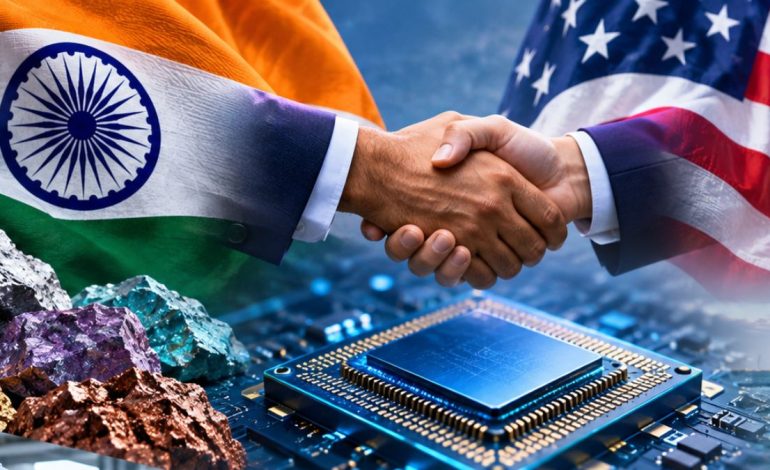
RNA Media illustration for representation.

New Delhi: India, the United States, Australia, Israel, Japan, South Korea, Qatar, Singapore, the United Arab Emirates and the United Kingdom signed the San Francisco Declaration on Sunday to safeguard technologies and infrastructure supporting artificial intelligence (AI). The move advances the US-led Pax Silica initiative, which seeks more secure supplies of critical minerals, semiconductor chips, computing power and energy infrastructure.
The declaration was adopted at a San Francisco meeting convened by US under secretary of state for economic affairs, Jacob Helberg. India’s delegation was led by electronics and information technology secretary, S Krishnan.
The participants agreed that economic security is fundamental to national security and proposed joint working groups to protect sensitive technologies and essential infrastructure.
“The know-how to design a chip, the machine that makes it and the port that ships it can all be in different countries,” Helberg told the Financial Times. He said the San Francisco declaration marked a significant development because participating countries had agreed to treat the security of critical technologies and supporting infrastructure as a shared responsibility.
What is Pax Silica?
Launched in December 2025, Pax Silica is a US-led partnership intended to diversify the industrial supply chains behind advanced technology.
“Pax” means peace in Latin, while silica, or silicon dioxide, is a raw material used to produce silicon for semiconductor chips.
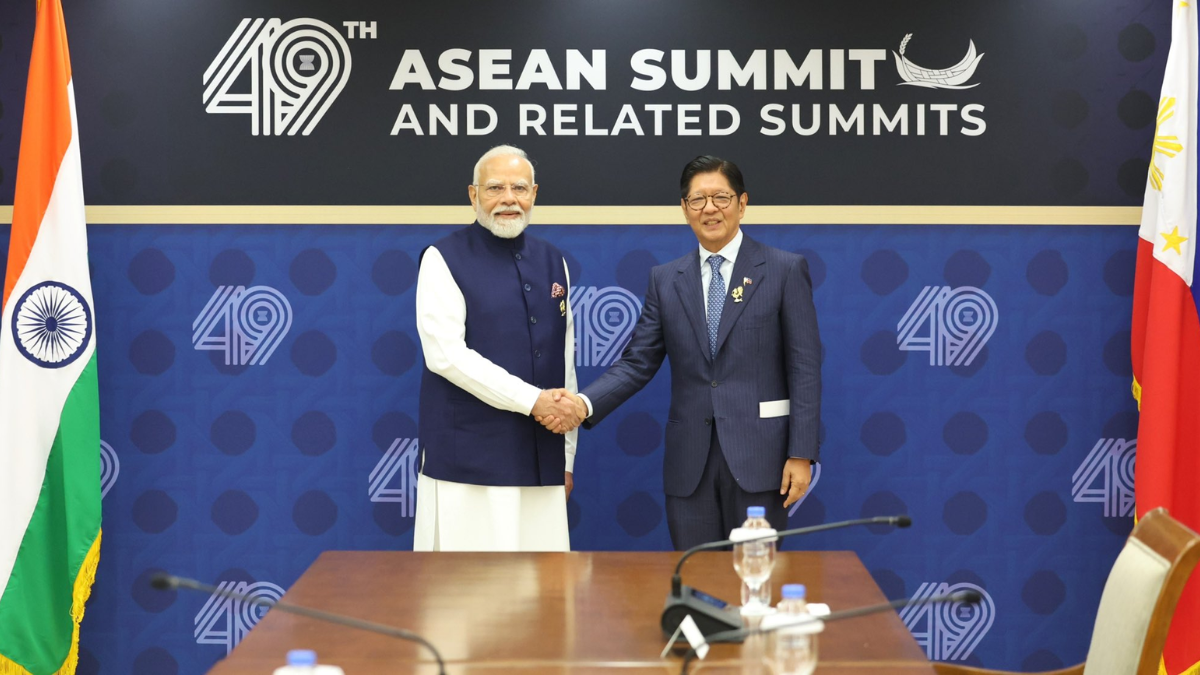
India formally joined Pax Silica on February 20 this year at the India AI Impact Summit in New Delhi. Sunday’s San Francisco Declaration represents a further step, not India’s first entry into the initiative.
Pax Silica had expanded to 26 signatories by October 23, when Paraguay joined the initiative. Germany, Sweden, the Netherlands and the European commission, which were already associated with the wider partnership, were expected to sign the new San Francisco Declaration the following week, according to the Financial Times.
It is an economic and technological partnership, not a military alliance or a binding commitment to transfer technology.
Why do minerals and chips matter?
AI software depends on physical components manufactured through complex global supply chains.
Rare earths are used in powerful magnets, while copper supports electrical networks. Lithium, nickel, cobalt and graphite are important in batteries and related power infrastructure.
The challenge extends beyond mining. Concentrated refining and processing capacity can disrupt production even when mineral deposits exist elsewhere.
Semiconductor chips contain electronic circuits fabricated using materials such as silicon. Graphics processing units (GPUs) and other specialized processors handle the demanding calculations behind AI systems.
Chipmaking involves design, highly specialized fabrication, advanced packaging and testing. It requires expensive machinery, chemicals, skilled workers and reliable electricity.
Why are data centres strategically important?
Data centres house servers that train and run AI models. They depend on advanced chips, stable electricity, cooling systems, fibre-optic connectivity and physical security.
Countries with reliable access to computing infrastructure can support domestic AI research and businesses, while shortages or disruptions can constrain both.
Where does China fit in?
China accounted for 60 per cent of global mined production of magnet rare earths in 2024 and 91 per cent of their refining, according to the international energy agency. Chinese export restrictions and concentrated processing have intensified concerns about supply-chain vulnerabilities.
Pax Silica is developing amid US-China competition over AI, semiconductors and critical minerals, although the San Francisco Declaration does not explicitly identify China as an adversary.
What could India gain?
India’s participation could create opportunities in semiconductor manufacturing, advanced packaging, mineral processing and AI infrastructure.
India is also pursuing cooperation through the Quad grouping with the US, Japan and Australia. At their October 31 meeting in Atlanta, Quad foreign ministers announced plans to provide more than $85 million in technical and financial assistance to expand access to trusted AI technology across the Indo-Pacific. Washington separately committed $10 million to support facilities recovering critical minerals from waste in India and Asean countries.
The India semiconductor mission had approved 12 projects involving investments exceeding ₹1.64 lakh crore, with five commencing commercial production by October 2026.
Government figures also put shared computing capacity under the IndiaAI mission at more than 45,000 GPUs by June.
India’s national critical mineral mission supports mineral exploration, processing and recycling, while international partnerships could help strengthen domestic manufacturing capabilities.
However, dependence on imported equipment, limited processing capacity, high production costs and infrastructure requirements remain challenges.
What happens next?
The US state department outlined five proposed working groups covering innovation-friendly policies, AI adoption, supply-chain cooperation, safe harbours and supply-chain security hubs, and AI-system security and resilience.
These could facilitate joint investments, industrial partnerships and greater participation by Indian companies in advanced technology supply chains.
However, the declaration does not automatically guarantee investment, access to advanced chips or technology transfers. Its practical impact will depend on the projects and cooperation arrangements developed by participating countries.