




Suck carbon out of the air? Why a controversial climate solution is gaining attention at COP31
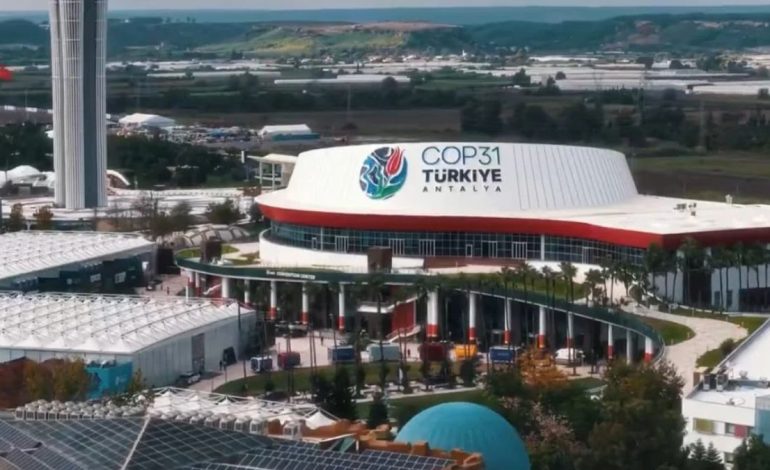
(Image courtesy: screenshot of a video posted by X/@turkiyecop31)

New Delhi: A proposal to remove carbon dioxide already in Earth’s atmosphere has entered a draft COP31 decision released on Monday in Antalya, Turkey, as campaigners push to make the approach part of the global climate response. The move has intensified debate over whether removing accumulated pollution can help reverse dangerous warming or become an excuse to delay cuts in fossil fuel emissions.
The draft cover decision recognizes that carbon dioxide removal (CDR) will be needed to bring global temperatures back below 1.5°C after an overshoot but must complement rather than replace emissions reductions. It also calls for environmental safeguards and protection of indigenous peoples and local communities.
However, the COP31 presidency has clarified that the draft represents proposals for further negotiations, not an agreement among participating governments.
At the summit’s Think Negative pavilion, advocates are pressing for greater investment, common standards and a possible international coordinating agency. Turkey hosts the summit, while Australia leads negotiations on its outcome.
Both carbon dioxide removal and carbon capture and storage first appeared together in a preliminary negotiating text on Friday, before Monday’s draft cover decision. The growing political influence of these technologies is reflected in the presence of approximately 700 registered participants associated with carbon capture and related industries, exceeding the combined delegations of the 50 smallest countries at COP31, according to an analysis by the center for international environmental law cited by The Guardian.
What does carbon removal actually do?
Carbon dioxide removal involves extracting CO₂ already present in the atmosphere and storing it for decades or longer. This differs from preventing new emissions from factories, vehicles or power stations.
One method, called direct air capture, uses machines equipped with chemical filters or specialized materials to extract carbon dioxide from surrounding air. The captured gas can then be compressed and injected into suitable underground geological formations for long-term storage.
Other approaches include restoring forests, converting organic material into stable charcoal-like biochar and spreading crushed minerals that gradually absorb atmospheric carbon through chemical reactions.
Scientists are also exploring methods to increase the oceans’ capacity to absorb carbon, although their potential effects on marine ecosystems remain uncertain.
The technology’s actual performance illustrates the enormous challenge.
Climeworks’ Mammoth facility in Iceland, designed to capture up to 36,000 tonnes annually, delivered just 675 tonnes of net carbon removal during the first six months of 2026.
Although the company reported substantial improvements following equipment upgrades, the gap between design capacity and actual removal demonstrates the difficulties of scaling up the technology.
Funding remains another major obstacle. Carbon-removal companies are struggling to attract sufficient private investment to expand their operations, while investors increasingly favour emerging sectors such as artificial intelligence. Despite growing political interest, the industry remains underfunded, raising questions about how quickly expensive removal technologies can be deployed on the scale required.
How much carbon needs to be removed?
Approximately 320 billion tonnes of carbon dioxide may need to be removed and permanently stored this century to return global warming to 1.5°C by 2100, according to a modelled pathway in the United Nations environment programme’s emissions gap report 2026. That scenario also requires global greenhouse gas emissions to fall by 45 per cent by 2035 compared with 2025 levels.
The scale of existing removal remains far smaller than projected future requirements. Around 2.2 billion tonnes of CO₂ are currently removed annually, overwhelmingly through conventional land-based approaches, the 2026 State of Carbon Dioxide Removal assessment estimates.
Newer approaches account for approximately 2 million tonnes of annual removal and carbon-transfer activity, primarily through biochar and bioenergy-based systems. Direct air capture contributes only a tiny fraction.
Why are scientists and environmental groups divided?
The debate has divided climate experts over whether carbon removal can reverse global warming after temperatures exceed the 1.5°C threshold. Injy Johnstone, a net-zero expert at the Max Planck Institute, argues that large-scale carbon removal is essential to bring temperatures back down rather than merely prevent further warming. However, Rachel Kennerley, of the center for international environmental law warns that relying on technologies whose future effectiveness remains uncertain could weaken pressure on governments to reduce fossil fuel emissions immediately.
Large-scale land-based removal could compete with agriculture and threaten biodiversity, while mechanical systems require substantial energy and resources. Experimental ocean interventions also raise ecological concerns.
Another controversy concerns carbon capture and storage (CCS), which is different from atmospheric carbon removal.
CCS captures emissions directly from industrial facilities before they enter the atmosphere. Unlike CDR, it does not remove carbon dioxide already accumulated in the air.
Environmental campaigners fear that promises of future carbon removal and capture could encourage continued fossil fuel dependence rather than accelerate emissions reductions.
What happens next at COP31?
Carbon dioxide removal and carbon capture have been included in the COP31 draft cover decision, but their inclusion in the final agreement remains uncertain as negotiations continue in Antalya.
Supporters are seeking greater international cooperation, investment and common standards for developing and deploying carbon-removal technologies. Environmental groups, meanwhile, are pressing governments to ensure that these measures do not weaken commitments to reducing greenhouse gas emissions and phasing out fossil fuels.
The final COP31 outcome will determine whether carbon removal receives formal recognition in the summit’s decisions and what commitments, if any, countries make towards its future development.