

Israel kills Hamas commander behind October 7 attack, raises fresh questions over Gaza ceasefire. Who was he?
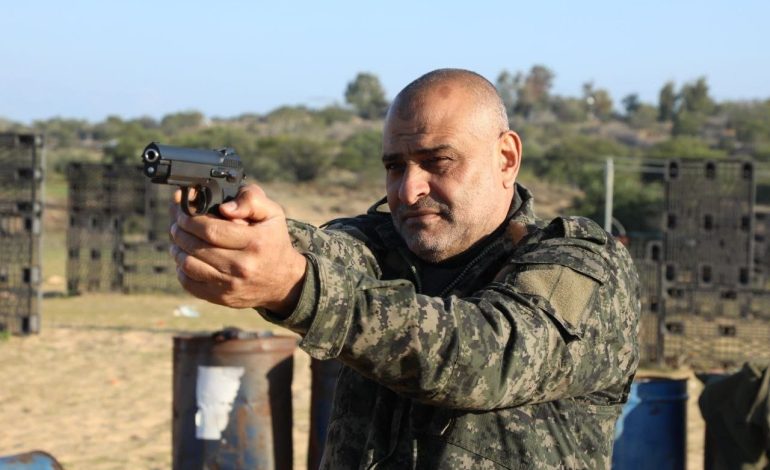
Samir Abu Younis. (Photo: X/@ThetiMapping)

New Delhi: Israel has killed a senior Hamas military commander who helped plan and supervise the October 7, 2023, attacks on southern Israel, delivering another blow to the Palestinian militant group’s leadership more than a year after a US-brokered ceasefire took effect in Gaza. The commander, Samir Abu Younis, also known as Abu Mahmoud, who headed Hamas’s Rafah brigade, was killed in an Israeli airstrike in southern Gaza on Saturday, according to confirmation issued by Hamas’s armed wing, the Al-Qassam Brigades, early Sunday.
The 53-year-old commander was targeted in the Al-Mawasi area, west of Khan Younis, where Israeli forces struck a location reportedly occupied by displaced Palestinians. Medical personnel confirmed his death and reported additional casualties, while Gaza’s civil defence authorities said two other people were wounded.
The Israeli military and the country’s domestic intelligence agency, Shin Bet, announced in a joint statement that they had targeted a senior figure in Hamas’s military organization. Although the initial Israeli announcement did not identify the individual, Hamas subsequently confirmed Abu Younis’s death and described the operation as a targeted assassination.
The Al-Qassam Brigades acknowledged that Abu Younis had been among the senior commanders involved in preparing and directing the October 7 assault, which triggered the devastating war between Israel and Hamas. His funeral was scheduled for Sunday afternoon in Khan Younis, according to the group’s announcement.
Who was Samir Abu Younis?
Abu Younis had been associated with Hamas’s military wing since 1991 and had occupied several important operational positions in Rafah, the southern Gaza city bordering Egypt. Over more than three decades, he rose through the organization’s command structure and eventually became a member of its general military council, according to Anadolu Agency.
He assumed command of the Rafah brigade following the killing of his predecessor, Nael Abu Obeid, in an Israeli strike on September 15. His death barely two months later points to Israel’s continuing campaign against surviving Hamas commanders, even after the ceasefire substantially reduced large-scale military operations in Gaza.
The Rafah brigade has been an important component of Hamas’s armed organization in southern Gaza, a region that became a major battlefield during Israel’s military campaign. Its command structure is particularly significant because of Rafah’s proximity to the Egyptian border and the area’s longstanding importance to Hamas’s military activities and underground infrastructure.
Abu Younis’s elimination represents a leadership setback for the brigade, although the extent of its present operational capabilities remains difficult to establish independently. Removing experienced commanders can disrupt coordination, succession and operational planning, but individual targeted killings do not necessarily dismantle the wider armed networks supporting an organization.
A ceasefire that has failed to end the violence
The latest strike has again exposed the limitations of the ceasefire that took effect on October 10, 2025, following two years of destructive warfare. Although the US-backed arrangement brought large-scale hostilities to a halt, Israeli attacks, Palestinian casualties and disagreements over Hamas’s disarmament have continued to obstruct a durable settlement.
According to a United Nations report, Israeli airstrikes, shelling and shooting continued across populated areas of Gaza during November, including locations sheltering displaced civilians. The UN Office for the Coordination of Humanitarian Affairs also reported that heavy rainfall had flooded temporary shelters and disrupted already strained humanitarian services.
Figures released by Gaza’s health ministry indicated that 1,643 Palestinians had been killed and 5,964 wounded since the ceasefire came into force, as of November 14. Israeli military figures cited by AFP separately recorded seven soldiers and one civilian contractor killed during the ceasefire period, underscoring the continuing security challenges despite the formal reduction in hostilities.
What the killing means for Gaza’s fragile peace
The Israeli operation also highlights the unresolved central question confronting international mediators – whether Hamas can be disarmed without renewed large-scale military operations. Israel has maintained that the group’s military capabilities must be dismantled, while the continuing presence of armed Hamas formations complicates efforts to establish a permanent post-war security arrangement.
A September 2026 UN report acknowledged that the ceasefire had secured the return of the remaining Israeli hostages and their remains but had failed to end the violence or bring about the disarmament of armed groups. It also warned that extensive restrictions on movement and access continued to leave Palestinian civilians in overcrowded and insecure areas.
The broader conflict began when Hamas-led militants attacked southern Israel on October 7, 2023, killing approximately 1,200 people and taking hostages into Gaza. Israel’s subsequent military campaign has killed more than 74,000 Palestinians, according to Gaza health authorities, and devastated much of the territory’s civilian infrastructure.
For international mediators, including Washington, the immediate challenge is preventing individual military operations from undermining the wider ceasefire framework. Abu Younis’s death demonstrates that the agreement has reduced the scale of the war without resolving its central military and political disputes, leaving Gaza vulnerable to further violence.