

India-US trade deal nears finish line, but Washington holds the key to final breakthrough, Jaishankar says
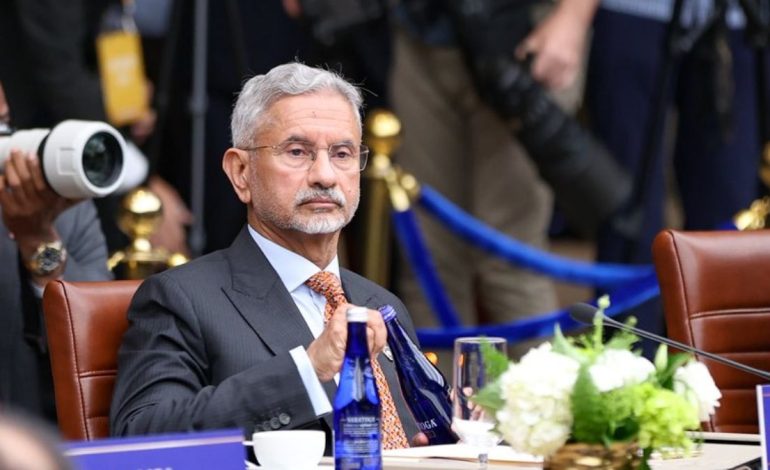
S Jaishankar. (Image courtesy: X/@DrSJaishankar)

New Delhi: India and the United States are approaching the final stage of negotiations for a long-awaited bilateral trade agreement, with most substantive differences resolved and the remaining obstacles largely requiring decisions in Washington, the external affairs minister, S Jaishankar, has said. His assessment signals renewed momentum in talks that have repeatedly encountered difficulties over tariffs, market access and geopolitical disagreements, raising expectations that the two countries could conclude an agreement in the coming weeks.
Speaking at the Hindustan Times Leadership Summit in New Delhi on Saturday, Jaishankar indicated that negotiators had completed much of the difficult groundwork and were concentrating on a limited number of outstanding matters. He suggested that several unresolved questions reflected changes in the American negotiating position rather than fresh demands from India, although he stopped short of identifying the specific issues or offering a deadline.
The minister said both sides had addressed most contentious questions through extensive negotiations, examining individual tariff categories rather than seeking a hurried political compromise. He described the discussions as approaching the “finishing line”, expressing confidence that the remaining differences could be overcome without reopening the broader framework of the proposed agreement.
Jaishankar nevertheless cautioned against expecting an immediate announcement, explaining that international trade negotiations directly affect employment, industrial competitiveness and economic opportunities. India’s objective, he emphasized, was not merely to secure an agreement but to obtain terms that were balanced, commercially beneficial and sufficiently competitive against those available to comparable exporting economies.
From tariff confrontation to renewed negotiations
The latest optimism represents a significant improvement from October, when senior officials acknowledged that negotiations had effectively stalled despite an earlier understanding on tariff reductions. According to a Reuters examination of the deadlock, uncertainty over American trade policy, India’s Russian oil purchases and disagreements over market access had complicated efforts to translate political commitments into a binding agreement.
The dispute intensified in August 2025 after Washington imposed tariffs reaching 50 per cent on several Indian exports, including an additional levy linked to New Delhi’s purchases of Russian petroleum. Relations subsequently improved when the two governments announced a framework for an interim trade agreement on February 6, providing for an 18 per cent reciprocal tariff on specified Indian products and additional market-access commitments.
However, the US supreme court’s subsequent rejection of the administration’s use of emergency powers for sweeping tariffs introduced further uncertainty into the negotiations. The changing legal and regulatory environment complicated the calculations of both governments, particularly India’s efforts to secure predictable tariff treatment for exporters competing with manufacturers in Southeast Asia and other emerging economies.
What is at stake for India?
The commercial importance of the agreement is considerable because the United States remains India’s largest merchandise export destination and a major source of investment and advanced technology. According to India Brand Equity Foundation, bilateral merchandise trade reached approximately $140.79 billion in the 2025–26 financial year, with India recording a surplus of about $33.82 billion.
For Indian exporters, a durable agreement could improve access to the American market for textiles, engineering goods, leather products, chemicals and other labour-intensive manufactured products. Washington, meanwhile, is seeking greater access to India’s industrial, agricultural and technology markets, alongside commitments addressing regulatory barriers, digital trade and supply-chain security.
The February framework also envisaged expanded Indian purchases of American energy, aircraft, technology products and other goods, with New Delhi indicating an intention to purchase $500 billion worth of specified products over five years. Nevertheless, India’s concerns over sensitive agricultural sectors and the implications of external trade concessions for domestic producers remain important considerations in negotiations.
Trade talks carry wider strategic implications
The negotiations extend beyond commercial considerations because India and the United States increasingly cooperate on defence, critical technologies and Indo-Pacific security despite occasional disagreements over foreign policy. A predictable economic relationship would strengthen that partnership, particularly as both countries seek more resilient supply chains and reduced dependence on concentrated manufacturing networks.
Diplomatic engagement has intensified in recent weeks, with the American secretary of state, Marco Rubio, describing the agreement as close to completion during his October visit to Mumbai. More recently, Reuters reported on November 10 that American officials had visited India for discussions covering customs procedures and trade facilitation, indicating that technical negotiations were continuing despite earlier setbacks.
Attention is now turning towards possible high-level engagement between the prime minister, Narendra Modi, and the American president, Donald Trump, ahead of the G20 summit scheduled in Miami on December 14–15. Although the summit could provide an opportunity for political intervention if outstanding differences persist, neither government has publicly confirmed that the trade agreement will be signed during the gathering.
Jaishankar’s remarks therefore suggest that the principal challenge has shifted from negotiating the broad terms of the agreement to securing final acceptance of its remaining provisions. Whether that optimism produces an early breakthrough will depend on Washington’s willingness to settle outstanding concerns and New Delhi’s assessment that the final arrangement protects India’s economic interests.