

Anthropic CEO Dario Amodei predicts cancer will be history within 10 years. Can AI really deliver ‘miracle’ cures?
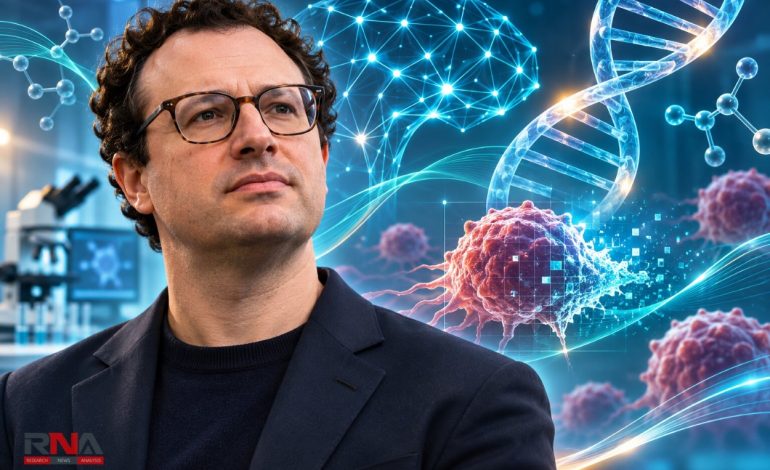
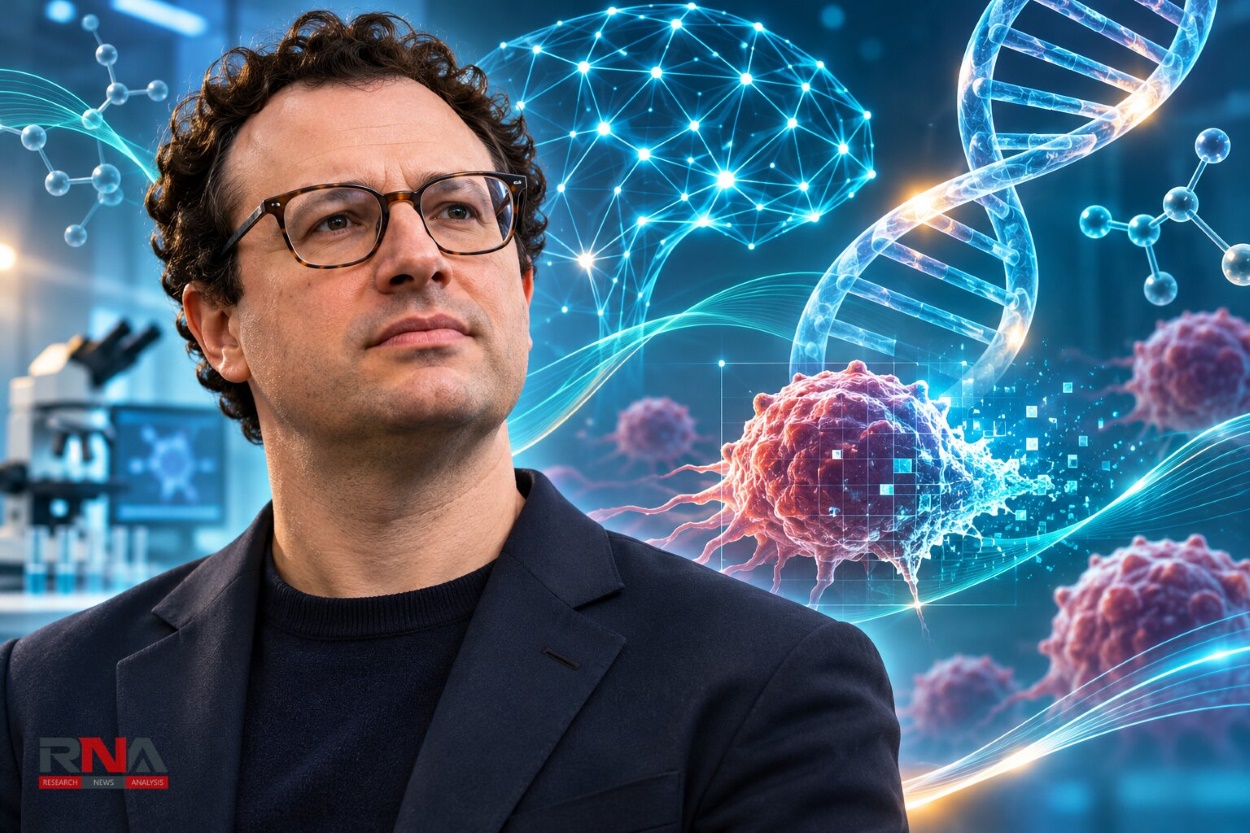
RNA Illustration featuring Dario Amodei for representation.

The chief executive of Anthropic, Dario Amodei, has predicted that artificial intelligence could make cancer and several other major diseases largely a thing of the past within the next decade, raising expectations of a medical revolution. His forecast has, however, exposed a sharp disagreement between technology leaders who believe AI can transform biomedical research and pharmaceutical executives who question whether scientific discoveries can be translated into effective treatments so quickly.
Amodei, whose company develops the Claude family of AI models, believes rapid advances in machine intelligence could transform the treatment of cancer, Alzheimer’s disease, cardiovascular disorders and mental illnesses. He suggested that these conditions could become “relics of the past” in less than 10 years, describing the prospect as an “age of miracles” in which humanity might overcome medical challenges that have resisted generations of scientific research.
The prediction is consistent with a position Amodei has advanced for several years, rather than an isolated expression of technological optimism. In an essay published in September this year, he argued that AI could help cure most major diseases within five to 10 years, potentially producing advances that would otherwise take decades to achieve.
His confidence is partly rooted in the possibility that increasingly sophisticated AI systems will transform the way researchers investigate biological processes, identify therapeutic targets and design medicines. Instead of relying exclusively on lengthy sequences of laboratory experiments, scientists could use computational systems to analyse enormous datasets, formulate hypotheses and identify promising treatments with unprecedented speed.
Anthropic has already begun pursuing this approach through partnerships with pharmaceutical and biotechnology companies, including Bristol Myers Squibb, BigHat Biosciences and Generate Biomedicines. In an update released on October 27, the company described early work involving experimental medicines, antibody engineering and cancer immunotherapy, although these projects have not established that AI can independently produce clinically effective cures.
One collaboration with Generate Biomedicines illustrates both the potential and the limitations of the technology. Researchers used Claude to redesign part of a cancer-fighting CAR T-cell therapy system, producing encouraging laboratory results that could eventually help extend the treatment beyond certain blood cancers to solid tumours, which remain substantially more difficult to treat.
Nevertheless, Amodei’s timetable has encountered resistance from the pharmaceutical industry, where scientists must contend with the biological complexity and high failure rates of experimental treatments. The executive chairman of Vertex Pharmaceuticals, Jeff Leiden, recently challenged sweeping predictions about AI-driven cures, explaining that his company had evaluated approximately 50 AI firms against a collection of 10,000 drug compounds without any independently producing a successful medicine.
The chief executive of AstraZeneca, Pascal Soriot, has similarly questioned whether technological advances justify predictions that cancer will soon be cured, even as his company invests in AI-assisted pharmaceutical research. Both executives acknowledge the technology’s usefulness in identifying drug targets and improving research efficiency but distinguish these advances from demonstrating that an experimental medicine is safe and effective in patients.
The disagreement comes against a substantial and growing global cancer burden, making the consequences of such a breakthrough potentially enormous. According to the International Agency for Research on Cancer, an estimated 20.6 million people developed cancer in 2024 and approximately 9.8 million died from the disease, with annual cases projected to rise to 34.4 million by 2050 unless demographic trends and other factors change.
Can AI really make cancer history by 2036?
The central question is not whether artificial intelligence can accelerate medical research, because plenty of evidence already shows it can. The real issue is whether faster discovery can overcome the biological, clinical and institutional obstacles that have stopped medicine from eliminating cancer, despite decades of progress.
To judge Amodei’s forecast, it helps to remember that cancer is not one disease with one underlying mechanism. It covers more than 100 broadly recognized types, each with its own molecular subtypes, genetic abnormalities and responses to treatment – and a remarkable knack for evolving resistance to drugs that looked effective at first.
That complexity is why some forms of leukaemia and lymphoma can now be treated with remarkable success, while advanced pancreatic cancer, aggressive brain tumours and several metastatic malignancies remain stubbornly hard to control. Even cancers that start in the same organ can respond differently to the same medicine, because their molecular makeup and surrounding biological environments are not alike.
AI could help with some of these problems by spotting patterns in genetic and clinical data that conventional research methods struggle to detect. Systems trained on genomic sequences, molecular structures and patient outcomes may eventually help oncologists choose better drug combinations, anticipate resistance and personalize treatment for individual tumours.
There is credible scientific precedent for such optimism in AlphaFold, the protein-structure prediction system built by Google DeepMind. It has produced structural predictions for more than 200 million proteins, giving researchers information that can speed up work on biological functions, molecular interactions and potential drug targets.
Predicting a protein’s structure, however, is a very different thing from showing that a medicine will wipe out a tumour without harming the patient. Cancer involves interacting cellular systems, immune responses, genetic mutations and shifting biological environments that computer models cannot yet reproduce reliably on their own.
That is why the clearest proof of AI’s immediate medical value may lie in diagnosis rather than cures. A large randomized Swedish study of nearly 106,000 women, published in the Lancet in January, found that AI-assisted breast-cancer screening raised detection sensitivity to 80.5 per cent, against 73.8 per cent with conventional double reading, without reducing specificity.
The study also recorded fewer cancers detected between scheduled screenings among women whose mammograms had AI assistance, though it established non-inferiority rather than clear superiority on that measure. Findings like these matter because catching a malignancy before it spreads improves treatment options, even when no revolutionary new drug exists.
Drug development, however, is an altogether different challenge, because promising molecular predictions must survive laboratory testing, animal studies, several phases of human trials and regulatory scrutiny. AI may speed up the selection of candidates and improve trial design, but it cannot remove the time needed to establish long-term safety, watch how patients respond or find out whether apparent gains mean longer survival.
There is already progress beyond computer simulations, including an AI-discovered experimental medicine for idiopathic pulmonary fibrosis that reached a randomized phase 2a trial reported in 2025. Yet that was a non-cancerous lung disorder and an intermediate stage of clinical testing, not proof that AI can reliably produce approved medicines, let alone eliminate an entire category of disease.
Another complication is that even effective cancer treatments do not stop new cancers from developing as people age or face environmental and lifestyle risks. So eliminating cancer as a cause of death, sharply reducing its incidence and finding treatments that control most cancers are three very different goals, each needing a different standard of evidence.
Interestingly, Amodei himself has acknowledged this distinction in his earlier writing, suggesting that reductions of 95 per cent or more in cancer incidence and mortality might eventually be possible without every malignancy disappearing. In his October 2024 essay, Machines of Loving Grace, he conceded that some rare and difficult cancers could persist because malignant cells are exceptionally adaptable, which makes complete eradication particularly hard.
This more qualified forecast is far easier to defend scientifically than the idea that cancer will disappear altogether by 2036, although cutting incidence on that scale within a decade would still be extraordinary. It would take not just a string of breakthroughs but their validation, regulatory approval, mass production and rollout across healthcare systems in countries with vastly different resources.
What the prediction means for India
For India, the stakes are particularly high, because cancer is already a major public-health challenge that stretches well beyond specialist hospitals in the big cities. A JAMA Network Open study from August 2025 estimated about 1.56 million new cancer cases and 874,404 cancer deaths in India during 2024, with breast, oral and cervical cancers accounting for large shares of the burden.
India also struggles to ensure timely diagnosis, specialist treatment and consistent follow-up, especially for rural and economically disadvantaged people. In that context, affordable AI-assisted screening, automated reading of medical images and better identification of high-risk patients could deliver big benefits long before any universal cancer treatment arrives.
The country has already started investing in such applications through the IndiaAI Mission and the National Cancer Grid, which supports a network of more than 400 cancer centres, research institutions and patient groups. In February this year, the government highlighted 28 AI-enabled solutions under the Cancer AI & Technology Challenge programme, spanning screening, diagnostics, clinical decision support and coordination of patient care.
These initiatives give India a chance to build technologies suited to its own healthcare conditions, instead of depending entirely on models trained on patients and medical infrastructure in richer countries. But their success will hinge on independent clinical validation, representative Indian datasets, protection of sensitive patient data and the ability of hospitals to fit new systems into routine care without pushing up costs or diagnostic errors.
There is a strategic dimension as well: as AI becomes central to pharmaceutical discovery, countries that control advanced computing infrastructure, biomedical datasets and proprietary research platforms could wield considerable influence over future medicines. India must therefore strengthen domestic biomedical research, regulatory expertise and affordable innovation while keeping access to international scientific collaboration, rather than letting technological dependence become another source of healthcare inequality.
Equally important, AI should not pull attention away from established preventive measures, particularly tobacco control, vaccination against cancer-causing infections and timely screening. A World Health Organization analysis released in February estimated that about 37 per cent of new cancer cases globally were linked to preventable causes, which shows how much can still be gained from existing public-health interventions.
Amodei may well be right that AI will compress decades of medical progress into a much shorter span, especially if breakthroughs in molecular biology, immunotherapy and individualized treatment feed off one another. But the evidence so far points to a more measured conclusion: AI could substantially improve cancer prevention, diagnosis and treatment over the next decade without necessarily making the disease itself history.
The decisive test will not be how fast AI systems generate hypotheses or how impressive they look in laboratory demonstrations, but whether they produce clinically validated treatments that reduce cancer deaths across populations. By 2036, the world may well have far more effective weapons against cancer than it has today – yet declaring the disease defeated would need evidence that science is still nowhere near establishing.