


Iran brands Argentina’s navy, air force terrorist organizations as diplomatic feud between Tehran and Buenos Aires worsens
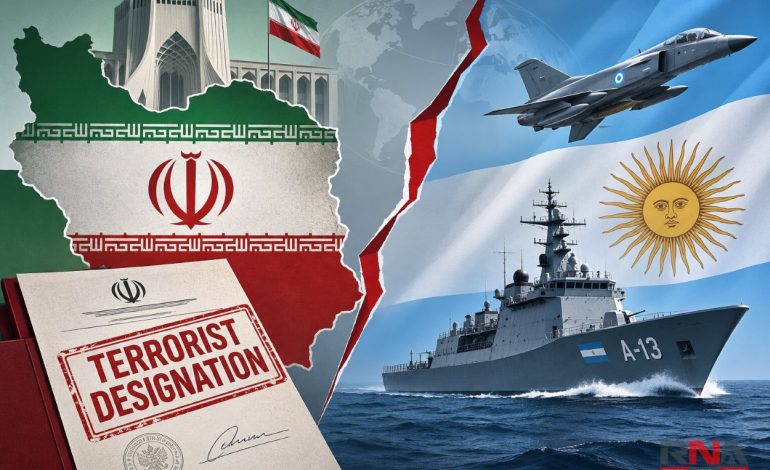
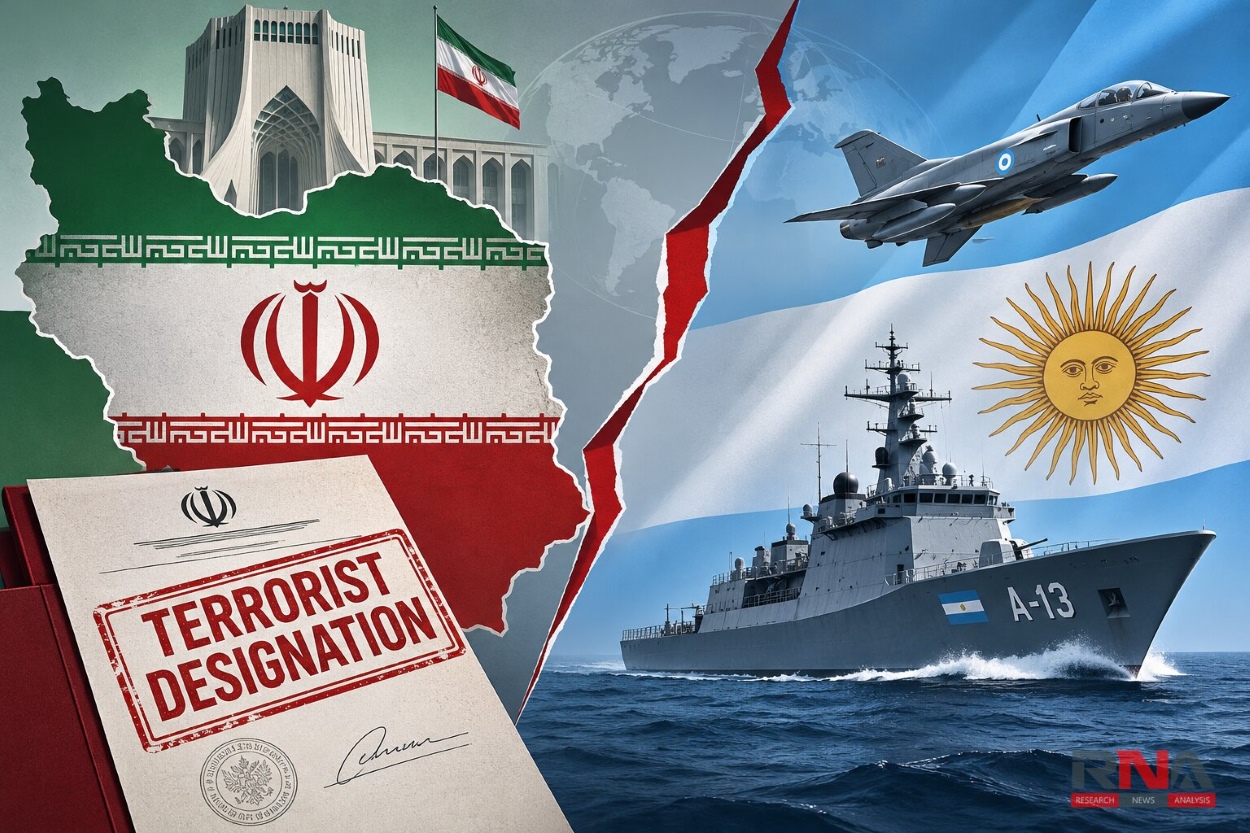
RNA Media illustration for representation.

New Delhi: Iran has designated Argentina’s navy and air force as terrorist organizations, escalating a diplomatic confrontation that has intensified since Buenos Aires blacklisted Tehran’s Islamic Revolutionary Guard Corps (IRGC) earlier this year. The announcement on Wednesday marks another retaliatory measure by Tehran against countries that have targeted its military establishment over allegations of involvement in international terrorism.
The Iranian foreign ministry said the decision was based on the principle of reciprocity and legislation adopted in 2019 after the United States designated the IRGC a foreign terrorist organization. Tehran accused Argentina of violating international law by classifying a constitutionally established component of Iran’s armed forces as a terrorist entity, arguing that the decision constituted an unjustified hostile act.
According to the foreign ministry’s statement, Iran considers both Argentine military branches subject to the provisions of its retaliatory legislation, which authorizes countermeasures against countries supporting the American designation of the IRGC. The ministry also warned that Buenos Aires would bear responsibility for the consequences, although it provided no explanation of what punitive measures might follow.
Significantly, the designation does not cover the Argentine army, and Tehran has offered no explanation for excluding the country’s principal land-warfare force. The practical implications also remain uncertain, particularly whether the decision will result in restrictions on military personnel, financial transactions or other activities involving the two services.
Argentina’s decision and shadow of two bombings
The confrontation follows the decision by the Argentine government, led by the president, Javier Milei, to designate the IRGC a terrorist organization on March 31. Buenos Aires justified the measure by citing the Iranian military organization’s alleged links to Hezbollah and two deadly attacks against Jewish and Israeli targets in the Argentine capital during the 1990s.
The first attack, on March 17, 1992, destroyed the Israeli embassy in Buenos Aires, killing 29 people and injuring more than 200. Two years later, on July 18, 1994, a bomb devastated the Argentine Israelite Mutual Association (AMIA) Jewish community centre, killing 85 people and injuring more than 300 in the deadliest terrorist attack in Argentina’s history.
Argentine investigators have accused Iranian officials and Hezbollah operatives of planning and executing the attacks, allegations that Tehran has consistently denied. The unresolved AMIA bombing remains a major obstacle to relations between the countries, with successive Argentine governments seeking accountability for those implicated in the investigation.
The dispute escalated further on April 2, when Argentina expelled Iran’s charge d’affaires, Mohsen Soltani Tehrani, ordering him to leave within 48 hours. Buenos Aires accused Tehran of interfering in its domestic affairs and refusing to cooperate with Argentine judicial authorities investigating the AMIA bombing.
Argentina had already designated the IRGC’s Quds Force, responsible for much of the organization’s overseas activity, as a terrorist entity in January this year. The subsequent classification of the entire IRGC reflected Milei’s increasingly close alignment with Washington and Israel on security and foreign policy issues.
Iran extends retaliatory measures to Britain
The Argentine designation is part of a wider Iranian response to governments taking action against the IRGC, which exercises considerable influence over Iran’s military capabilities, regional operations and economy. On November 1, Tehran similarly designated Britain’s Royal Navy and Royal Air Force as terrorist organizations and classified the British foreign intelligence agency, MI6, as a hostile group, as RNA Media had reported earlier.
That decision followed Britain’s July 13 move to designate the IRGC under the State Threats Act 2026, which introduced restrictions on supporting the Iranian organization. Unlike a conventional terrorist proscription, the British measure addressed the IRGC through legislation targeting foreign-state threats, a distinction that underscores the different legal approaches being adopted against Tehran.
The widening dispute also comes amid greater cooperation between Washington and several Latin American governments over alleged Iranian activities in the Western Hemisphere. On October 5, Argentina joined the United States and eight other countries in a joint statement condemning alleged Iranian-backed terrorist operations, illicit financing and political interference across the region.
For Argentina, the confrontation is closely connected to the unresolved legacy of the Buenos Aires bombings and Milei’s strategic alignment with the United States. For Iran, the reciprocal designations offer a means of challenging the international legitimacy of measures directed against the IRGC, even though their immediate operational effects remain unclear.
The latest announcement therefore appears principally diplomatic and political rather than an indication of an imminent military confrontation between the two countries. Nevertheless, it further narrows the scope for engagement between Tehran and Buenos Aires and reflects a broader deterioration in Iran’s relations with governments seeking to isolate its security establishment.


