



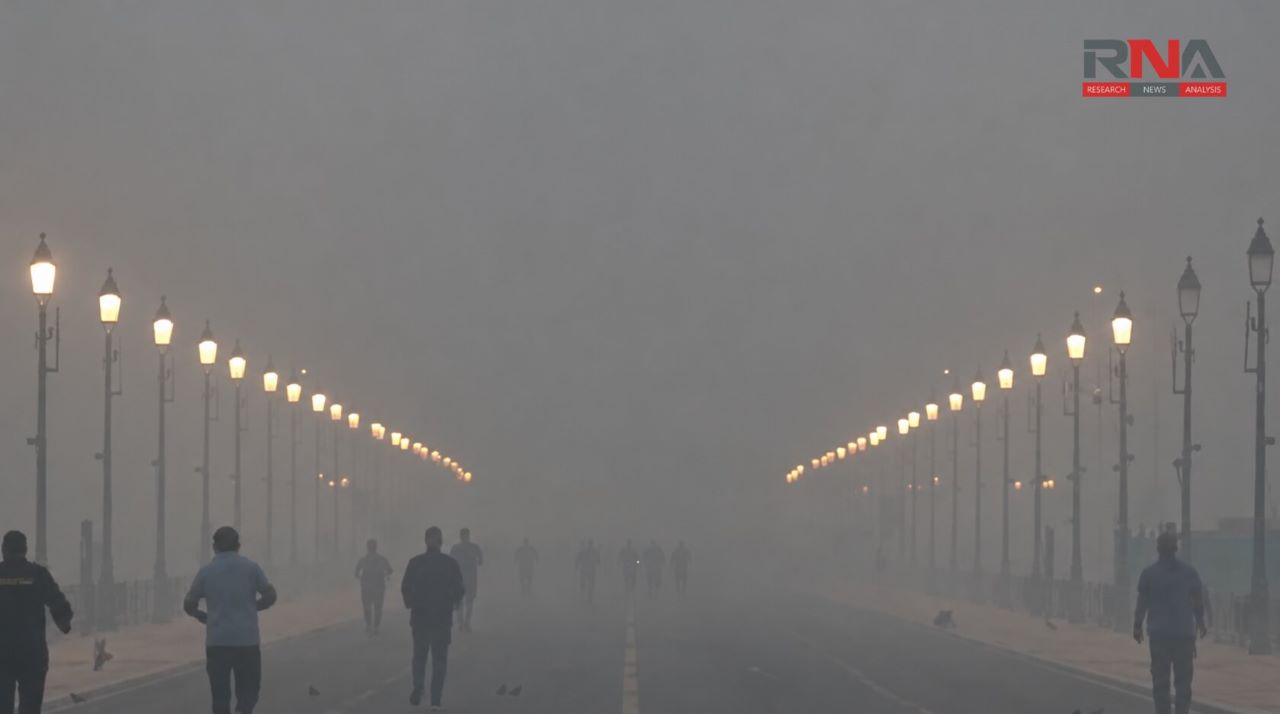
Firecrackers dominate Delhi’s post-Diwali pollution as CPCB explains AQI cap
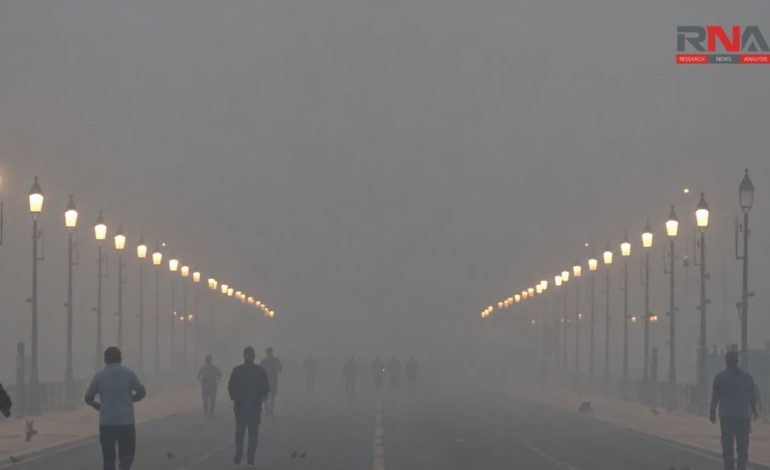

New Delhi: Firecracker emissions were estimated to account for more than 80 per cent of Delhi’s fine-particle pollution during the early hours after Diwali, as unusually high readings on private air-quality applications raised questions about official data. The episode has brought the severity of the pollution surge and the way extreme readings are communicated into focus.
A model developed by the Indian Institute of Tropical Meteorology (IITM) estimated the firecracker contribution to PM2.5 at 80.2 per cent between 1am and 9am on November 9, the Times of India reported. The estimate, published on the government’s Airwise-Delhi portal, carried a standard deviation of 54.9 percentage points, indicating substantial uncertainty.
A separate IITM assessment estimated a 71.1 per cent firecracker contribution to PM2.5 during the same hours, the Indian Express reported. Its estimates had risen from 5.6 per cent on November 7 to 43.4 per cent on November 8, illustrating the sharp change around the festival rather than a full-day share of all pollutants.
The intensity was visible in measured concentrations: PM2.5 reached 4,985 micrograms per cubic metre at Jahangirpuri and 2,808 at Nehru Nagar around 3am on Monday. These figures measure pollutant concentrations, not AQI, and should not be compared numerically with index readings.
Delhi’s average AQI reached 376 on Diwali, November 8, its worst festival-day level in five years, and remained “very poor” the following day. Favourable winds helped it improve to 299 at 4pm on Tuesday before it slipped to 302 by 6pm; it was 299 at 7am on Wednesday and later rose to 301.
Why official AQI stops at 500
The Central Pollution Control Board (CPCB) said on Tuesday that the upper limit of India’s national air quality index was established by design, not because pollution concentrations cannot rise further. Introduced in 2015, the scale runs from zero to 500 through six categories, from “good” to “severe”, with “severe” covering 401-500.
CPCB maintained that the AQI is intended primarily to communicate health risks rather than provide an unlimited numerical measurement of pollution. It said extending the index beyond 500 would not change the severe classification or its associated health advisory, as the health-risk category was more significant than individual numerical values. The methodology, developed in 2015, follows prevailing international practices, including the US environmental protection agency’s AQI framework.
Private applications reportedly displayed figures between 1,500 and 1,800 during Diwali night, despite lower official citywide readings. CPCB said some platforms use shorter averaging periods, different breakpoints or low-cost sensors, making their figures not directly comparable; they may also fall more quickly after short pollution peaks.
Missing data raise separate questions
The Indian Express found missing hourly observations for at least one pollutant at 45 of Delhi’s 59 monitoring stations on Diwali. CPCB acknowledged that some particulate-matter analysers are calibrated only up to 1,000 micrograms per cubic metre, so readings outside their range can be excluded from the relevant average.
These gaps are a separate issue from the AQI’s 500-point ceiling and can affect how exceptional peaks appear in official summaries. CPCB said it was examining how to process data beyond the instruments’ existing design range, without suggesting that the index cap itself concealed higher concentrations.
Firecrackers dominated the early post-Diwali estimates but were not Delhi’s only pollution source. Vehicles, road and construction dust, industrial emissions and secondary aerosols continued to contribute, while IITM’s assessment indicated crop-residue smoke was not a major factor on Monday.
The World Health Organization links fine-particle exposure with respiratory and cardiovascular disease, underscoring the risks of both acute spikes and sustained pollution. The episode highlights the need to capture extreme concentrations transparently while tackling routine emissions that keep Delhi’s air polluted beyond festival nights.