


Iran claims seven tankers damaged near Hormuz, threatens US bases over shipping protection
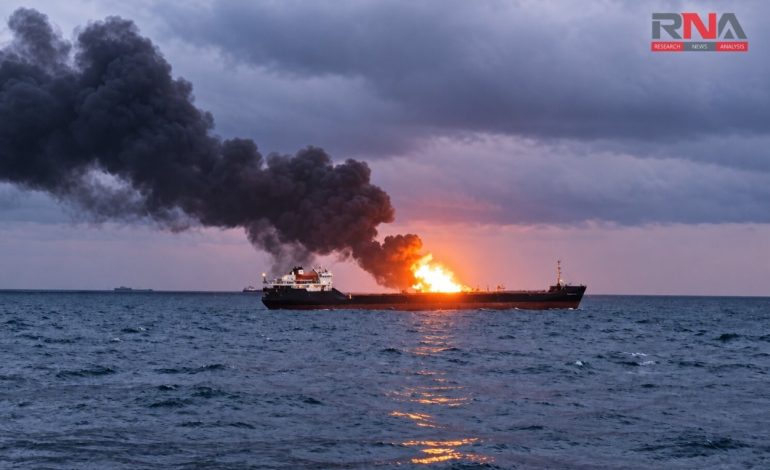
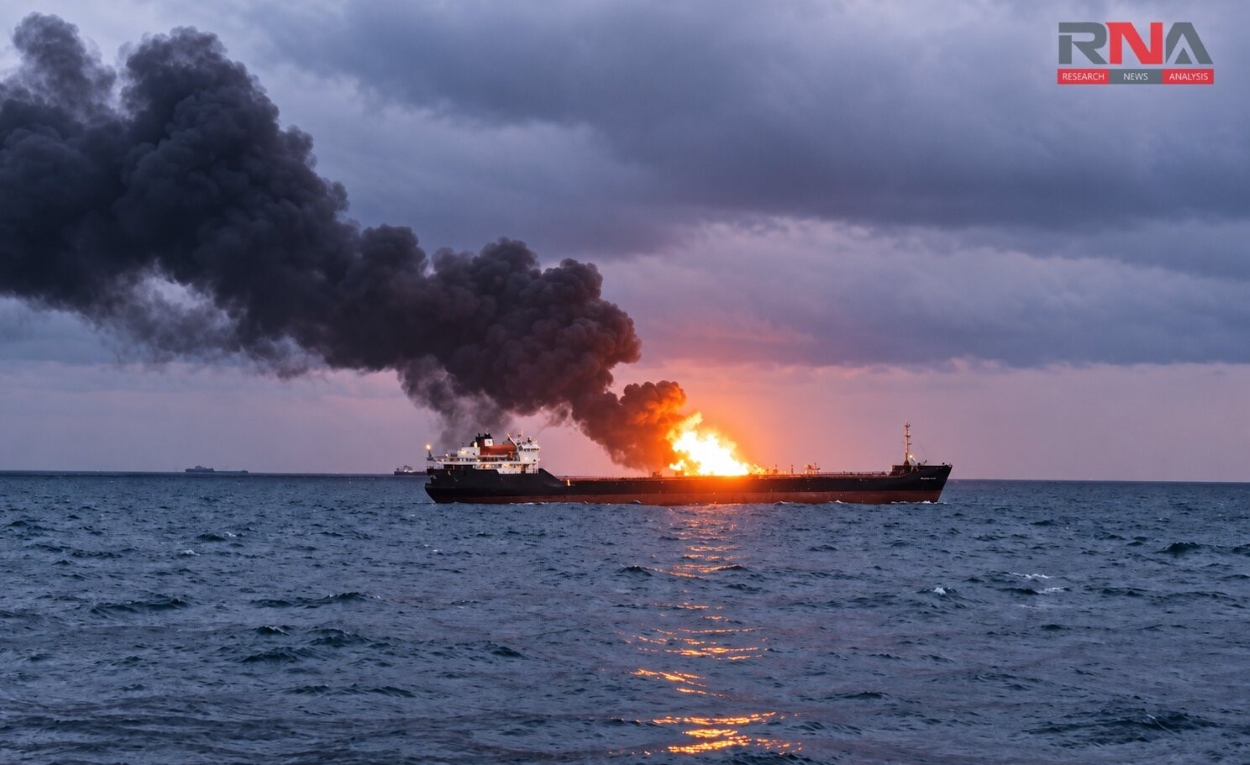
This digitally enhanced version of a viral photo on X shows a tanker burning in the Strait of Hormuz after being struck by a projectile.

New Delhi: Iran said on Thursday that seven oil tankers had been damaged in attacks or mine incidents in and around the Strait of Hormuz, raising fresh concerns over the security of a critical global energy corridor. Tehran also threatened strikes on American military bases in the region if Washington continued helping commercial vessels navigate the waterway.
The account remained an Iranian claim, with the western media outlets saying they could not independently confirm the reported attacks. The initial Iranian report did not identify the vessels, their flags or possible casualties, leaving the scale of the damage unclear.
According to Reuters’ account of the Iranian statement, the Islamic Revolutionary Guard Corps (IRGC) navy said four vessels caught fire after being struck simultaneously during oil transfers in the northern Persian Gulf on Wednesday. It described those transfers as illegal and said three other vessels had struck mines west of Hormuz.
The Iranian account described incidents across the northern Gulf and the approaches to Hormuz, rather than seven confirmed attacks within the narrow strait itself. The reported mine incidents also remained unverified, alongside the claims of direct strikes.
Commercial traffic has nevertheless continued through the area under American military protection, according to shipping intelligence cited by the Associated Press. Lloyd’s List Intelligence said some operators were making night-time passages near Oman with tracking equipment and mobile phones switched off, before transferring cargoes to tankers in the Gulf of Oman for onward shipment to Asia.
For India, the danger to merchant crews was underscored by a separately reported incident involving the Kuwait-flagged oil products tanker Al Dasma. The minister for ports, shipping and waterways, Sarbananda Sonowal, said the vessel, carrying 21 Indian seafarers, was hit by an unidentified projectile while transiting Hormuz on Wednesday, but all crew members were safe.
Sonowal’s statement did not identify the attacker, and the available reports did not establish whether Al Dasma was among the seven vessels mentioned by Iran. The incident therefore cannot be treated as independent confirmation of Tehran’s wider claim.
The strategic importance of Hormuz extends well beyond the ships immediately exposed to attack: it connects the Persian Gulf with the Gulf of Oman and the Arabian Sea, providing an export route for several major energy producers. According to the International Energy Agency’s Hormuz factsheet, about 20 million barrels of crude oil and petroleum products passed through it each day in 2025, accounting for roughly a quarter of global seaborne oil trade.
Asia received about 80 per cent of those shipments, making disruption particularly consequential for the region’s importing economies, including India. The passage also carried almost a fifth of global liquefied natural gas trade in 2025, principally exports from Qatar and the United Arab Emirates.
Alternative routes offer only a partial cushion: Saudi Arabia and the UAE have pipelines that bypass Hormuz, but their available capacity cannot accommodate the full volume normally shipped through it. The IEA’s assessment explains why even a disruption that falls short of closing the strait can have consequences well beyond the Gulf, affecting energy availability and prices across importing markets.