

Nigeria Ebola case matches DR Congo virus as outbreak reaches West Africa
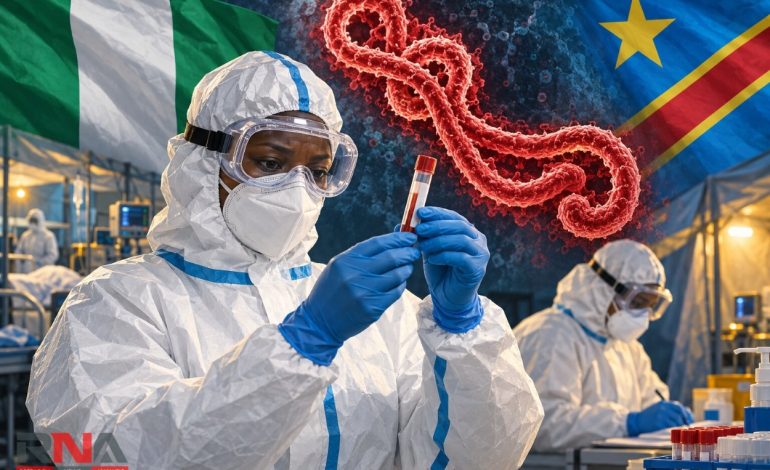
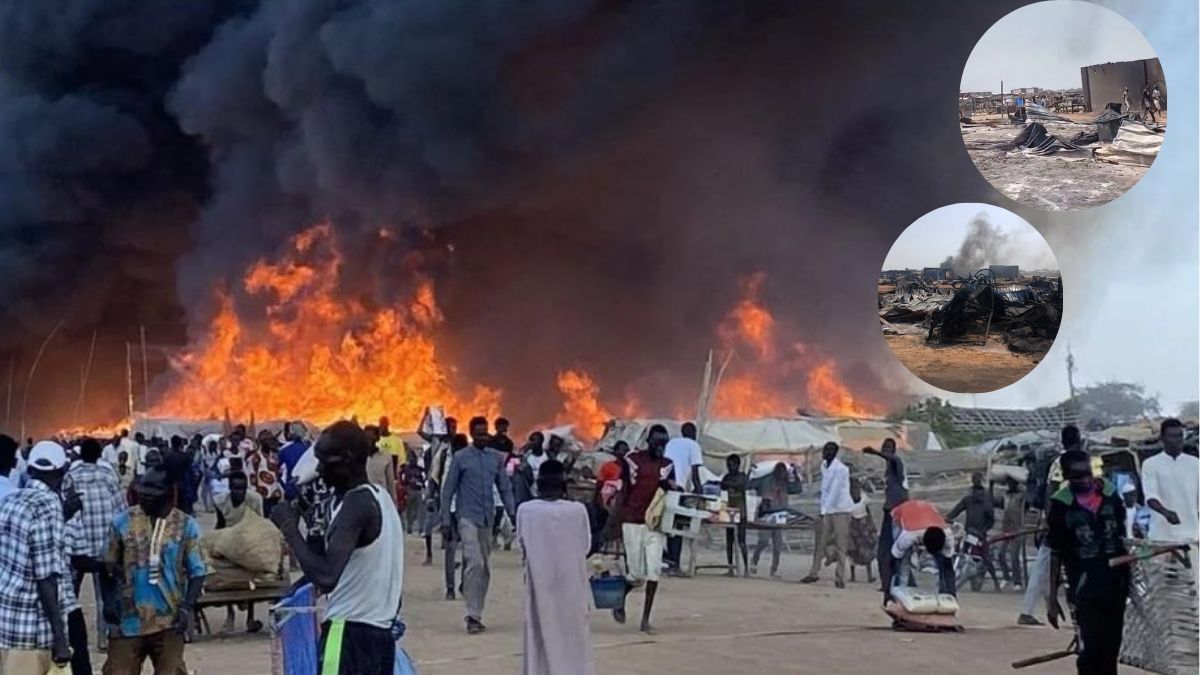
RNA Media illustration for representation.

New Delhi: Nigeria has confirmed that an Ebola infection detected in Abuja was caused by the Bundibugyo virus driving the outbreak in the Democratic Republic of the Congo, extending the current health emergency into West Africa. Authorities have identified 44 contacts of the patient, a woman who recently travelled from Uganda, and are investigating where she contracted the infection.
The Nigeria Centre for Disease Control and Prevention (NCDC) announced the laboratory findings on Wednesday, a day after the infection was confirmed. Its director of public health laboratory services, Olajumoke Babatunde, said three rounds of molecular testing had identified Bundibugyo, establishing that the case involved the same type of virus responsible for the Congolese outbreak.
Officials at an emergency response meeting in Abuja identified the patient as a diplomat and said her condition had deteriorated into multi-organ failure, according to Nigeria’s Cable. The minister of health and social welfare, Muhammad Ali Pate, said she was being treated in isolation, while teams traced potentially exposed healthcare workers, patients, caregivers and travel contacts.
According to the World Health Organization’s regional office, the woman developed symptoms on October 7, four days after arriving in Nigeria, and sought treatment at a private facility in Abuja on October 11. Laboratory confirmation followed on October 20, leaving an interval of nearly two weeks between the onset of illness and diagnosis.
Her recent travel to Uganda does not, by itself, establish where she became infected, and investigators are reconstructing her movements and possible exposures. The 44 people identified for monitoring are contacts of the patient, rather than additional confirmed Ebola cases.
The NCDC has activated its incident management system, while infection-control measures are being strengthened at the private hospital where she received care. WHO and its partners are supporting the investigation, contact tracing and provision of protective equipment for health workers.
The identification of Bundibugyo has direct implications for the response because, according to WHO’s guidance on Ebola disease, there is no approved vaccine or specific treatment for illness caused by this virus. Vaccines and medicines licensed for disease caused by Ebola virus – commonly called the Zaire type – do not constitute an approved treatment or vaccination option for Bundibugyo.
Patients can nevertheless benefit from early intensive supportive care, including rehydration and treatment of complications. The absence of an approved virus-specific intervention increases the importance of prompt diagnosis, isolation, careful clinical management and protection of those providing care.
The wider outbreak has already become the second-largest Ebola outbreak recorded. Its October 20 update listed 9,637 confirmed cases and 4,646 confirmed deaths in the DR Congo, where the emergency was declared in May.
Kenya had also recorded nine confirmed infections and one death by Tuesday, following the arrival of a man who had travelled from the DR Congo through Uganda. Subsequent Kenyan cases involved relatives or healthcare providers who had close contact with him; the US agency said all were already quarantined when diagnosed and that Kenya had reported no community spread.
The Africa Centres for Disease Control and Prevention has called an emergency virtual summit for October 28 to coordinate the response as the crisis expands across the continent. Its director-general, Jean Kaseya, has urged stronger political leadership, with Nigeria’s case adding urgency to efforts to contain transmission beyond the original outbreak area.
Containment in the DR Congo remains difficult because conflict, inadequate health infrastructure and shortages of protective equipment obstruct disease surveillance and safe treatment. Frequent population movements, insecurity affecting contact tracing, and mistrust of authorities further complicate the response, according to the US agency.
Ebola spreads through direct contact with infected blood or other body fluids, or with contaminated materials, making unprotected caregiving a particular concern. WHO says people do not transmit the disease before symptoms appear, while the incubation period ranges from two to 21 days.
Early symptoms can resemble malaria and other common infections, making laboratory testing and an accurate travel history important for diagnosis. This overlap can delay recognition, particularly when a patient first seeks treatment outside a specialist infectious-disease facility.
Nigeria’s previous experience provides an important precedent: in 2014, an infected traveller arriving from Liberia introduced Ebola into Lagos, triggering an outbreak that also reached Port Harcourt. The response identified 19 laboratory-confirmed cases and one probable case, with 894 contacts traced and followed, according to a contemporaneous CDC report.
WHO subsequently declared that outbreak over on October 20, 2014, following a response supported by established surveillance infrastructure and international partners. The present case again places early detection, comprehensive contact tracing and infection control at the centre of Nigeria’s containment effort.