
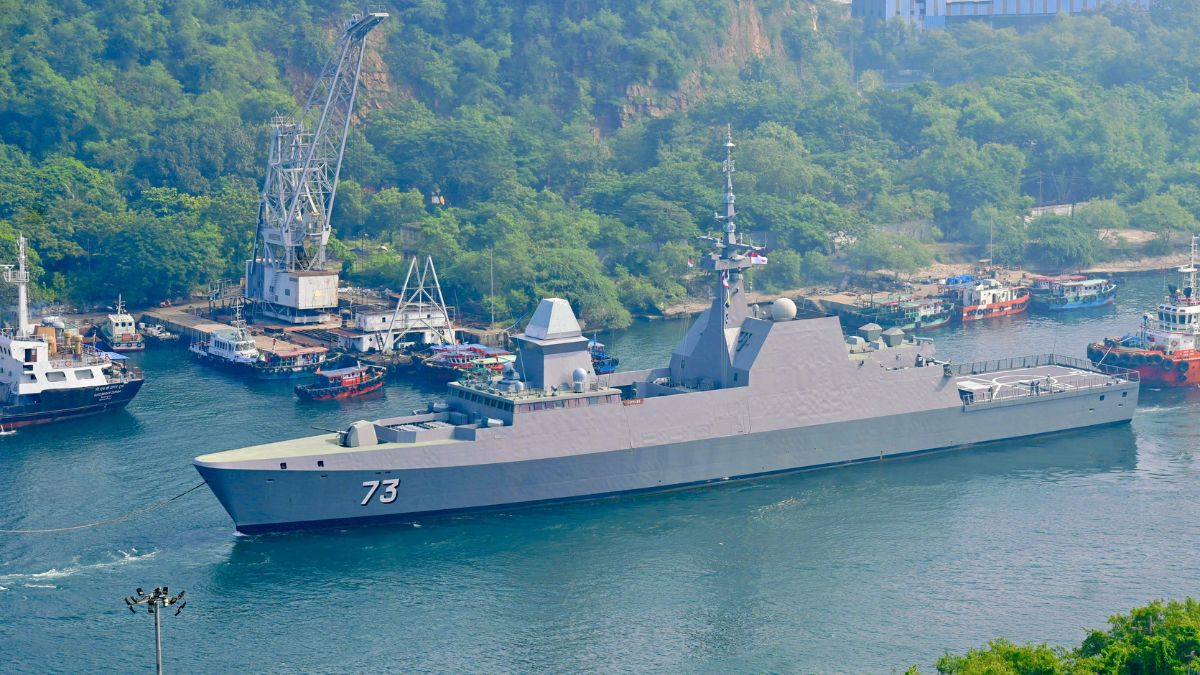
Turkiye, Pakistan, Qatar and Indonesia sign Badr accord to expand joint defence production
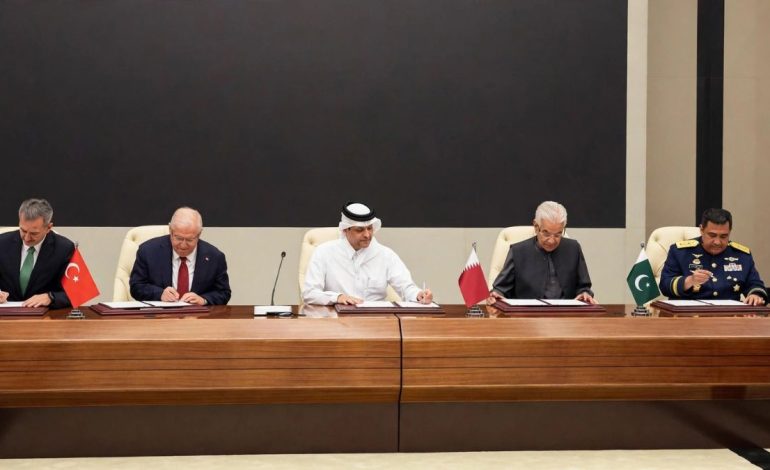
The Badr MoU, signed in Doha. (Image courtesy: Screenshort from a widely shared video on social media)

New Delhi: Turkiye, Qatar, Pakistan and Indonesia signed the Badr Memorandum of Understanding in Doha on Wednesday to expand cooperation in defence production, military training and research. The agreement seeks to integrate their industrial capabilities and strengthen domestic defence industries while developing broader strategic partnerships.
The accord was signed by the Turkish defence minister, Yasar Guler; the Pakistani defence minister, Khawaja Muhammad Asif; the Qatari deputy prime minister and minister of state for defence affairs, Sheikh Saoud bin Abdulrahman bin Hasan Al Thani; and the Indonesian deputy defence minister, Yusuf Jauhari.
The Turkish defence ministry said, “The agreement holds substantial economic importance,” highlighting its potential to strengthen manufacturing and technical cooperation.
“By leveraging the unique military production capabilities of each country, the initiative will facilitate cooperation and integration, enhance defense industrial capacities, and enable the fulfillment of the needs of allied and friendly nations,” the ministry added.
Turkiye and Pakistan already collaborate on four MILGEM/Babur-class corvettes, with construction divided between Istanbul and Karachi. Turkiye and Indonesia jointly developed the Kaplan MT/Harimau tank, while Jakarta has separately contracted to purchase 48 Turkish KAAN fighter jets.
Turkiye also maintains a military base in Qatar and has established defence industrial partnerships with Qatari companies.
Haluk Gorgun, chairman of Turkiye’s defence industry presidency, emphasized technology sharing and developing domestic manufacturing capabilities.
“Technology sharing, joint development and strengthening domestic production capabilities lie at the heart of the sustainable defence industry. As Turkey, we value partnerships that go beyond off the shelf procurement models, that foster the development of a nation’s own human capital and industrial infrastructure,” Gorgun said.
“We believe that the Badr Memorandum of Understanding will contribute to transforming the complementary capabilities of Qatar, Pakistan, Indonesia, and Turkey into concrete projects,” he added.
The memorandum follows the separate Makkah Joint Defence Agreement signed by Turkiye, Pakistan and Saudi Arabia in August, under which an attack on one signatory is considered an attack on all three, as RNA Media reported earlier.
Unlike that mutual-defence pact, Badr focuses on defence-industrial cooperation rather than collective military obligations.
While the agreement establishes a framework for future collaboration, the participating countries have not announced specific weapons contracts, financial commitments or implementation schedules