
Marco Rubio’s Jamnagar visit puts India’s refining power at centre of US energy strategy
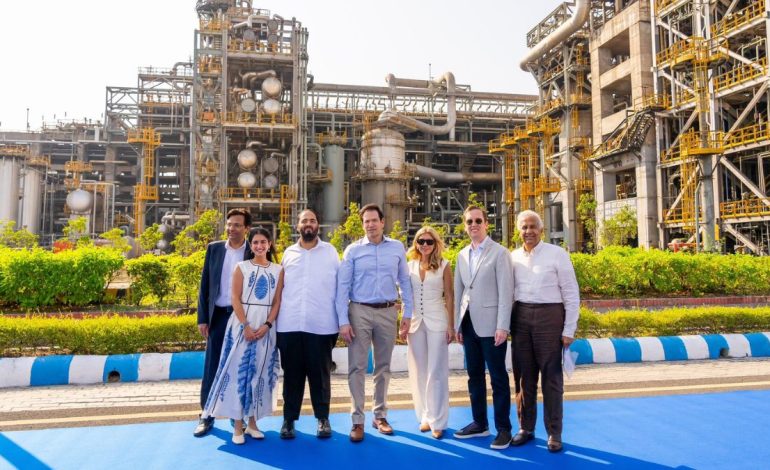
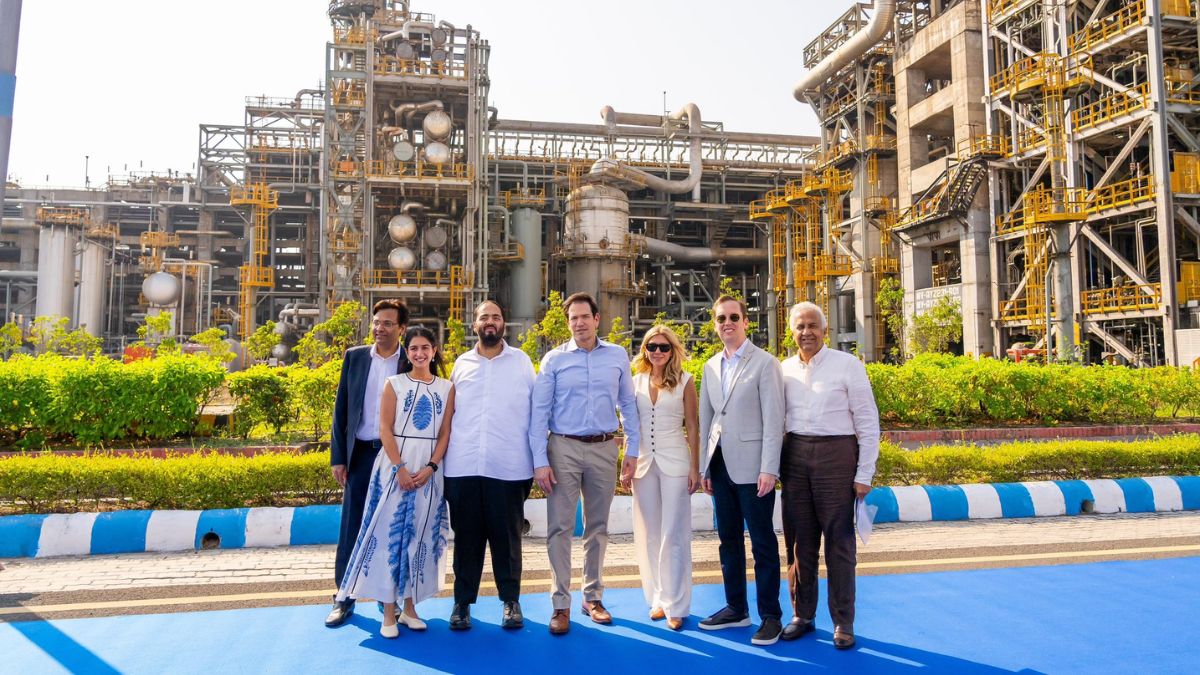
Marco Rubio visits Reliance Industries’ Jamnagar refinery as India and the US deepen energy cooperation. (Image courtesy: X/@USAmbIndia)

New Delhi: The US secretary of state, Marco Rubio, arrived in Gujarat’s Jamnagar on Wednesday to visit Reliance Industries’ oil-refining complex as Washington seeks to strengthen energy cooperation with India amid global supply disruptions. The visit highlights India’s growing importance in international fuel markets as the Iran conflict threatens shipping routes and the US explores additional Venezuelan oil supplies.
Rubio’s visit to Jamnagar is part of his three-day India tour, during which he held talks with the external affairs minister, S Jaishankar, in Mumbai on Tuesday, covering energy, defence, technology and trade. The US state department said increased American energy exports could help India diversify its supplies while meeting growing demand.
Before travelling to Jamnagar on Wednesday, Rubio met the Adani Group chairman, Gautam Adani, and the Tata Sons chairman, N Chandrasekaran, in Mumbai. Neither side disclosed details of the meetings, which came amid efforts to strengthen bilateral cooperation in energy, investment and technology.
Why is Jamnagar important to Washington?
Reliance operates the world’s largest single-location refining complex at Jamnagar, with a combined capacity of about 1.4 million barrels of crude oil daily. The facility has processed more than 216 grades of crude oil, according to Reliance, demonstrating its ability to handle different oil qualities and supply refined fuels to international markets.
According to Reliance, the refinery has a complexity index of 21.1, which it describes as the world’s highest. Its advanced processing units, including fluidized catalytic cracking, coking and petcoke gasification facilities, allow it to convert difficult-to-process crude into valuable petroleum products.
This flexibility is particularly important for processing heavy, sulphur-rich Venezuelan crude, which requires sophisticated refining technology. The complex produces diesel, petrol, aviation fuel and petrochemical products, making it an important supplier when conflicts disrupt oil production and maritime routes, including the Strait of Hormuz.
Rubio described India as a “refining superpower” on Tuesday, acknowledging its ability to process crude that many facilities cannot handle.
Venezuelan oil, Russian supplies and India-US trade talks
Rubio said Washington wanted Reliance to process additional Venezuelan crude as production increases. The US is also exploring whether the Indian company could participate in oil production in Venezuela, according to Reuters.
Reliance already imports Venezuelan crude, but no agreement to increase purchases or invest in Venezuelan production has been announced. Rubio also acknowledged that Venezuelan supplies alone could not compensate for wider disruptions to global oil markets.
The visit comes amid continuing disagreements over India’s Russian oil purchases. On October 16, the US president, Donald Trump, waived provisions of legislation authorizing punitive tariffs of up to 100 per cent on imports from certain major buyers of Russian energy.
The executive order waived specified duties and sanctions under the Lindsey O Graham Sanctioning Russia and Iran Act of 2026 but left existing Russia-related restrictions unaffected.
Meanwhile, India-US trade negotiations are approaching a conclusion. Rubio told the Indian Express that 99 per cent of the work was complete, with an agreement potentially weeks away, although some differences remain unresolved.
India imported about 88.7 per cent of its crude oil requirements in 2025-26, making access to competitively priced supplies critical to energy security. Jamnagar’s ability to process oil from multiple sources gives Indian refiners commercial flexibility while supporting domestic demand and fuel exports.
The visit underscores India’s growing importance in global energy markets, but neither government has announced an agreement requiring New Delhi to replace Russian crude with American or Venezuelan supplies.