



Meerut blue drum murder: Victim’s wife and her lover get death penalty; judge cites Mahabharata while sentencing
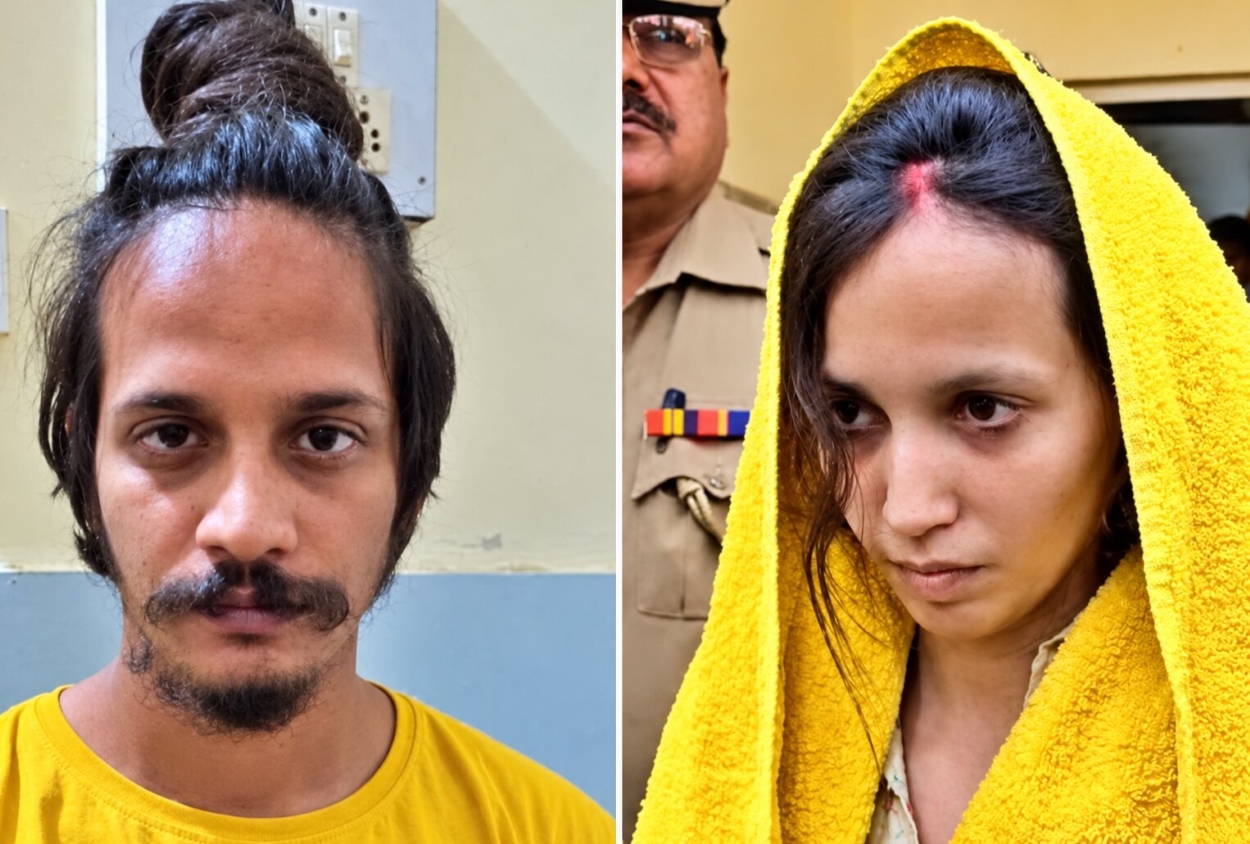
This widely circulated combination image shows Sahil Shukla (L) and Muskan Rastogi.

New Delhi: A court in Meerut sentenced Muskan Rastogi and her lover, Sahil Shukla, to death on Wednesday for murdering the former’s husband, Saurabh Rajput, and concealing his dismembered remains in a cement-filled blue drum. The district and sessions judge, Arvind Kumar Mishra, invoked the Mahabharata while explaining the punishment for the sensational murder case, observing that imposing a penalty proportionate to a crime was also dharma, according to the prosecution.
The sentencing came a fortnight after the court convicted the pair of murder and destruction of evidence on September 30. The trial involved 126 hearings and the examination of 22 prosecution witnesses, bringing the case to a sentencing decision more than 19 months after the killing in March 2025.
The prosecution lawyer, KK Chaubey, told reporters that the judge referred to the Mahabharata while discussing the principle of punishing offenders according to the gravity of their actions. Chaubey said the judge’s observation linked punishment with the discharge of a righteous duty.
Both convicts appeared before the court through videoconferencing from prison, according to media reports. The prosecution had sought capital punishment, arguing that the planned killing and subsequent concealment of the body placed the crime in the “rarest of rare” category.
The defence was represented by the lawyer, Rekha Jain, appointed through the district legal services authority. Speaking to reporters, an advocate said the defence raised the absence of an eyewitness to the murder and the convicts’ family responsibilities, but the court accepted the prosecution’s evidence as sufficient to establish their guilt.
Rajput’s relatives welcomed the sentence, although his elder brother, Rahul, said the family remained troubled by why he had been killed. His mother, Renu Rajput, had earlier questioned why Muskan had not simply separated from her husband when differences arose between them.
Before the sentencing, Muskan had requested an opportunity to meet her elder daughter, who has been living with her maternal grandparents. The jail superintendent, Viresh Raj Sharma, said officials had provided her with paper and a pen to write to her parents asking them to bring the child for a visit.
The death sentences must now undergo mandatory scrutiny by the Allahabad high court before they can be carried out. Section 407 of the Bharatiya Nagarik Suraksha Sanhita requires a sessions court to submit death-sentence proceedings to the high court and expressly prohibits execution without its confirmation.
That scrutiny is significant because Indian law treats capital punishment as an exceptional sentence rather than the automatic consequence of a particularly violent murder. The Supreme Court has reiterated that courts must consider the offender’s circumstances and prospects of reform alongside the gravity of the crime when applying the “rarest of rare” standard.
How the blue drum murder case unfolded
Saurabh Rajput and Muskan Rastogi married in 2016 after a relationship that their families eventually accepted, and their daughter was born in 2019. They lived in rented accommodation in Meerut’s Brahmpuri area, while Rajput later worked in London and Muskan remained in India.
According to the prosecution, Muskan developed a relationship with Shukla, a former schoolmate who lived nearby, while her husband was away. Rajput returned from London in February 2025, shortly before the killing at the couple’s rented home in early March.
The prosecution’s account was that Muskan mixed sedatives into Rajput’s food, leaving him unconscious before she and Shukla killed him. They then dismembered his body and concealed the remains in a blue plastic drum filled with cement, which investigators said was intended to hinder identification and contain the smell of decomposition.
Afterwards, the pair travelled to Himachal Pradesh, staying in Shimla and Manali while the drum remained inside the locked house. Police said Muskan left her daughter with her mother and took Rajput’s mobile phone, using his Instagram account to post photographs in an attempt to avoid arousing suspicion about his disappearance.
The crime came to light in mid-March, when police searched the accommodation and recovered the drum containing Rajput’s remains. Investigators subsequently examined the pair’s movements, their hotel stays and other evidence to reconstruct the events before and after the murder.
Police filed a chargesheet in May 2025, and the prosecution presented its case through witness testimony and supporting evidence. The convictions on September 30, followed by the death sentences on Wednesday, concluded the trial-court proceedings, with the punishment now subject to high court confirmation.