




Saudi Arabia overturns Sri Lankan man’s death sentence over Facebook comment, release still unclear
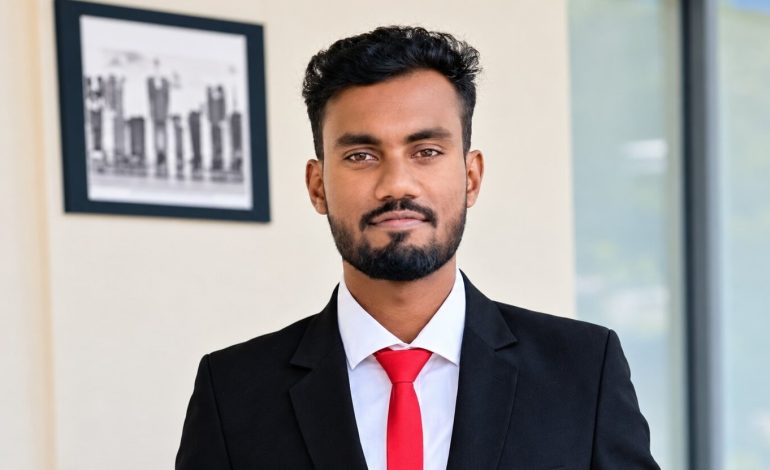
Anojan Sivarasa. (Viral photo via Facebook.)

New Delhi: Saudi Arabia’s supreme court has overturned the death sentence imposed on Sri Lankan migrant worker Anojan Sivarasa, 24, over a Facebook comment deemed insulting to Islam and the Prophet Muhammad, Sri Lankan authorities announced on Wednesday. The decision follows diplomatic intervention and a legal appeal supported by Colombo, although it remains unclear whether his original prison sentence still stands or whether he can return home.
The ruling was delivered on Tuesday, according to a Sri Lankan foreign ministry statement reported by the country’s media outlet Newswrire. The announcement reverses the capital punishment imposed during appellate proceedings in September, but does not establish that Sivarasa has been acquitted or released.
The deputy foreign minister of Sri Lanka, Arun Hemachandra, welcomed the outcome and credited sustained diplomatic and legal efforts by his government. In a statement carried by the Daily Mirror, he thanked the Saudi government, Sri Lankan diplomatic officials, the Sri Lanka Bureau of Foreign Employment and lawyers from both countries for their cooperation.
The immediate question is whether the Supreme Court’s decision leaves intact the earlier punishment of five years’ imprisonment and a fine of three million Saudi riyals. Newswire reported, citing diplomatic sources, that the implications for Sivarasa’s conviction and remaining sentence had yet to be confirmed.
The case began with a Tamil-language comment that Sivarasa posted on June 28 in response to a video circulating on Facebook, according to Human Rights Watch. A family member told the organization that screenshots reached his employer and Saudi authorities despite his deleting the comment and subsequently publishing a video apology.
Sivarasa was arrested on July 1, and the criminal court in Al-Ahsa sentenced him on July 27 to five years in prison and the substantial fine, equivalent to approximately $800,000. Human Rights Watch said court documents it reviewed also recorded orders to confiscate his electronic device and close his Facebook account.
Both the prosecution and Sivarasa’s lawyer appealed against the initial judgment, after which the punishment escalated to a death sentence. Human Rights Watch and Amnesty International date the capital sentence to September 17, 2026, although some subsequent Sri Lankan reporting refers to an appellate ruling on September 21.
The distinction between the original prosecution and the subsequent death sentence is central to understanding the case. The initial punishment was imposed under Saudi Arabia’s anti-cybercrime legislation, while Amnesty said the appellate court-imposed death as a “hadd” punishment – a penalty treated as fixed under its interpretation of Islamic law.
The official text of Saudi Arabia’s anti-cybercrime law, published by the Saudi bureau of experts at the council of ministers, provides for up to five years’ imprisonment, a fine of up to three million riyals, or either penalty under Article 6 of the law. Among the activities covered is producing, transmitting or storing online material considered prejudicial to public order, religious values, public morals or privacy; the article itself does not prescribe capital punishment.
Sri Lanka pursued the case through diplomatic channels alongside the judicial challenge, with its foreign ministry confirming its involvement on September 18. The ministry said its embassy in Riyadh was coordinating with the Saudi embassy in Colombo and engaging the relevant Saudi authorities to protect Sivarasa’s interests.
A Sri Lankan legal delegation subsequently travelled to Saudi Arabia to support the appeal filed before the Supreme Court on October 11. The Daily Mirror identified its members as Azad Navavi, Faizer Mustapha, Upul Kumarapperuma and Hafeel Farisz, working alongside Sri Lankan diplomatic representatives and Saudi lawyers.
The Sri Lankan ambassador to Saudi Arabia, OL Ameer Ajwad, had also visited Sivarasa at Dammam Central Prison on October 8, according to an official embassy statement. Ajwad discussed his needs and concerns, provided contact details for direct communication and reaffirmed the embassy’s commitment to consular and legal assistance.
The embassy said the ambassador found Sivarasa in good health and met the prison director and doctor to discuss his welfare. Its statement, published on October 10, also confirmed that the mission was assisting with the Supreme Court appeal.
Before the reversal, Amnesty had questioned the fairness of the proceedings, saying Sivarasa lacked access to a lawyer between his arrest and initial sentencing. It argued that an allegedly offensive comment should not attract imprisonment or execution and said international human rights standards restrict capital punishment to crimes involving intentional killing.
Sri Lankan political representatives welcomed the latest decision while stressing that further legal steps remained necessary. The opposition lawmaker, Shanakiyan Rasamanickam, said efforts would continue until Sivarasa could safely return to Sri Lanka and reunite with his family, following completion of the required procedures.



