Saudi-backed Yemen government launches offensive as Houthis tighten grip around Taiz
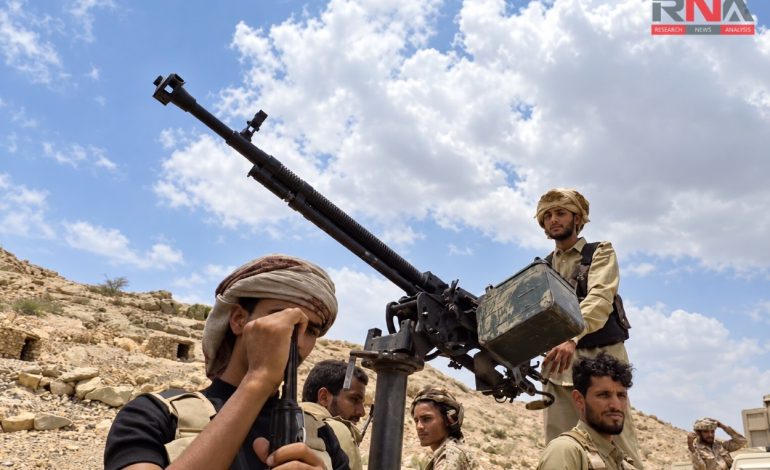
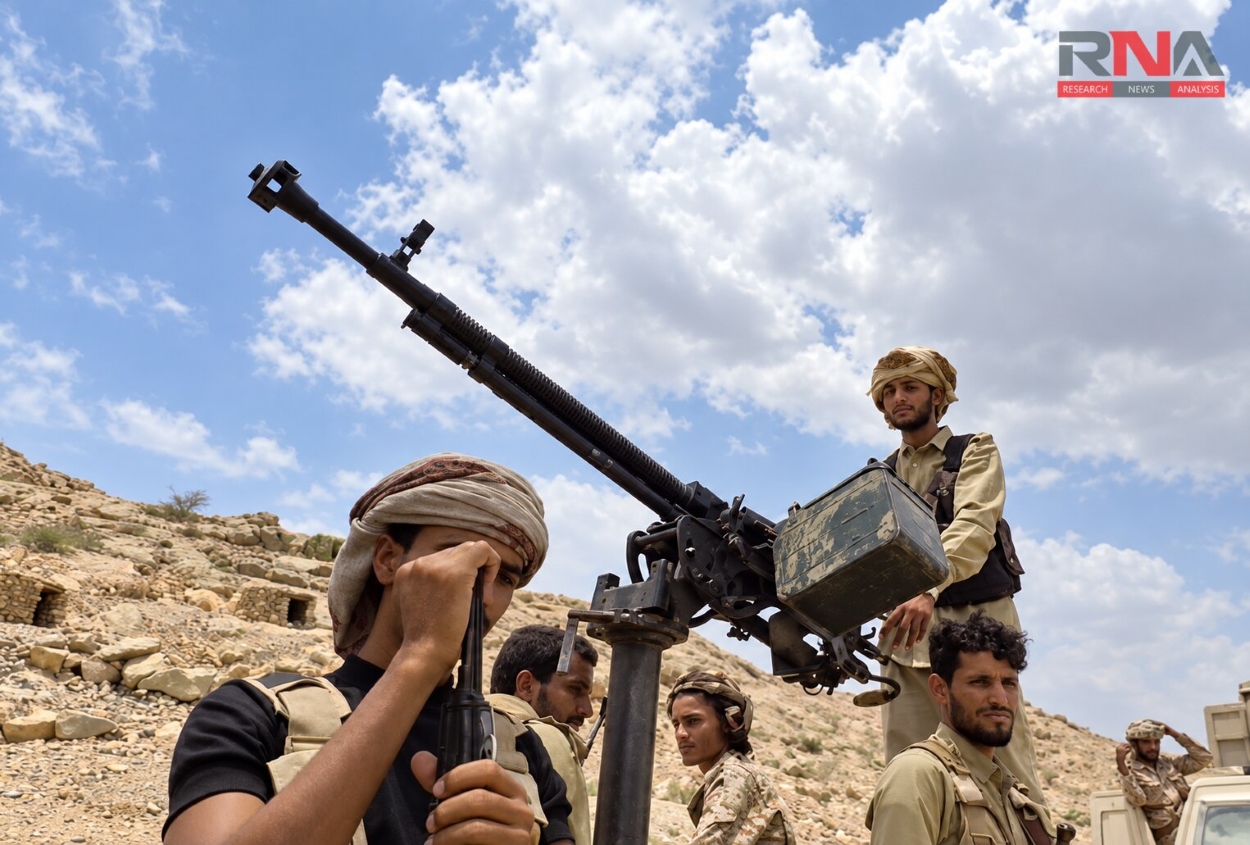
This digitally enhanced screenshot of a widely circulated video clip on social media shows Houthi fighters with one of them manning an anti-aircraft gun.

New Delhi: Yemen’s internationally recognized government has announced a military campaign to recover Houthi-held territory, escalating the conflict as its opponents advance around the strategically important city of Taiz. The chairman of the presidential leadership council, Rashad al-Alimi, announced the operation on Saturday, pledging to restore government authority across the country.
Alimi ordered armed forces, security units and allied formations to implement approved battle plans, saying opportunities to reduce tensions had been exhausted. The declaration sets a nationwide objective, although the government must first contend with Houthi gains that threaten its remaining positions and supply routes in southwestern Yemen.
Saudi Arabia subsequently pledged operational backing for government forces, reinforcing its commitment to a campaign with consequences for both Yemen’s internal balance of power and regional maritime security. The Saudi-led coalition’s spokesman, Major General Turki al-Maliki, said support would continue until state institutions were restored and Houthi control ended, according to DD News.
The announcement came as the Houthis captured Turbah, a town on the principal road connecting Taiz with Aden, the government’s interim seat. Associated Press reported that its fall followed advances through villages and other positions around Taiz, increasing the pressure on Yemen’s third-largest city.
Security sources separately told AFP that Houthi fighters had occupied the al-Safiya area and interrupted traffic on the Taiz-Aden supply route. Taiz itself remained under government control, but the loss of access from the south threatened to complete its isolation after years of pressure from other directions.
Fighting in Taiz province and neighbouring Lahj killed more than 70 combatants over the preceding day, according to figures supplied to AFP by sources on both sides. Government sources reported 34 military deaths, while Houthi sources put their losses at 39; these battlefield figures were not independently verified.
Accounts of the counteroffensive’s early progress remain contested, making it difficult to establish whether the announcement has translated into a sustained reversal of Houthi gains. Government-affiliated Saba reporting described successful resistance to attacks across several Taiz districts, while Houthi sources disputed claims of advances towards Dhubab, another strategically important town.
The Houthis also said they had fired missiles and drones at Saudi Aramco installations in Riyadh and Khurais, claiming retaliation for Saudi-led strikes in Yemen. Saudi Arabia had not immediately confirmed the alleged damage, leaving the scale and outcome of those attacks uncertain.
The wider military stakes centre on the Bab al-Mandab strait, where September’s Houthi advances brought Mokha and several Red Sea islands under their control. Those gains strengthened the movement’s position along the Yemeni side of a maritime passage connecting the Red Sea with the Gulf of Aden.
Before Alimi’s announcement, Reuters reported on Saudi preparations for either a concentrated coastal operation or attacks across multiple fronts. Officials described Yemeni ground forces supported by Saudi air power and US intelligence, while cautioning that the effectiveness of the campaign would depend on a fragmented coalition of local forces.
The announcement therefore leaves an important question unresolved: whether the immediate military effort will concentrate on reopening coastal and inland supply corridors or pursue the much broader goal of defeating Houthi rule. For India and other trading economies, instability along this route also raises concerns about shipping reliability, insurance costs and the movement of goods between Asia and Europe.
Yemen’s present conflict dates to the Houthis’ seizure of Sanaa in 2014, followed by Saudi-led military intervention in support of the government in March 2015. A UN-brokered truce in April 2022 substantially reduced violence but did not produce a comprehensive political settlement.
The presidential leadership council was itself established in April 2022, when the then president, Abdrabbuh Mansur Hadi, transferred his powers to the new collective leadership. The arrangement brought a broader range of political actors into the government, although translating that political structure into unified military action remains a central challenge.
For civilians, the renewed fighting is worsening an already severe food emergency, particularly where roads, markets and aid deliveries have been disrupted. In an October 2 assessment, the World Food Programme said 74 per cent of households in accessible government-held areas could not meet their basic food needs, while renewed violence had displaced more than 149,000 people.
The agency also reported that wheat flour prices had risen by 10 per cent within two weeks in parts of Taiz, with conflict preventing assistance from reaching approximately 350,000 people across parts of Taiz and Hodeidah. Yemen imports around 90 per cent of its food, making further disruption to roads, ports and shipping routes a direct threat to household survival.