
US-China negotiators set for final talks ahead of Trump-Xi summit; tariffs, AI, rare earths on agenda
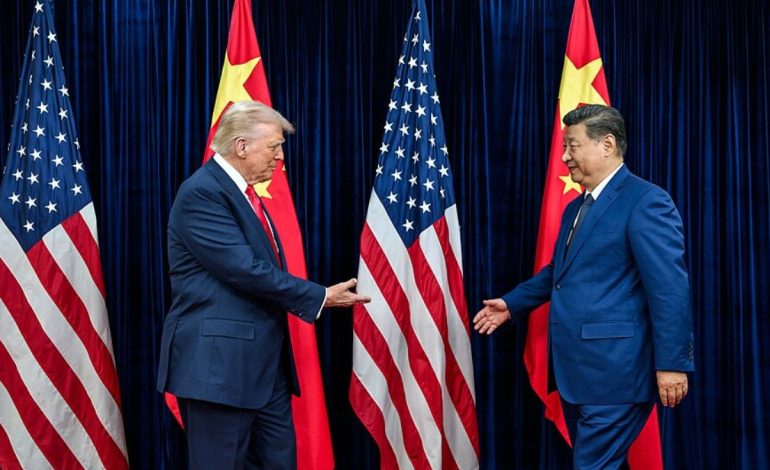
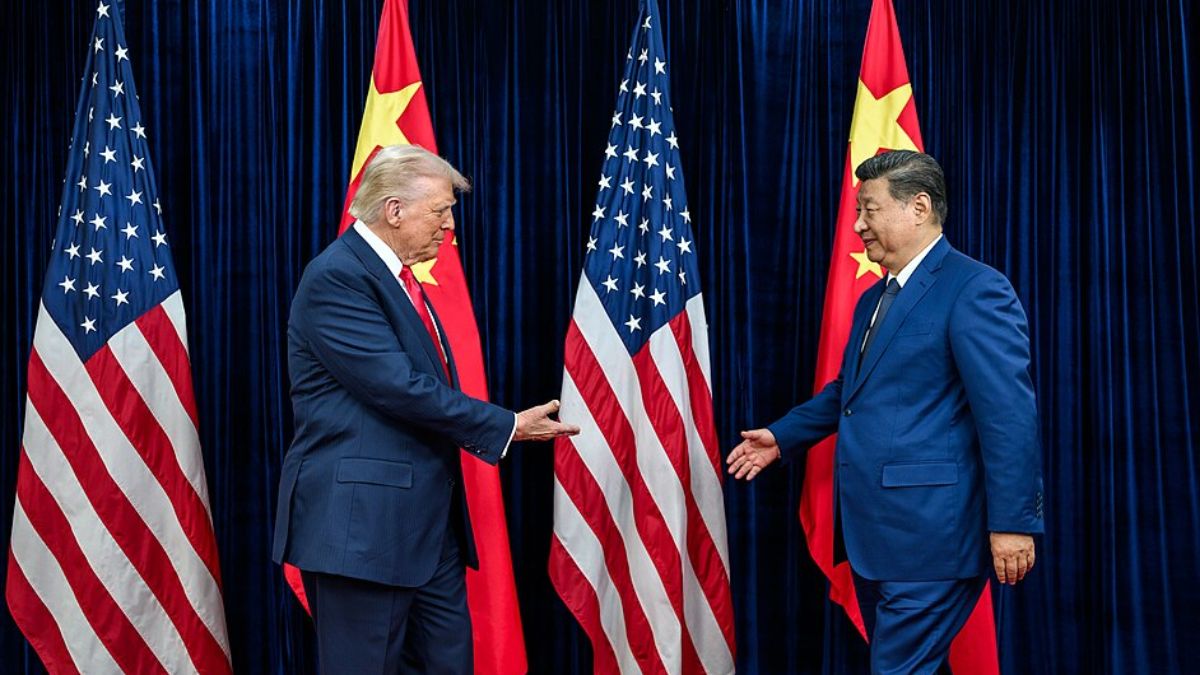
Donald Trump and Xi Jinping during an earlier meeting. Image courtesy: Wikimedia Commons.

New Delhi: Senior US and Chinese economic officials are set to hold a final round of preparatory negotiations in New York on Sunday, ahead of the US president, Donald Trump’s, meeting with the Chinese president, Xi Jinping, in Washington on Thursday. Tariffs, market access, rare earths, artificial intelligence and other unresolved economic issues are expected to dominate the talks.
The US treasury secretary, Scott Bessent, and the US trade representative, Jamieson Greer, will meet the Chinese vice premier, He Lifeng, on Sunday. He is leading a Chinese delegation to the US from September 19 to 23, with Beijing saying the two sides will discuss economic and trade issues of mutual concern.
Trade remains at the centre of the negotiations. Greer said Washington would focus on implementation of recent commitments, trade in non-sensitive goods, and improved market access for American farmers, manufacturers and workers. Reuters reported earlier that the two sides were working on reciprocal tariff cuts covering about $30 billion in trade.
RNA Media reported earlier that some Chinese rare-earth suppliers had halted shipments to US customers despite holding export licences, underscoring continuing uncertainty over critical-mineral supplies ahead of Xi’s Washington visit.
The existing tariff arrangement is due to expire on November 10 this year. Under the deal reached last year, the US suspended its heightened reciprocal tariffs on Chinese imports while retaining a 10 per cent reciprocal tariff, and China made commitments covering rare earths, critical minerals, agricultural purchases and retaliatory trade measures.
Artificial intelligence is emerging as another negotiating track. Reuters reported, citing a source familiar with Bessent’s plans, that the New York discussions were expected to cover AI safety, open-weight models and safeguards against misuse.
Iran is also expected to feature when Trump and Xi meet. Reuters reported that Washington viewed Beijing as capable of exerting influence on Tehran, while Bessent has said discussions would continue over China’s financial ties with Iran. China, meanwhile, has urged Iran and the US to exercise restraint, resume substantive negotiations and help restore safe passage through the Strait of Hormuz.
Another point of friction is the new US sanctions law signed by Trump on Friday, which gives Washington sweeping tariff powers against major purchasers of Russian oil and gas. China’s Ministry of Commerce on Saturday opposed unilateral and secondary sanctions, saying its normal trade with other countries should not be subject to third-party interference.
The legislation also matters for India, one of the world’s largest buyers of Russian crude and among the countries potentially exposed to the tariff provisions. New Delhi has said its energy sourcing will continue to be guided by national interest and energy security, while any changes in US-China tariffs or rare-earth supplies could also affect wider global supply chains.