Gen Dhiraj Seth begins 3-day Russia visit as New Delhi and Moscow expand defence-industrial cooperation
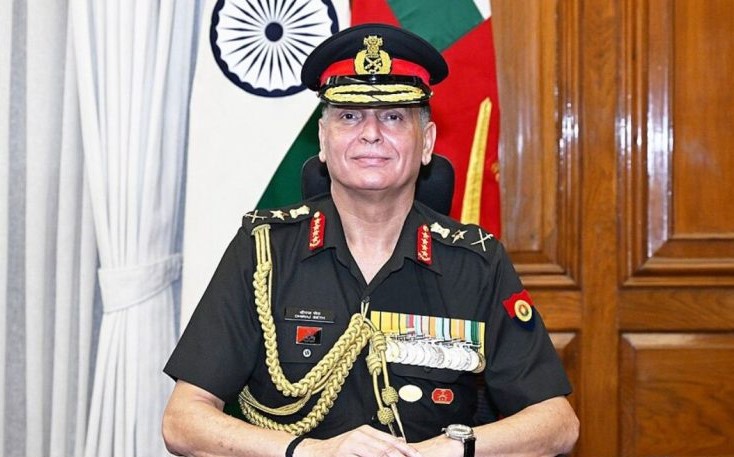
General Dhiraj Seth. (File photo)

New Delhi: The chief of the Army staff, General Dhiraj Seth, started a three-day official visit to Russia on Wednesday. This visit comes at a time when New Delhi and Moscow are seeking to expand their defence cooperation through technology transfer, joint development and manufacturing in India.
The visit – from September 16 to 18 – is expected to provide an opportunity for senior military-level discussions on bilateral defence ties and the future direction of military-technical cooperation between the two countries.
According to a Ministry of Defence release, during the visit, the Army chief will receive a ceremonial guard of honour and pay tribute to the fallen soldiers at ‘Tomb of the Unknown Soldier’ at Moscow. He will be holding discussions with Colonel General Andrei Nikolayevich Mordvichev, commander in chief of the Russian Land Forces, on issues of mutual interest, including professional military cooperation and training.
Gen Seth will be visiting the National Defence Control Centre in Moscow and interact with senior officials of the Russian defence ministry, including the country’s deputy defence minister, Vasily Sergeyevich Osmakov, who deals with the Russian defence industry and procurement. The engagements will provide an opportunity to exchange perspectives on contemporary military developments and avenues for enhancing defence cooperation.
As part of the visit, Gen Seth will also travel to Saint Petersburg, where he will visit the Mikhailovskaya Military Artillery Academy and interact with its leadership and faculty.
This is his second overseas engagement since taking charge of the Indian Army. The visit follows Gen Seth’s four-day trip to Nepal in August, where he met senior Nepali political and military leadership and discussed ways to expand defence cooperation between the two countries.
During that visit, Nepal’s president, Ramchandra Paudel, conferred on him the honorary rank of general of the Nepali Army, continuing the longstanding reciprocal military tradition between India and Nepal.
His Russia visit comes at a time when the India-Russia defence relationship is undergoing a gradual shift from its traditional buyer-seller character towards greater emphasis on co-development, co-production and localization. The two sides have in recent years sought to expand cooperation in areas where Russian technologies and Indian manufacturing capabilities can be combined to strengthen domestic production and reduce dependence on imports.
The direction of this partnership was reaffirmed at the 23rd India-Russia Annual Summit, where the two governments said military and military-technical cooperation would increasingly focus on joint research and development, co-development and co-production of advanced defence technologies and systems. They also agreed to promote manufacturing in India of spare parts, components and other equipment for Russian-origin platforms through technology transfer and joint ventures.
That evolution is particularly significant for the Indian Army, which operates a large inventory of Russian-origin platforms and systems. T-90 tanks and other equipment form an important part of the Army’s combat inventory, making reliable access to spares, components, maintenance support and technology for upgrades an important element of India’s military preparedness.
The broader defence relationship also extends well beyond the Army. India and Russia have a long record of cooperation involving the Su-30MKI fighter programme, BrahMos, the T-90 tank and other major systems, while the two countries have increasingly explored ways to manufacture and maintain Russian-origin equipment in India.
For New Delhi, the emphasis on localization has a strategic dimension that goes beyond individual procurement programmes. Greater domestic manufacturing of components and spares can strengthen supply-chain resilience, reduce turnaround times for repairs and upgrades, and build Indian industrial capacity around platforms that are likely to remain in service for many years.
The relationship is also being shaped by a changing geopolitical environment. India continues to maintain strategic ties with Moscow while simultaneously expanding defence partnerships with the United States, France, Israel and other countries, making diversification of military suppliers compatible with the continued importance of Russian-origin equipment to India’s armed forces.
Gen Seth’s visit therefore comes against a wider effort to preserve the operational advantages of the established India-Russia military relationship while adapting it to India’s growing emphasis on self-reliance. The challenge for both sides will be to translate longstanding defence ties into deeper technology access, reliable production arrangements and greater value addition in India.
The visit also follows a period of sustained high-level engagement between the two countries. India and Russia have continued to use the India-Russia Intergovernmental Commission on Military and Military-Technical Cooperation as the principal institutional mechanism for managing defence cooperation, with military contacts and the Indra exercises remaining important components of the relationship.
For Gen Dhiraj Seth, who assumed office as the 31st chief of the Army staff on June 30, the Russia trip will thus be an early opportunity to engage directly with one of India’s most consequential longstanding defence partners. The significance of the visit will ultimately depend less on individual announcements than on whether it helps move the relationship further towards technology-enabled manufacturing and sustained industrial cooperation in India.