


HAL readies first HTT-40 trainers for IAF after engine delays
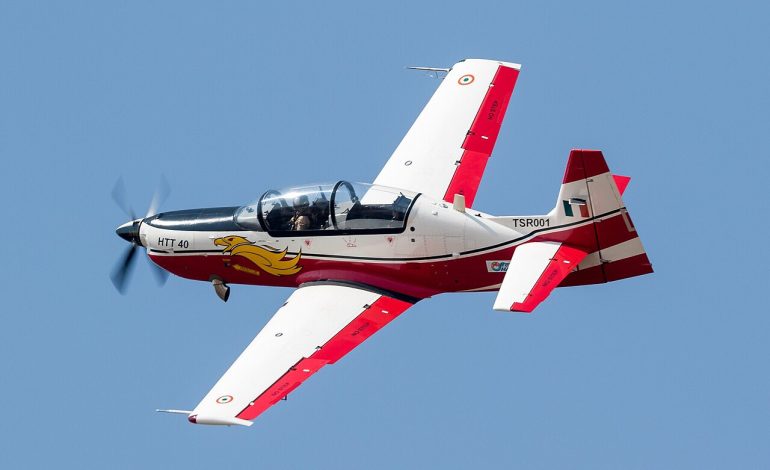
An HAL HTT-40. (Photo: X/@IAF_MCC)

New Delhi: Hindustan Aeronautics Limited (HAL) is preparing to hand over its first HTT-40 basic trainers to the Indian Air Force (IAF), following delays caused by engine shortages. Three aircraft − two manufactured in Bengaluru and one in Nashik − are ready for delivery, according to officials.
The prospective handover would begin fulfilling an order for 70 aircraft intended to strengthen the Air Force’s capacity to train newly recruited pilots. The defence ministry signed the procurement contract on March 7, 2023, following cabinet approval for the acquisition at a cost exceeding ₹6,800 crore.
HAL had been expected to supply 12 trainers during the 2025–26 financial year but delivered none because engines were unavailable. Supply chain difficulties at the US manufacturer, Honeywell, held up the programme despite the establishment of aircraft production facilities in India.
Honeywell subsequently confirmed in a statement dated June 11, 2026, that it had delivered three TPE331-12B turboprop engines for the HTT-40 programme. The statement also quoted HAL expressing confidence that subsequent engine deliveries would remain on schedule.
The engine arrangement provides for Honeywell to supply the first 16 units, after which HAL will undertake local assembly and expand its repair and overhaul capabilities. This is intended to build domestic support capacity for the trainer fleet, alongside production of the aircraft themselves.
The defence minister, Rajnath Singh, inaugurated HAL’s second HTT-40 production line at Nashik on October 17, 2025, together with its third Tejas-Mk1A production line. The trainer programme has a planned annual output of 20 aircraft across Bengaluru and Nashik, although achieving that rate will depend on sustained component supplies.
For the Air Force, the HTT-40 will add capacity at the opening stage of military flying instruction, before pilots specialize in fighter, transport or helicopter operations. Initial flying training currently takes place on Swiss-origin Pilatus PC-7 MkII aircraft, with trainees subsequently moving into their respective streams.
Designed and developed by HAL’s Aircraft Research and Design Centre, the HTT-40 is a tandem-seat turboprop aircraft equipped with a glass cockpit, modern avionics and ejection seats. Its training roles include basic aircraft handling, aerobatics, instrument flying, close formation flying and navigation, giving students a foundation for more advanced instruction.
The procurement also includes simulators and associated training equipment, allowing pilots to practise flight profiles on the ground before undertaking sorties. At the time of contracting, the defence ministry put the aircraft’s indigenous content at approximately 56 per cent, with plans to raise it above 60 per cent through the indigenization of components and subsystems.