

Former CDS Anil Chauhan warns Pakistan will remain security threat, calls for broader engagement with China
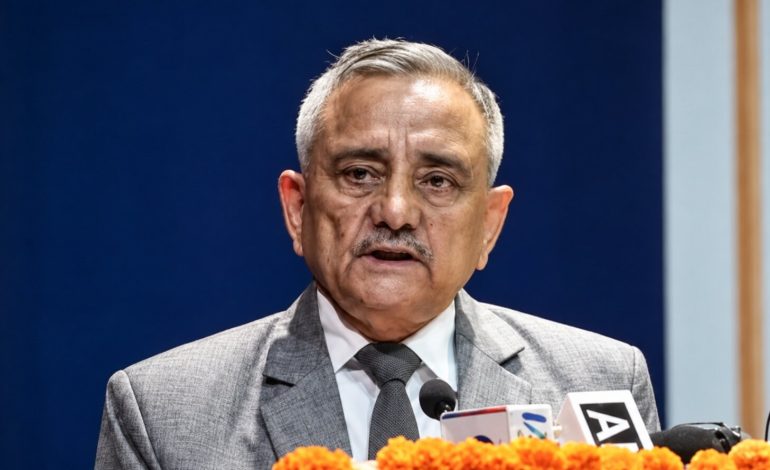
CDS Anil Chauhan.

New Delhi: Pakistan will remain a major security concern and a potential threat to India for the foreseeable future, the former chief of defence staff, General Anil Chauhan, has warned, pointing to Islamabad’s continued reliance on terrorism and proxy warfare. China, by contrast, represents a broader and more enduring strategic challenge, although bilateral ties cannot remain hostage solely to the unresolved boundary dispute, he said.
Delivering the 22nd Govind Ballabh Pant Memorial Lecture at Teen Murti Bhawan in New Delhi on September 5, Chauhan outlined an increasingly complex external-security environment shaped by unsettled borders, cross-border terrorism, non-state actors and competition in the maritime, cyber and space domains. He argued that these pressures were interconnected and could no longer be assessed or countered in isolation.
Chauhan described Pakistan as a “major security concern and a threat for times to come”, saying its nuclear weapons had produced what strategic theorists call the “stability-instability paradox”. Under this formulation, nuclear deterrence reduces the likelihood of an all-out conventional war but encourages lower-level aggression because the aggressor calculates that its nuclear arsenal will deter major retaliation.
Pakistan, he said, had consequently tried to narrow India’s room for conventional military action while expanding the space for terrorism, cross-border attacks and other sub-conventional operations. Non-state groups offered Islamabad plausible deniability, lowered the apparent cost of aggression and provided a means of creating political and communal disruption inside India.
Destroying or weakening one terrorist organization would not eliminate the larger problem because its supporting ecosystem – including ideology, recruitment, financing, training, propaganda and state patronage – could regenerate the network, Chauhan cautioned. India should therefore assume that terrorism and proxy warfare would remain persistent challenges rather than temporary security problems.
The answer, he said, lay in establishing credible deterrence across the conflict spectrum and demonstrating that sponsoring terrorism would carry substantial costs. He cited India’s cross-border strikes after the Uri terrorist attack in 2016, the Balakot airstrikes in 2019 and Operation Sindoor in 2025 as successive attempts to alter Pakistan’s calculations.
Chauhan, who was CDS during Operation Sindoor, said the military campaign, India’s decision to hold the Indus Waters Treaty in abeyance and other practical measures could help induce behavioural change in Pakistan. However, deterrence would have to be sustained because terrorist infrastructure could be rebuilt even after individual groups or facilities had been degraded.
The former CDS also flagged the risk arising from Pakistan’s expanding network of defence partnerships, warning that such arrangements could foster overconfidence in Islamabad and encourage another strategic miscalculation. His comments appeared to refer principally to the Makkah Joint Defence Agreement signed by Pakistan, Saudi Arabia and Türkiye on August 7.
The agreement treats an armed attack on any of the three signatories as an attack on all and is intended to strengthen collective deterrence, although its publicly released provisions do not specify the precise military obligations of each member. The pact brings together Saudi financial resources, Türkiye’s powerful conventional military and defence industry, and nuclear-armed Pakistan’s armed forces, giving it significance well beyond its immediate West Asian setting. India is closely monitoring the development.
Turning to China, Chauhan characterized the northern neighbour as an “absolutely different”, comprehensive and long-term challenge for India. The boundary remains unresolved, and the two countries do not even share a mutually accepted definition of the Line of Actual Control, leaving substantial stretches vulnerable to competing territorial perceptions.
Infrastructure construction, forward military deployments and the induction of technological force multipliers on both sides could increase the possibility of friction and escalation, he said. Maintaining stability along the frontier would consequently require vigilance, credible military capabilities, clearly framed agreements and consistent adherence to those understandings.
At the same time, Chauhan said India’s relationship with China “cannot be held hostage to only boundary issues”, noting that the two civilizational states and major Asian economies cooperate in some areas while competing in others. Continued engagement was therefore necessary through multilateral institutions such as BRICS and the Shanghai Cooperation Organisation, with the wider trajectory of Asia likely to depend heavily on how New Delhi and Beijing manage their simultaneous rise.
His formulation did not dismiss the seriousness of the boundary dispute but placed it within a wider relationship involving trade, climate negotiations, multilateral diplomacy and competition for influence across the Indo-Pacific. It also reflected the practical need to maintain political and military communication without allowing engagement in other fields to weaken India’s position on border security.
Chauhan welcomed recent moves to establish additional military hotlines and expand senior commander-level consultations in the eastern and middle sectors of the India-China frontier. The measures followed talks in Beijing on August 25 between the national security adviser, Ajit Doval, and the Chinese foreign minister, Wang Yi, acting as the special representatives on the boundary question.
India and China subsequently agreed to create two additional commander-level meeting points, establish two military hotlines and form working groups on boundary delimitation and border management. The two sides also reaffirmed their commitment to maintaining peace and tranquillity while pursuing what they described as a fair and mutually acceptable settlement.
Beyond the two principal neighbours, Chauhan identified instability across India’s immediate neighbourhood and uncertainty in the global order as serious security challenges. With old geopolitical balances weakening before a durable replacement has emerged, he said international partnerships were becoming increasingly transactional and issue-specific.
A country could be a trading partner in one domain, a technological competitor in another and a security partner in one theatre while holding opposing positions elsewhere, he observed. India, he concluded, must prepare for multiple contingencies simultaneously, strengthen self-reliance and preserve the military, economic and technological capacity needed to act independently.