

Chinese rare earth suppliers halt some US shipments as critical-minerals dispute shadows Xi visit
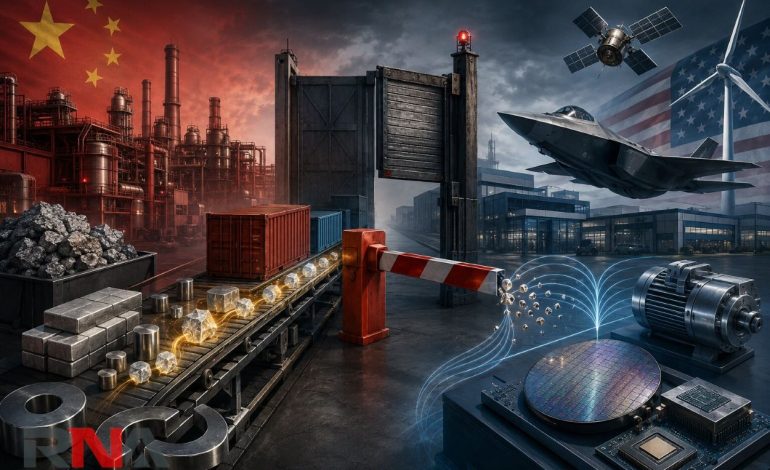
RNA Media illustration for representation.

New Delhi: Some Chinese rare earth suppliers have stopped accepting or fulfilling orders from US customers because they fear regulatory action by Beijing, according to people familiar with the trade. The disruption has emerged despite some exporters holding valid licences, exposing the continuing fragility of critical-mineral supply chains ahead of the Chinese president, Xi Jinping’s, planned visit to Washington on September 24.
A small number of suppliers began withholding shipments in early August after China sanctioned the Responsible Business Alliance, a US-based organization that monitors corporate supply chains, Reuters reported. Exporters were reportedly concerned that following audit requirements associated with the alliance’s Responsible Minerals Initiative could bring them into conflict with Chinese authorities.
Other producers had withdrawn from US business earlier, seeking to avoid becoming entangled in the wider strategic contest between Beijing and Washington. In at least four cases, Chinese companies reportedly rejected orders because of concerns that the materials could ultimately be resold or transferred to entities barred by Beijing.
The full scale of the stoppage remains unclear, and there has been no formal announcement of a blanket suspension by China. The development instead points to an informal layer of commercial caution in which export approvals do not necessarily guarantee that a Chinese supplier will proceed with a transaction.
Washington has repeatedly pressed Beijing to honour commitments made during negotiations in Busan and Beijing to ensure the smoother movement of rare earths and related products. The issue is now expected to figure in preparatory discussions for Xi’s visit because licence delays and uncertain deliveries continue to affect American manufacturers.
The United States said after the 2025 trade agreement that China would issue general export licences covering rare earths, gallium, germanium, antimony and graphite for US end users and their overseas suppliers. Beijing also suspended for a year a broader package of controls announced in October 2025, but earlier restrictions imposed in April that year continued to affect seven rare earth elements and their derivatives.
Shipments of several rare earths and permanent magnets have recovered since the initial restrictions, but supplies of yttrium, tungsten and indium phosphide remain tight and prices are close to record levels. These materials are used in fighter aircraft, precision weapons, jet-engine coatings, semiconductors, satellites, medical equipment and energy systems, making interrupted supplies an economic as well as a national-security concern.
Chinese customs figures indicate that yttrium exports to the United States have increased during 2026 but remain at roughly half their 2024 level, while some American companies have reportedly waited more than six months for export licences. China shipped 27 tonnes of yttrium to the United States in July after recording no deliveries during the preceding two months, suggesting that supplies can change sharply with the political climate.
India and Japan appear to be facing even greater difficulty securing approvals, according to people familiar with the licensing process. China exported no terbium to Japan between January and August 2026, compared with 20 tonnes in the corresponding period of 2025, while its gallium shipments fell 65 per cent and yttrium deliveries plunged 98 per cent.
For India, the disruption highlights the strategic importance of accelerating domestic mining, separation, refining, recycling and magnet-manufacturing capacity rather than relying primarily on unprocessed mineral resources. New Delhi has been expanding cooperation with partners such as Australia, Japan and the United States, but establishing an integrated mine-to-magnet industry will require sustained investment, advanced separation technology and assured commercial demand.
China says it remains committed to maintaining stable global critical-mineral supply chains and has described its sanctions against American auditing organizations as retaliation for US restrictions on Chinese technology companies and testing laboratories. Beijing has argued in discussions with Washington that some US measures violated the existing trade understanding, while American officials maintain that China has not fully implemented its own commitments. The dispute illustrates how rare earths have become a source of geopolitical leverage even without a formally declared export ban. A CSIS assessment found that Chinese shipments have remained volatile and licensing uneven, leaving defence, aerospace, semiconductor and automotive manufacturers exposed while alternative supply chains take years to develop.