
Putin claims 270 sq km Donetsk gain as Russia presses Ukraine’s ‘fortress belt’; Kyiv reels under seven-day air assault
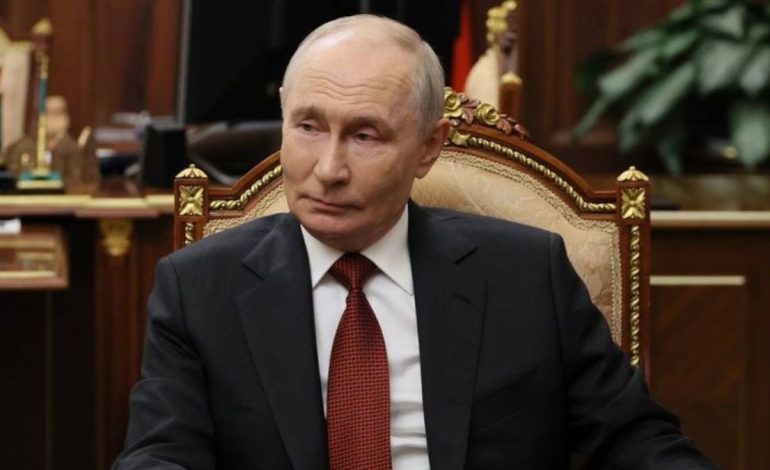
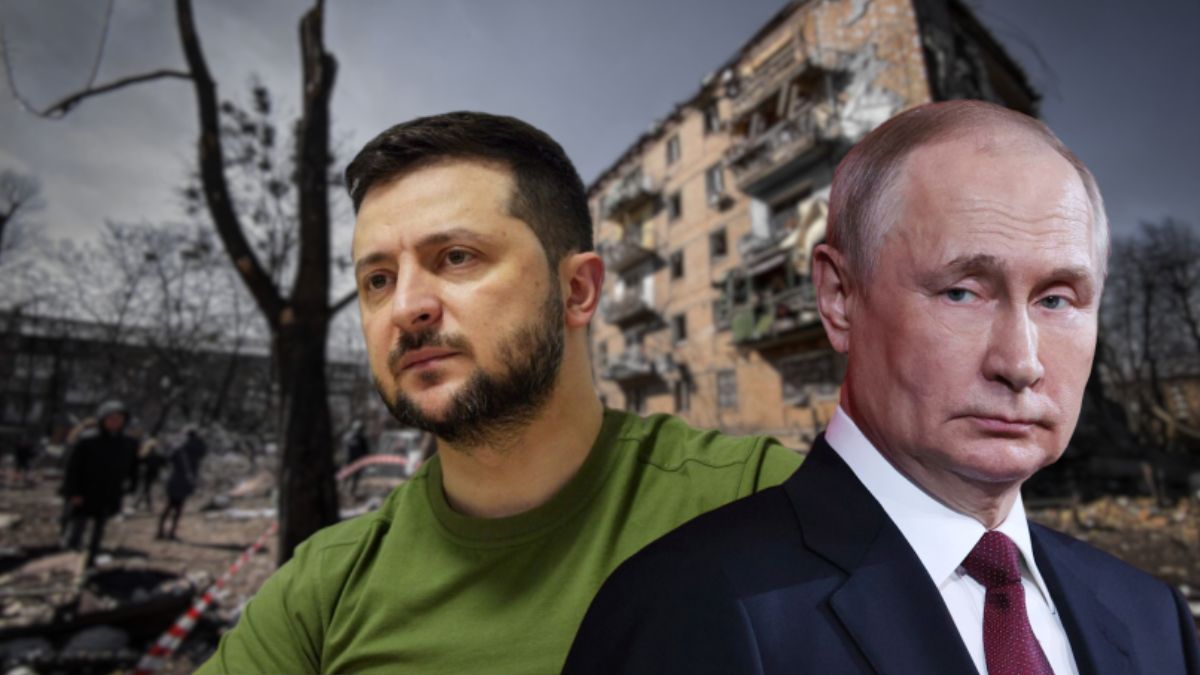
Vladimir Putin. (Photo: Kremlin/Handout)

New Delhi: The Russian president, Vladimir Putin, has claimed that Moscow’s forces captured 270 square kilometres of Ukraine’s Donetsk region in August, presenting the advance as evidence that Russia is gaining momentum on the battlefield. The claim comes as fighting intensifies around Ukraine’s remaining strongholds in northern Donetsk, even as Kyiv and independent battlefield assessments contest Moscow’s account of the pace of Russian gains.
Speaking at a news conference after the Shanghai Cooperation Organization summit in Bishkek, Kyrgyzstan, on Tuesday, Putin said Russian troops were advancing towards Sloviansk and Kramatorsk, two cities at the heart of Ukraine’s remaining defensive network in Donetsk.
He also claimed that two sizeable groups of Ukrainian troops had been surrounded, one numbering between 4,500 and 4,800 soldiers and another comprising as many as 2,000. Some western media said they could not independently verify either the territorial or encirclement claims.
The more significant element of Putin’s statement is where Moscow says its forces are heading. Sloviansk and Kramatorsk form part of Ukraine’s heavily defended chain of cities in Donetsk, sometimes described as its “fortress belt”. Breaking that defensive network would bring Russia substantially closer to its longstanding objective of controlling the entire Donetsk region.
Independent battlefield analysis, however, paints a considerably more cautious picture of Russian progress. The Institute for the Study of War (ISW) assessed that Russian forces seized or consolidated positions across about 90.35 square kilometres of Ukrainian territory in August. When areas of Russian infiltration are included, the figure rises to about 123.53 square kilometres.
Both estimates are well below Putin’s claim of 270 square kilometres in Donetsk alone. ISW said Russia’s rate of advance increased marginally during August but assessed that Moscow’s spring-summer offensive had still failed to produce an operational breakthrough or rapidly collapse Ukrainian defensive lines.
The gap between the figures illustrates one of the persistent difficulties in assessing the war. Russia and Ukraine regularly publish battlefield claims that cannot immediately be independently verified, while control of villages, tree lines and urban positions can remain contested for prolonged periods.
Why Sloviansk and Kramatorsk matter
Russia’s principal military objective in eastern Ukraine remains the capture of the remainder of Donetsk. Moscow already controls large parts of the region, but several major Ukrainian defensive positions remain outside Russian control. The fighting around Kostiantynivka, Sloviansk and Kramatorsk are therefore becoming increasingly important.
ISW said Russia’s principal territorial gains in August were concentrated around Ukraine’s fortress-belt area in Donetsk. Even there, however, it assessed that Russian forces had achieved only marginal tactical advances and had failed to completely seize Kostiantynivka despite months of infiltration and urban fighting.
Russian troops are also reported to be moving closer to Sloviansk. Vadym Lyakh, the head of the city’s military administration, has said Russian forces are about seven to 10 kilometres from the city in some areas, placing Sloviansk within range of conventional tube artillery, according to ISW.
Russian forces have also reportedly reinforced the Sloviansk axis as Moscow attempts to increase pressure on Ukraine’s remaining defensive positions in northern Donetsk. Yet the advance remains costly and incremental rather than resembling the rapid manoeuvre warfare seen during some earlier phases of the conflict.
ISW, citing figures released by the Ukrainian general staff, said Ukraine claimed Russian forces suffered 42,020 personnel casualties in August. It was the second consecutive month in which Kyiv claimed Russian losses exceeded 40,000.
Russian casualty figures released by Ukraine cannot be independently verified, while Moscow does not provide comparable current battlefield loss data.
Ukraine, meanwhile, has continued counteroffensive operations of its own.
ISW assessed that Ukrainian forces recovered at least 129.81 square kilometres during August, particularly during operations in the Lyman and Oleksandrivka directions. It described the estimate as conservative, saying additional evidence could eventually show greater Ukrainian gains around Lyman.
That follows an earlier Ukrainian claim that its forces had retaken about 700 square kilometres by late July this year.
The competing advances underline the fluid nature of the front. Russia continues to press Ukrainian positions in Donetsk, but Moscow has so far failed to convert those gains into the kind of large scale operational breakthrough that could rapidly collapse Ukraine’s defensive network.
Kyiv strikes enter 7th day as drone battle expands
The battle for Donetsk is unfolding alongside a sharp escalation in the air war. Russia subjected Kyiv and the surrounding region to another sustained wave of drone and missile attacks on September 1, marking the sixth consecutive day of intense strikes on the Ukrainian capital.
At least 12 people were killed in Kyiv and the surrounding region, according to Ukrainian authorities. The attacks continued into Wednesday, taking the sustained Russian air assault on the capital into a seventh consecutive day.
The Kyiv mayor, Vitali Klitschko, said seven people were injured after a Russian drone strike partly destroyed a six-storey residential building in the capital. A medical facility was also damaged, while a fire broke out at an educational establishment.
Two more people were injured in the wider Kyiv region, where warehouses and private buildings were damaged, according to Ukrainian authorities.
Russia simultaneously carried out a major missile and drone attack against energy infrastructure in the southern Odesa region. Ukrainian officials said eight people, including a child, were injured in Odesa, while a 24-storey apartment building, office buildings and educational facilities were damaged.
Ukraine’s energy authorities said the strikes left a large number of consumers in the Odesa region without electricity, with power disruptions also reported elsewhere in the country.
The latest attacks follow increasingly sustained Russian use of drones alongside ballistic and cruise missiles.
Ukraine’s air force said Russian forces launched 218 Shahed-type strike drones and decoys overnight from from Monday into Tuesday, about a third of them jet-powered, alongside several types of ballistic, cruise and other missiles.
It said Ukrainian forces downed five ballistic missiles, five Kalibr cruise missiles, two Banderol loitering munitions and 187 drones. The figures are Ukrainian military claims and cannot be independently verified.
ISW said Russia has sharply increased its use of faster jet-powered drones, which are more difficult for Ukrainian forces to intercept than conventional piston-engine variants.
According to figures cited by the institute, Russia launched more than 2,800 jet-powered drones during August, when they accounted for about 56 per cent of its long-range drone launches.
The shift is further complicating Ukraine’s air-defence challenge at a time when Kyiv continues to seek additional Western air-defence missiles, particularly interceptors capable of countering ballistic threats.
Putin has also said Russia is preparing what he described as massive attacks against Ukrainian energy infrastructure, indicating that pressure on Ukraine’s power network could intensify as the conflict moves towards another winter.
The large-scale attack on Odesa’s energy infrastructure on September 2 offered an immediate indication of that continuing pressure.
Ukraine takes drone war deeper into Russia
Ukraine, however, is increasingly attempting to impose comparable economic and military costs inside Russia.
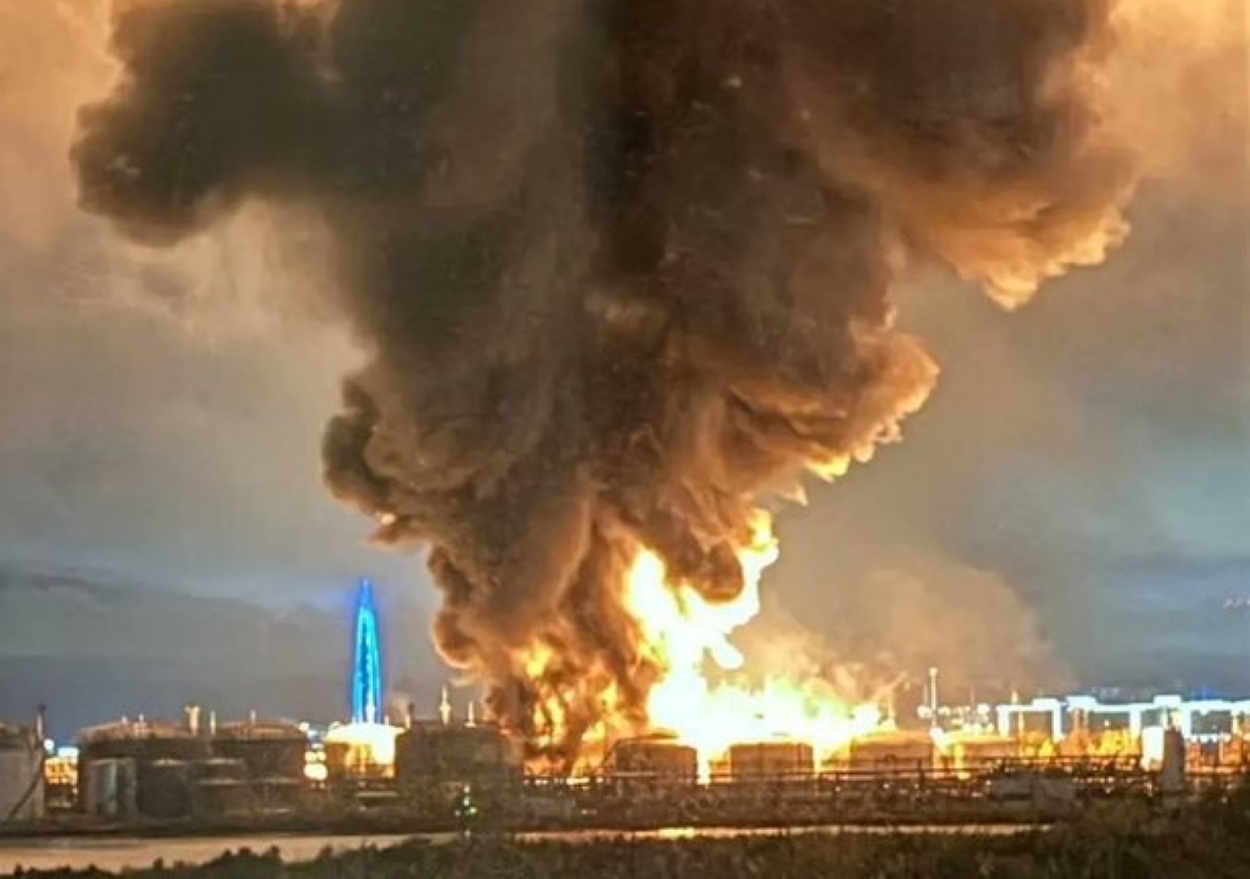
Long-range Ukrainian drones have repeatedly targeted Russian oil refineries, storage facilities and other energy infrastructure, forcing Moscow to divert air-defence assets and disrupting parts of its refining system.
Reuters reported that Russian gasoline production had fallen to roughly 70 per cent of domestic demand by late August after drone attacks forced several refineries to reduce or suspend operations.
Average gasoline output during August was about 90,000 tonnes per day, according to Reuters, while production had fallen to around 80,000 tonnes per day towards the end of the month against estimated summer demand of about 115,000 tonnes.
The disruption has become significant enough for Moscow to impose restrictions on fuel exports in an effort to protect domestic supplies.
Russia has extended restrictions on diesel exports and also maintains controls on overseas sales of gasoline and jet fuel.
The pressure on the Russian energy sector is being felt beyond the refinery system.
Draft Russian government forecasts seen by Reuters show Moscow has cut its projected crude oil production for 2026 to 494.2 million tonnes, or about 9.88 million barrels per day, the lowest projected annual level since 2009.
The revised forecasts reflect the wider economic consequences of the war, including export constraints, European restrictions and disruptions linked to repeated Ukrainian drone attacks on Russian refining infrastructure.
Ukraine has also widened its campaign against other targets inside Russia. Its military intelligence agency said Ukrainian forces struck the Novatek Ust-Luga complex in Russia’s Leningrad region on Tuesdy, claiming that processing equipment was damaged and a large fire broke out. Russian regional authorities separately acknowledged damage in the Ust-Luga port area following a Ukrainian drone attack.
Ukraine’s general staff has also reported strikes on Russian drone storage and launch sites, communications facilities and other military infrastructure in Russian-controlled territory and inside Russia.
The Ukrainian president, Volodymyr Zelenskyy, has sought to portray the expanding campaign as a growing strategic problem for Moscow.
He warned international airlines and insurers on September 1 that the increasing presence of Ukrainian drones was making Russian airspace more dangerous and said those continuing to operate through Russian skies should account for the risks.
Putin has acknowledged that Ukrainian drone attacks have caused damage inside Russia, particularly to oil infrastructure, but has insisted Moscow is improving its defences. He has also rejected reports that the Kremlin is preparing another military mobilization, calling such suggestions “utter nonsense”.
For now, the battlefield presents two contrasting trends. Russia continues to apply pressure against Ukraine’s fortress belt in Donetsk and is intensifying its missile and drone campaign against Ukrainian cities and infrastructure. Ukraine, however, is contesting parts of the frontline while increasingly using long-range strikes to push the economic and military costs of the war deeper into Russian territory.