India holds firm on Indus Waters Treaty after Shehbaz rant, says stance unchanged
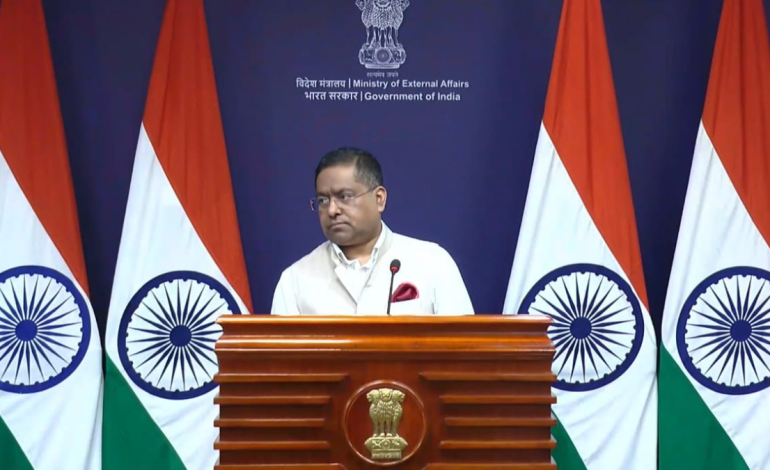
MEA spokesman Randhir Jaiswal. (Image courtesy: X/@MEAIndia)

New Delhi: India on Friday held firm on its decision to keep the Indus Waters Treaty in abeyance, saying its position had not changed after the prime minister of Pakistan, Shehbaz Sharif, warned of a “direct response” over water. New Delhi also reiterated that Jammu & Kashmir is an integral part of India and said any discussion must reckon with Pakistan’s illegal activities in the region.
Responding to questions at a media briefing, the Ministry of External Affairs spokesman, Randhir Jaiswal, said India’s position on the treaty remained unchanged. That position is that the agreement will stay in abeyance until Pakistan “credibly and irrevocably” ends its support for cross-border terrorism.
Sharif, speaking during Pakistan’s Independence Day celebrations, accused India of acting illegally and described the country’s water entitlement as a “red line”. He warned that Pakistan would respond directly unless New Delhi changed course, according to a statement issued by his office.
India placed the treaty in abeyance following the April 22, 2025, terrorist attack at Pahalgam in Jammu & Kashmir, in which 26 people were killed. The decision was announced after a meeting of the cabinet committee on security on April 23, 2025, with New Delhi arguing that the circumstances in which the agreement had operated had fundamentally changed.
Brokered by the World Bank and signed in 1960, the treaty divided the use of the six rivers of the Indus system between India and Pakistan. It had survived wars and prolonged diplomatic ruptures, but New Delhi now maintains that normal treaty cooperation cannot be separated from Pakistan’s continued support for cross-border terrorism.
Kashmir, Afghanistan and Bangladesh
On Jammu & Kashmir, the MEA said India’s position was equally clear and consistent: the Union territory is an integral part of the country. Jaiswal added that any discussion concerning the region would have to take Pakistan’s illegal activities there into account.
The ministry’s remarks came against the backdrop of renewed unrest and allegations of repression in Pakistan-occupied Kashmir, where recent protests have resulted in dozens of deaths. India has called for international scrutiny of Pakistan’s conduct in the territory, while Islamabad has rejected allegations of excessive force.
Turning to Afghanistan, Jaiswal said India maintained several forms of engagement with the country and that these contacts had helped strengthen trade ties. India and Afghanistan shared longstanding relations, he said, adding that New Delhi remained committed to maintaining them.
On Bangladesh, the MEA confirmed that existing arrangements for the supply of diesel remained in place. It also said India had extended an invitation to the prime minister of Bangladesh, Tarique Rahman, to participate in the BRICS summit, signalling continued efforts to sustain high-level engagement with Dhaka.
Nepal’s missing treaty documents
Asked about reports that Nepal had lost original documents relating to the Treaty of Sugauli, Jaiswal described India-Nepal relations as strong and said any issue concerning the papers would be addressed through the appropriate diplomatic channels. Both countries would continue working to deepen their partnership, he added.
The 1816 treaty, signed between the East India Company and the Kingdom of Nepal after the Anglo-Nepalese War, largely established Nepal’s modern boundaries. Nepal’s foreign minister recently told Parliament that there was no clear information about the location of the original documents, prompting concern because of the treaty’s continuing relevance to boundary questions.
India also expressed condolences over the deaths caused by the powerful earthquake in Colombia and conveyed its sympathies to those affected. The government stood ready to provide assistance, including medical supplies, if requested, the MEA said.
India examines US trade assessment
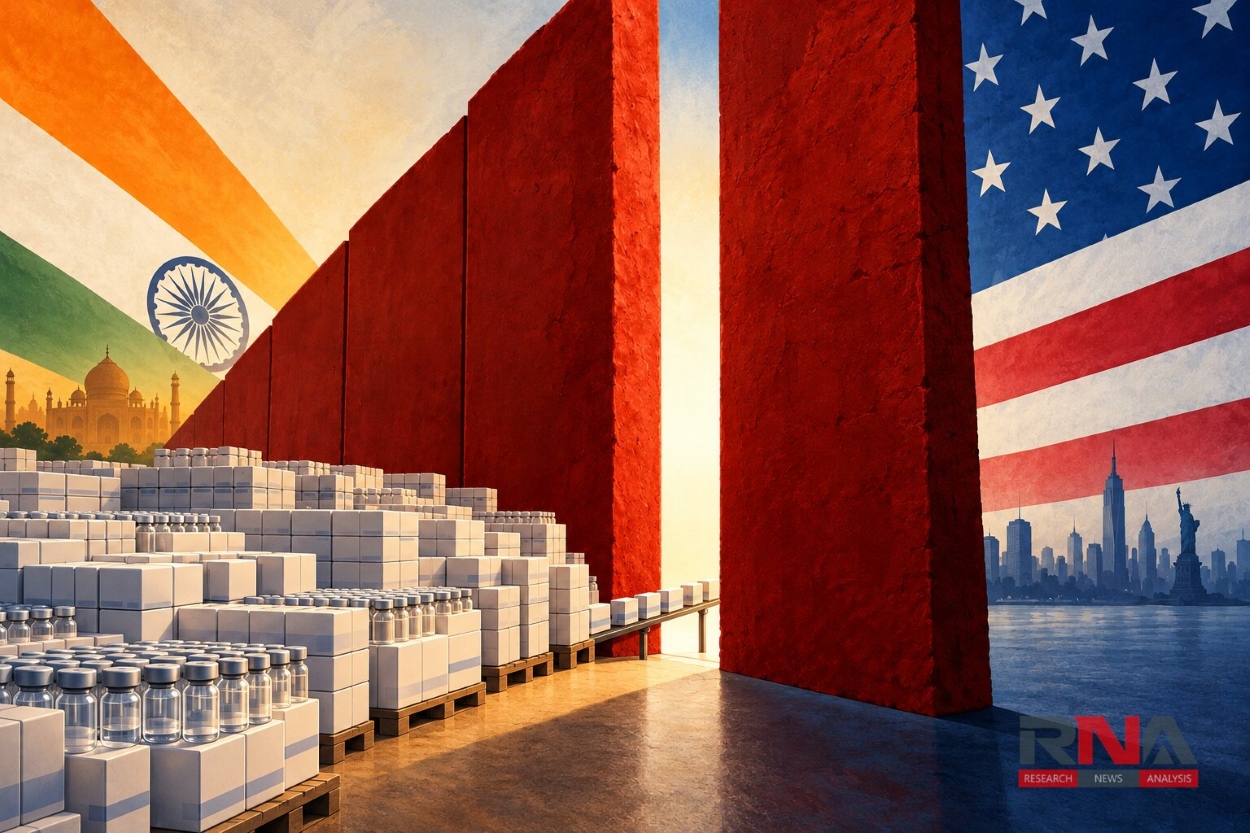
The MEA said India was examining a US assessment that reportedly placed the country among more than 40 jurisdictions considered vulnerable to the transshipment of Chinese goods intended to evade American tariffs. Jaiswal stressed that India had strong customs laws and regulations, and that its customs authorities closely monitored trade activity.
The US assessment reportedly categorized India among the higher-risk jurisdictions, potentially creating another complication in continuing bilateral trade negotiations. However, questions have been raised over the absence of shipment-level evidence identifying India’s precise role in the alleged tariff circumvention.
Jaiswal said India was also studying another report originating in the United States but did not provide further details during the briefing. His remarks indicated that the government would formulate a considered response after examining the document.
FCRA bill for Parliament to decide
Responding to questions about the Foreign Contribution (Regulation) Amendment Bill, 2026, the MEA said Parliament was the competent authority to debate and decide the proposed legislation. Jaiswal advised that misleading reports concerning the bill should be disregarded.
Introduced in the Lok Sabha on March 25, 2026, the bill was referred to a joint parliamentary committee on August 12. It proposes a framework for supervising, managing or disposing of foreign contributions and assets belonging to organizations whose FCRA registration is cancelled, surrendered or allowed to lapse.
On Italy, the ministry said the two countries enjoyed good relations but underlined that mutual respect was essential to sustaining the partnership. The response followed controversy over recent political comments involving the Italian leadership.
Jaiswal also described India’s relationship with Singapore as strong, pointing to the several institutional mechanisms through which the two countries cooperate. Ministers from both sides remained in regular contact across a range of bilateral issues, he said.
On Russia, the MEA characterized bilateral cooperation as broad and multifaceted, with connectivity forming an important component of the partnership. The statement reflected the increasing prominence of transport and maritime corridors in India-Russia economic engagement.