

Australian crew completes first ever winter medical evacuation in Antarctica
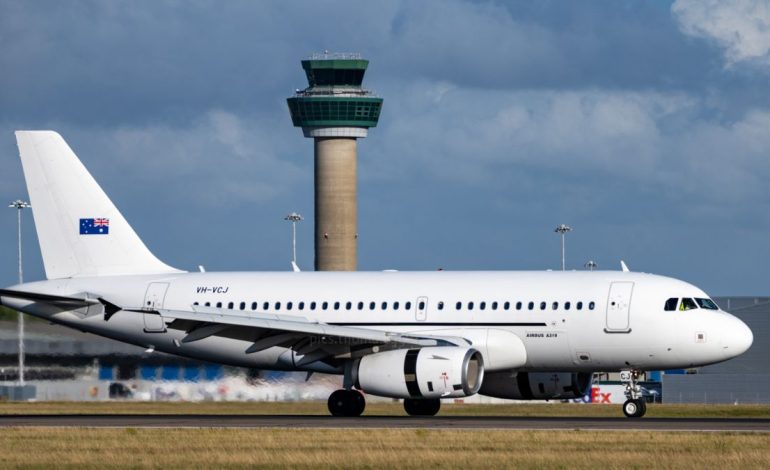
Airbus A319 completed the first-ever July medical evacuation from Antarctica. Image Credit: X/@picsthomasgg

New Delhi: An Australian aviation crew has carried out the first-ever midwinter medical evacuation from Antarctica conducted entirely in darkness, according to a BBC report. The mission rescued a member of the US Antarctic Program from McMurdo Station on Ross Island.
The evacuation was carried out by Skytraders, an Australian aviation company, at the request of the US Antarctic Program through the Australian Antarctic Division.
The aircraft used was an Airbus A319, operating under the callsign Snowbird 1. It departed Hobart, Tasmania, on 31 July and landed at Phoenix Airfield near McMurdo station about five and a half hours later.
The jet touched down in temperatures as low as –43°C (–45.4°F), in complete darkness. Antarctica’s winter darkness runs from late March until September, leaving crews with almost no natural light to work with.
Flying through Antarctica’s harsh winter
An earlier attempt to fly the mission on 29 July was called off due to a snowstorm, the BBC reported. Ground crews needed clear conditions to grade and groom the roughly 3-kilometre-long runway of compacted snow before the aircraft could land safely.
Engineers spent 24 hours reconfiguring the aircraft’s cabin to accommodate a stretcher. The flight was then delayed by a further 12 hours while the crew waited for a suitable weather window.
Once conditions improved, Snowbird 1 flew to McMurdo Station, picked up the patient and remained at Phoenix Airfield for about an hour before departing for Christchurch, New Zealand, where the patient received treatment. According to Skytraders, the patient is recovering well.
A first for Antarctic aviation
Captain Louise Robertson, one of the four pilots on the mission, told the BBC it was the first Antarctic medical evacuation conducted in July and the first to be completed entirely in total darkness. She said she was unaware of any previous mission of its kind.
Robertson flew alongside her husband, Captain Rod Robertson. She described it as the most complex operation of her career, having spent seven years with Skytraders and 25 years as a pilot.
Captain Al Wallach, another pilot involved in Antarctic operations, said winter missions push aircraft and crews close to their operational limits and require absolute precision.
Emma Campbell, head of the Australian Antarctic Division, said the operation highlighted the capability of Australian personnel and the importance of international cooperation in Antarctic operations.
Skytraders’ latest Antarctic rescue
Skytraders carried out a similar medical evacuation from McMurdo Station in March 2020, also on behalf of the US Antarctic Program. Temperatures during that mission were comparatively milder, at around –30°C.
Skytraders has provided air services to the Australian Antarctic Division for nearly 25 years and operates the intercontinental air link between Hobart and Antarctica. The company holds a broad range of technical approvals from Australia’s Civil Aviation Safety Authority (CASA), along with ISO certifications for quality, environmental and safety management. It also operates a 24-hour on-call operations centre to respond to emergencies such as medical evacuations.
According to the report, the combination of total darkness, extreme cold and a narrow weather window made the operation one of the most technically challenging Antarctic medical evacuations in recent years.