

Ace mountaineer Nirmal Purja and 3 other climbers’ bodies found, Broad Peak tragedy wipes out a generation of Nepal’s great climbers
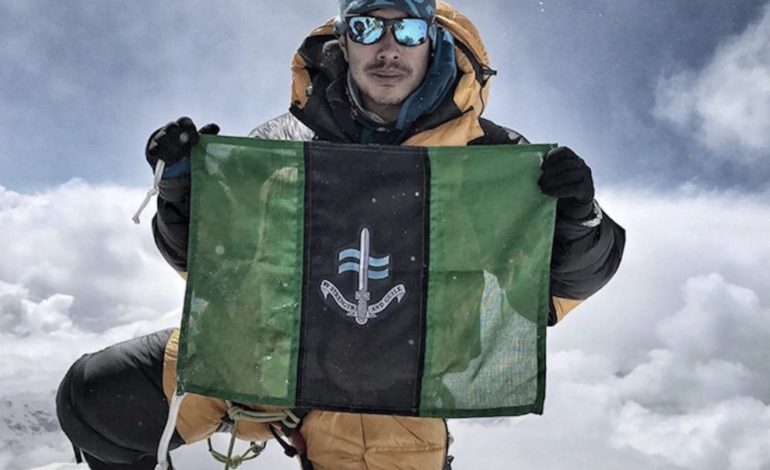
Nirmal Purja on a mountain summit holding a flag with the Special Boat Service insignia. (Photo: X/@ShaneDonohoe07)

New Delhi: The body of the celebrated Nepali mountaineer Nirmal Purja, was recovered on Broad Peak on Sunday, four days after an avalanche swept down the Karakoram giant and buried his 10-member expedition team. Rescuers of the Alpine Club of Pakistan (ACP) reached him at roughly 5,700 metres, alongside three more bodies lying nearby, bringing to eight the number of team members accounted for since the disaster struck.
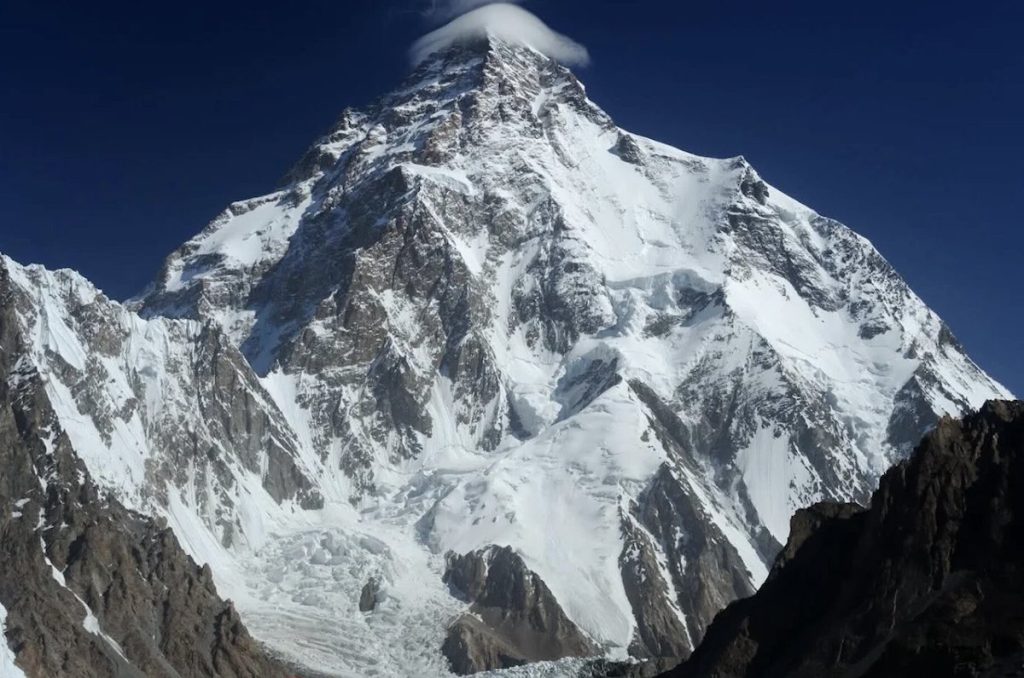
The avalanche hit Broad Peak’s standard West Ridge route at an altitude of between 21,600 and 21,850 feet on the morning of July 30. It swallowed not just Purja, the record-breaking climber known across the world as Nimsdai, but five of Nepal’s most decorated high-altitude guides, men whose combined resumes spanned dozens of Everest summits, a historic winter ascent of K2 and, in one case, all 14 of the world’s 8,000-metre peaks.
Nepal’s mountaineering industry has called it one of the heaviest single losses the country’s climbing fraternity has ever suffered. It was not merely 10 lives taken on a mountainside, industry figures said, but a generation of technical expertise built up over decades and now gone within the space of one avalanche.
Recovery effort in brutal terrain
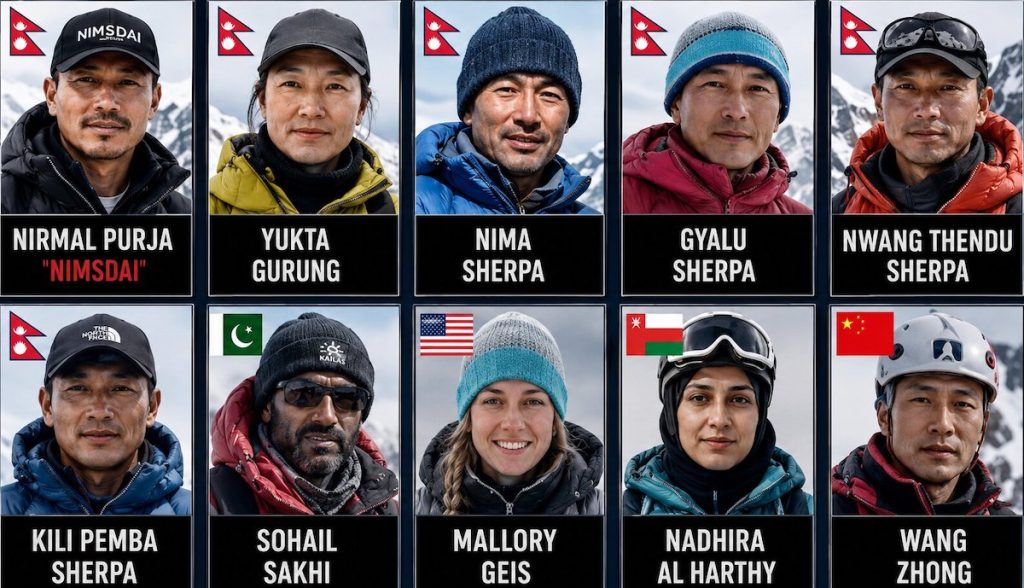
Purja’s expedition comprised 10 climbers in all: six Nepalis including himself, and one each from Pakistan, Oman, the United States and China. Bodies of the Omani climber, Nadhira Ahmed Abdullah Al Harthy, and the Nepali guide Pur Bahadur Gurung were the first to be brought down on July 31, along with remains believed to belong to the American climber Sarah Mallory Geis.
By Saturday, the expedition’s organizing company, Elite Exped, had confirmed that none of the 10 had survived. The body of the Nepali guide Gyaljen Sherpa was recovered that same day, and aerial reconnaissance spotted five more bodies scattered across the slope.
The ACP’s ground team, an eight-member unit drawn from Pakistan and Nepal, had reached Camp 1 before 9am on Sunday to press on with the search. Helicopters could not be deployed because of weather, and steep, avalanche-prone slopes forced rescuers to work almost entirely on foot. One further body, spotted at a significantly higher elevation, is unlikely to be recovered at all given how hazardous the terrain has become.
Broad Peak rises 8,051 metres in the Karakoram range of Pakistan-occupied Kashmir’s Gilgit-Baltistan, close to K2 and only a short distance from the Chinese border. It is the world’s twelfth-highest mountain and, despite lacking the notoriety of Everest or K2, remains a technically demanding climb that has claimed lives regularly since it was first summited by an Austrian team in 1957.
The region’s remoteness compounds every rescue. Helicopters that would ordinarily be scrambled within hours were grounded by poor weather for much of the search, leaving ground teams to negotiate crevasses and unstable snowpack on foot, often above 6,000 metres.
Commando and mountaineering’s fastest
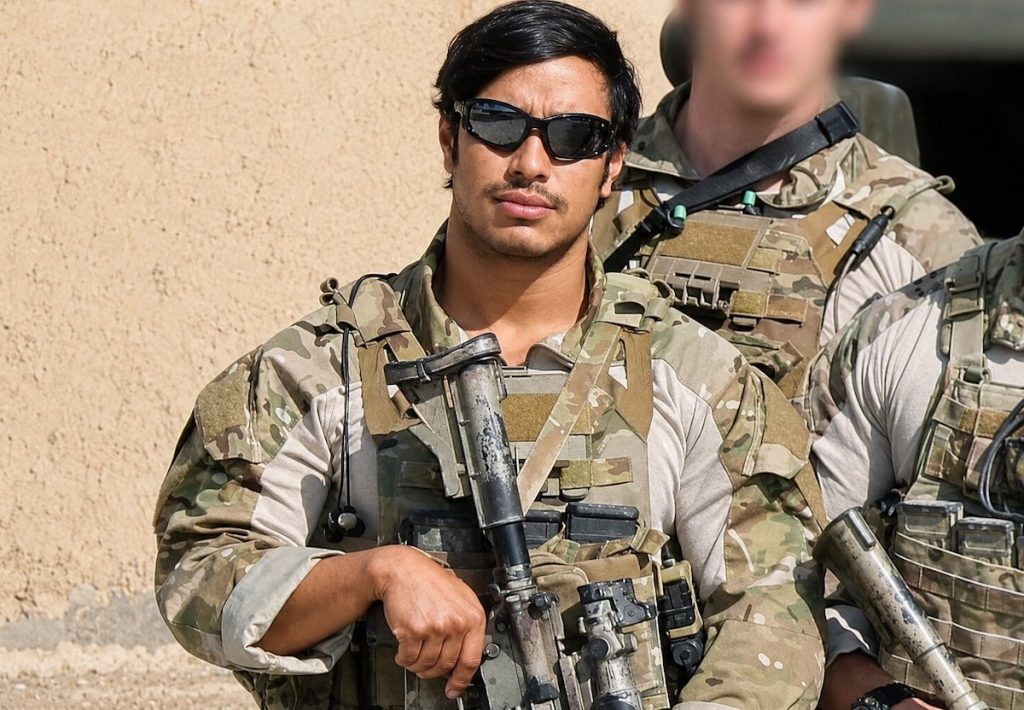
Purja, 43, was born on July 25, 1983, in Myagdi in Nepal’s Gandaki province, into a family with a long history of Gurkha service. He joined the British Army’s Brigade of Gurkhas in 2003 and, six years later, became the first Gurkha to be accepted into the Special Boat Service, the Royal Navy’s elite special forces unit, where he served as a cold-weather warfare specialist.
He was also the first Gurkha to summit Everest while still serving in the British military, and in 2016 he broke with mountaineering convention to rescue a stranded climber from what is grimly known as the death zone. It was a decision that cost him his own summit attempt that year but hinted at the instincts that would define the rest of his career.
Purja left the army to chase a far riskier ambition: climbing all 14 of the world’s 8,000-metre peaks faster than anyone in history. He achieved it in six months and six days in 2019 and shattered a record that had stood for nearly eight years. This feat was later chronicled in the Netflix documentary “14 Peaks: Nothing Is Impossible,” which turned him into a household name well beyond the climbing world.
His record was eventually surpassed in 2023, although his standing as one of the sport’s most influential figures never dimmed.
He was awarded an MBE (Member of the Order of British Empire or commonly called Member of the British Empire) by the late British queen, Elizabeth II, in 2018 for his contribution to high-altitude mountaineering. In January 2021 he led an all-Nepali team to the first winter ascent of K2, an achievement long considered one of the last great problems in Himalayan climbing.
The prime minister of Nepal, Balendra Shah, said he was shocked by the deaths and that the climbers’ courage and dedication would continue to inspire long after their journeys had been cut short. Elite Exped, the company Purja co-founded, said the world had lost “one of mountaineering’s greatest climbers” in a statement that also mourned every other member of the expedition.
The prince of Wales, William, said he was deeply saddened by the death of a man who had served with distinction before becoming one of the world’s greatest mountaineers. The British climber Kenton Cool, who has summited Everest more times than any non-Sherpa alive, described Purja as a “charismatic, colourful” figure whose real legacy lay in how he transformed high-altitude guiding as an industry, not merely in the records he broke.
Generation of Nepal’s climbing greats erased
Alongside Purja, the avalanche killed Pur Bahadur Gurung, known as Yukta; Kili Pemba Sherpa, known as Kilu; Nima Sherpa; Nawang Thendu Sherpa; and Gyaljen Sherpa, known as Gyalu. Between them, expedition operators say, they represented one of the most accomplished cohorts of Nepali high-altitude guides ever assembled, and Nepal has rarely lost so many internationally recognized climbers in one disaster.
Kili Pemba’s death carries a particularly cruel timing. Barely a month before the avalanche, on July 3, he had summited Nanga Parbat to complete all 14 of the world’s 8,000-metre peaks, and in 2021 he had been part of Purja’s historic winter K2 team. Born in 1980 in Beding in Dolakha’s Rolwaling valley, he began working on expeditions at 16 and went on to summit Everest 15 times, according to his uncle, besides guiding climbers with disabilities, including a Chinese double amputee to the top of Everest in 2018 and a Russian double amputee up Manaslu in 2021.
Gyalu Sherpa, who had worked with Seven Summit Treks for nearly eight years, held a Guinness World Record for summiting Kanchenjunga three times in a single season and had completed another Everest ascent only months before his death. Yukta had climbed twelve of the world’s 14 8,000-metre peaks and, coming from Gorkha’s Laprak village, itself famed for producing champion climbers, had become the first member of the Gurung community to summit Everest 10 times, the last of them on May 20 this year.
Nima Sherpa, a farmer’s son from Sankhuwasabha known for his discipline and quiet fearlessness, had already climbed four 8,000-metre peaks in 2026 alone before joining the Broad Peak team. Nawang Thendu Sherpa, at 29 the youngest of the group and still unmarried, came from a family of veteran climbers and had built a rapidly rising reputation of his own, having summited Everest, Lhotse, Manaslu, Kanchenjunga, Makalu and Ama Dablam in barely four years of professional climbing.
Nepali expedition operators say the setback will be felt for years, not months. The director of Seven Summit Treks, Chhang Dawa Sherpa, said “an international-standard mountain guide cannot be produced overnight.” Companies spend years training young men from remote Himalayan villages before they reach world-class standard.
That, industry figures argue, is precisely what makes this tragedy so difficult to absorb. Nepal has lost individual legends before, but rarely so many at once, and never quite this abruptly, on a single, unforgiving morning on a mountain few outside the climbing world had even heard of before.