



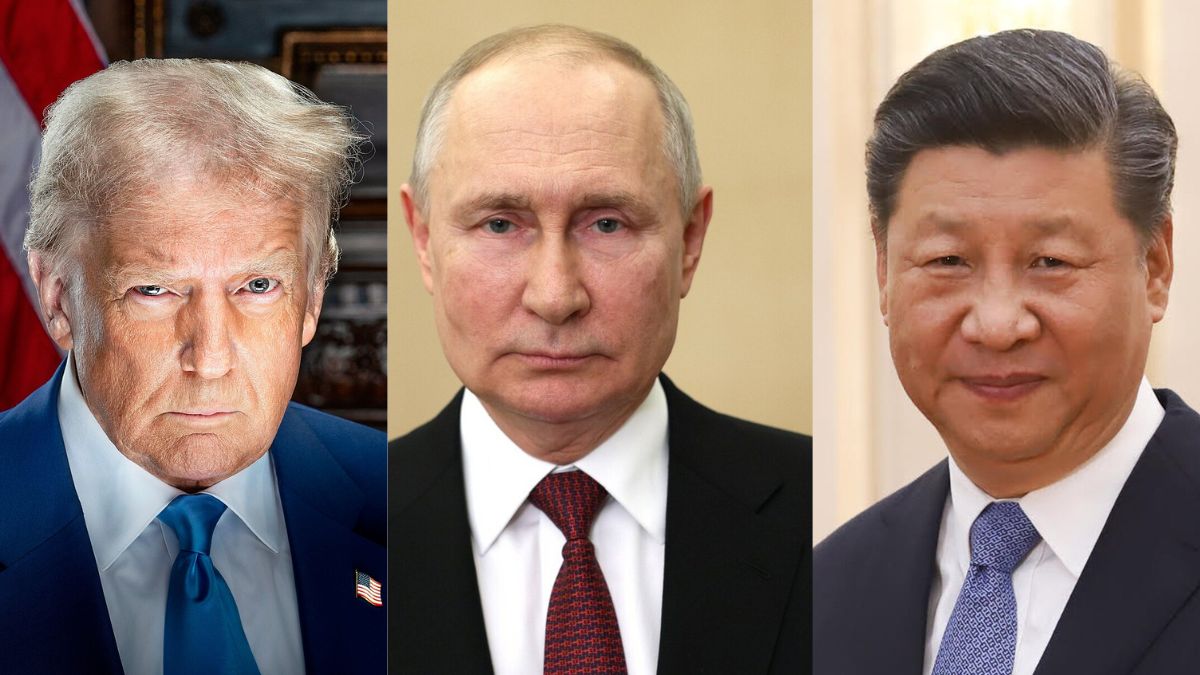
Trump accuses China of hacking 220 million US voter records, revives 2020 election dispute
RNA illustration for representation.

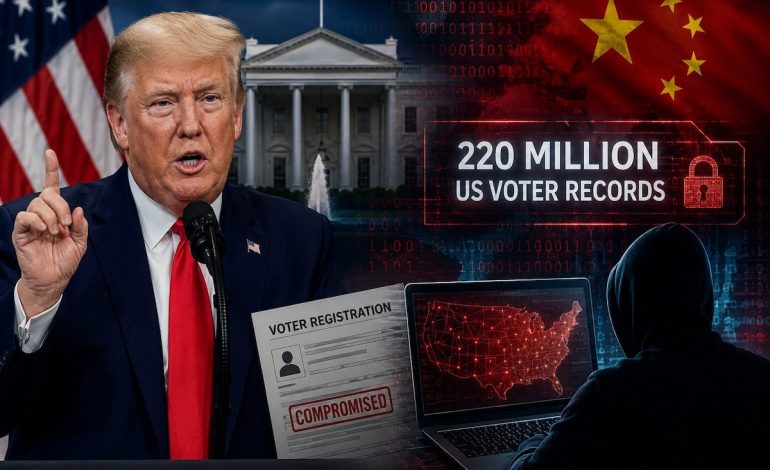
New Delhi: The president of the United States, Donald Trump, has accused China of orchestrating what he called the largest breach of election data in American history. He alleged that Chinese intelligence services illicitly obtained the voter registration files of 220 million Americans during the 2020 election cycle.
Speaking in a prime-time address from the White House on Thursday night, Trump said newly declassified documents showed that Beijing had bought, stolen or hacked voter data across 18 states, and that officials within America’s intelligence establishment had concealed the scale of the breach from both him and the public for years.
“The People’s Republic of China carried out what is believed to be the largest compromise of election data in history, resulting in China’s illicit acquisition of 220 million US voter files,” Trump said, describing the episode as “an unprecedented election security nightmare.”
Old claims, new documents
The allegations are not new. Trump has for years insisted, without success in court, that the 2020 election – which he lost to Joe Biden – was marred by fraud. His legal team lost more than 60 court challenges attempting to overturn the result, and multiple independent reviews found no evidence of the vote having been manipulated.
What is new is the release of a batch of documents that the White House says substantiates claims of a Chinese-linked data compromise, alongside intelligence assessments that Trump says were suppressed by the “deep state” – a term used by his supporters to describe career officials allegedly working against him. Notably, this runs against Trump’s own administration’s earlier position. A declassified intelligence community assessment shown to Trump in January 2021 concluded that China had “considered but did not deploy” influence efforts aimed at changing the outcome of the presidential election, and that Beijing had not interfered with vote tabulation or the transmission of results.
Analysts also point out that voter roll data – names, addresses and party affiliation – is routinely available for purchase or through public records in most American states, and its acquisition, even at scale, does not by itself amount to interference with the voting or counting process.
Democrats push back
Democratic lawmakers rejected the president’s framing within hours of the speech. Senator Mark Warner of Virginia, the ranking member of the Senate intelligence committee, described the address as a prelude to interference in this November’s midterm elections. Senators Chris Van Hollen and Ron Wyden made similar objections.
Trump also used the address to announce a package of election integrity measures, including a proposal requiring photo identification at polling booths and proof of citizenship for voter registration. Separately, the assistant attorney general, Harmeet Dhillon, announced that the Department of Justice and the Department of Homeland Security would launch a website mapping the administration’s election security initiatives.
The Trump administration says it is already engaging with the affected states to secure voter databases ahead of the midterms, due in November 2026.
The allegations arrive against a backdrop of broader concern in Washington over Chinese cyber intrusions into American systems, including a cyberattack on Microsoft’s servers that the US and its allies attributed to Beijing last year. US officials have separately told Congress that data harvested through such operations could be sufficient to build detailed profiles on virtually every American adult.
China’s foreign ministry did not immediately respond to the allegations. Beijing has consistently denied interfering in the internal affairs of other nations, including their elections.