

US-Iran conflict escalates into dangerous phase as strikes intensify, commercial shipping comes under attack and Hormuz crisis deepens
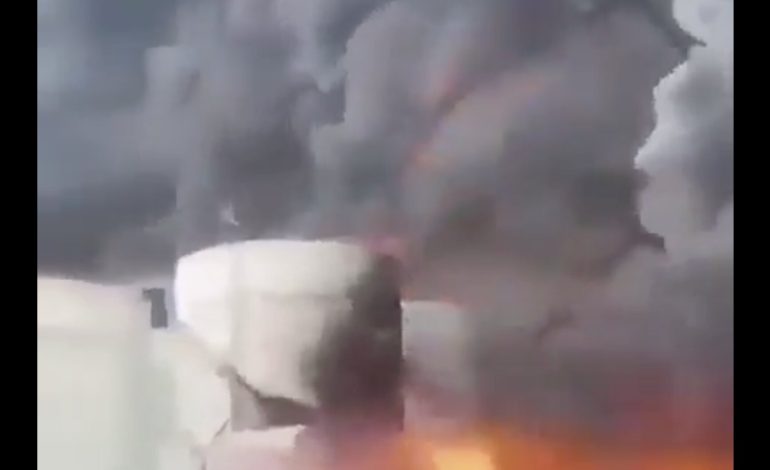
Iran’s Assaluyeh Petrochemical Complex on fire after a US bombing raid on it. (Screenshot from an X video)

New Delhi: The conflict between the United States and Iran has entered one of its most dangerous phases since the war began earlier this year. Monday and Tuesday saw both sides exchanging sustained military strikes and commercial shipping coming under direct attack in the Strait of Hormuz
This led to growing concerns over the security of one of the world’s most critical maritime chokepoints.
The latest escalation has effectively ended a fragile period of de-escalation, with President Donald Trump declaring that the understanding reached with Tehran had collapsed after renewed attacks on commercial vessels. Washington has since resumed large-scale military operations, while Iran has retaliated by targeting US military facilities across the Gulf and tightening its grip over maritime traffic through Hormuz.
US Central Command (Centcom) said it had carried out successive waves of precision strikes against Iranian military infrastructure, focusing primarily on coastal missile batteries, air-defence systems, drone facilities, radar stations and Islamic Revolutionary Guard Corps (IRGC) naval assets operating near the Strait of Hormuz.
According to the US military, more than 80 military targets were struck during the initial phase of the renewed campaign. The operations were designed to degrade Iran’s ability to threaten commercial shipping and freedom of navigation through the Gulf. Subsequent strikes expanded the target list to include additional missile launch sites, drone facilities and fast-attack craft operated by the IRGC navy. The US also employed one-way attack sea drones for the first time in combat during the latest operations.
Washington said the military action was a direct response to repeated attacks on civilian merchant vessels transiting the Strait of Hormuz.
Iran answered with missile and drone attacks directed at US military installations in Bahrain and Jordan, while also attempting strikes linked to Gulf partners supporting Washington. Several incoming missiles and drones were intercepted by regional air-defence systems, although the attacks underlined Tehran’s willingness to widen the geographical scope of the conflict.
The exchanges represent the most serious military confrontation between Washington and Tehran since the collapse of the temporary understanding reached only weeks earlier. The US president, Donald Trump, adopted an increasingly confrontational tone following the renewed attacks.
Trump announced that the ceasefire understanding was effectively “over” after Iran resumed attacks against commercial shipping. He warned that further attacks on international maritime traffic would invite additional military action, saying the United States would continue striking Iranian capabilities that threatened freedom of navigation.
Initially, Trump also proposed imposing a 20 per cent transit fee on commercial cargo passing through the Strait of Hormuz under US protection while simultaneously announcing a naval blockade targeting Iranian shipping.
However, following consultations with Gulf partners, the White House later dropped the broader proposal for transit charges. Trump instead stated that Gulf states had agreed to make substantial investments in the United States while Washington would continue preventing only Iranian-linked shipping from operating freely if Tehran persisted with attacks.
Iranian officials, meanwhile, condemned the US operations as violations of international law and accused Washington of reigniting a broader regional conflict.
Iran’s military leadership vowed a “crushing response” following the American strikes, insisting that any further attacks would be met with expanded retaliation against US interests across the region. Tehran has also maintained that its actions in the Strait of Hormuz are defensive measures intended to counter what it describes as unlawful American military pressure.
Merchant shipping under direct fire
Perhaps the most strategically significant development has been the return of direct attacks on commercial shipping in and around the Strait of Hormuz.
Over several days, multiple merchant vessels were struck by missiles or unidentified projectiles while transiting the narrow waterway separating Iran from Oman.
British maritime security authorities reported that one tanker south of Oman caught fire after being hit by an unknown projectile.
US officials subsequently accused the IRGC of firing missiles at commercial shipping, saying at least three merchant vessels were attacked within a 24-hour period. The incidents immediately triggered international concern because they directly targeted civilian maritime traffic using one of the world’s busiest energy corridors.
Among the vessels reported to have been hit was Stolt Magnesium, which sustained damage in the Arabian Sea. A UAE-owned tanker was also struck in Omani waters, resulting in one fatality of an Indian seafarer and multiple injuries.
Reuters reported that two Emirati tankers were damaged, while other reports indicated that three separate commercial ships came under attack during the latest escalation. The attacks prompted several commercial shipping companies to reassess their routes through Hormuz.
Some oil and gas tankers reportedly reversed course before entering the strait, while insurers sharply increased war-risk premiums for vessels operating in the region. Oil markets responded immediately, with crude prices climbing as traders factored in the possibility of prolonged disruption to Gulf exports.
Hormuz emerges as the conflict’s centre of gravity
The Strait of Hormuz has now become the central strategic flashpoint of the conflict.
Roughly one-fifth of globally traded crude oil normally passes through the narrow waterway, making any disruption a matter of worldwide economic concern.
Iran has repeatedly declared that it is prepared to close the strait if American military pressure continues. During the latest round of fighting, Tehran announced that the waterway had effectively been closed, although Washington rejected the claim and continued naval operations to keep shipping lanes open.
US Central Command has maintained that Iran neither controls the strait nor possesses the legal authority to restrict international navigation.
American forces have continued escort operations while striking Iranian coastal military positions believed capable of launching anti-ship missiles, drones and fast-boat attacks against merchant shipping.
Iran, however, has sought to establish de facto control through repeated military harassment of vessels and warnings to commercial operators.
The deteriorating security environment has led shipping companies to slow traffic through the corridor, while regional governments remain concerned that any prolonged closure could disrupt global energy markets and international supply chains.
The International Maritime Organization has also expressed concern over unilateral actions affecting one of the world’s most important international waterways.
Regional and international implications
The renewed confrontation has significantly complicated diplomatic efforts to restore stability in the Gulf. Indirect negotiations aimed at establishing long-term arrangements for navigation through Hormuz have stalled following the latest exchange of strikes.
Regional governments have urged restraint while simultaneously strengthening military preparedness against possible spillover attacks.
India is closely monitoring developments because nearly two-thirds of its crude oil imports originate from the Gulf region, much of which transits the Strait of Hormuz. Any sustained disruption could affect energy prices, shipping costs and maritime insurance premiums, with wider implications for India’s economy and energy security.
For the United States, the campaign has evolved beyond retaliation into an effort to preserve freedom of navigation through one of the world’s most strategically important maritime corridors. For Iran, maintaining pressure in Hormuz offers one of its few remaining strategic levers against a militarily superior adversary.
With neither side showing signs of stepping back, the Gulf appears set for an extended period of instability in which military operations, attacks on commercial shipping and competing claims over maritime access are likely to remain defining features of the conflict.