

Theatre commands reform enters final stage, CDS to present plan to Rajnath Singh
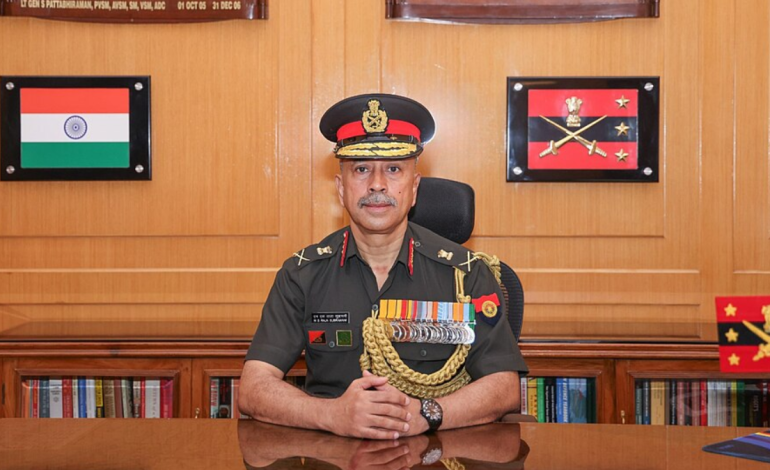
CDS to present plan to Rajnath Singh. (Image courtesy: Wikimedia)

New Delhi: The chief of defence staff, General NS Raja Subramani, is expected to make a detailed presentation on the proposed military theatre commands to the defence minister, Rajnath Singh, later this month, marking the next major step in one of India’s biggest defence reforms. The presentation will outline the structure of the proposed commands and the roadmap for implementation.
The proposal was prepared by former CDS General Anil Chauhan before he completed his tenure in May. Gen Subramani is now expected to brief the defence minister and other stakeholders on the plan before it is sent for the government’s final approval. If cleared by the minister, the proposal is expected to be placed before the Cabinet Committee on Security (CCS), headed by the prime minister, Narendra Modi.
The theatre commands project has been under discussion for several years and has gathered pace since the creation of the CDS post in 2019. The objective is to improve coordination among the Indian armed Forces by bringing their operational resources under integrated commands instead of allowing each service to fight independently during a conflict.
According to a Hindustan Times report, the current proposal centres on three main theatre commands – a Northern Theatre Command focused on the China border, a Western Theatre Command responsible for the Pakistan front and a Maritime Theatre Command for India’s surrounding seas, including the Andaman and Nicobar region. The proposal also includes the creation of a vice-chief of defence staff (VCDS), with all theatre commanders expected to hold four-star rank, equivalent to the three service chiefs.
At present, armed forces maintain separate command structures and coordinate operations when required. Under the proposed model, a single theatre commander would control forces from all three services within a designated geographical area. The service chiefs would continue to oversee recruitment, training and maintenance of their respective forces, while operational control during military operations would shift to the theatre commanders.
Supporters of the reform believe the new system would allow faster decision-making and better coordination in future conflicts, where military operations increasingly involve land, air, sea, cyber and space simultaneously. Defence planners have argued that integrated commands would reduce duplication of resources and improve the military’s ability to respond to complex security challenges.
However, the proposal has also generated debate within the armed forces. While the Army and the Navy are understood to support the restructuring, the Air Force has raised concerns over the division of its limited aircraft and other aerial assets across multiple theatre commands. It has maintained that air power needs flexibility to move quickly across different fronts rather than remaining tied to individual commands.
Another issue relates to the balance of authority between the service chiefs and the proposed theatre commanders. Under the new structure, the chiefs would primarily be responsible for preparing and sustaining their forces, while operational decisions during conflicts would rest with the theatre commanders. The proposal also creates four additional four-star appointments, a move that has prompted discussions within the defence establishment over the expansion of the military’s senior leadership.
Gen Subramani, who took charge as India’s third CDS at the end of May, has inherited the responsibility of taking the long-pending reform through its final stages. His predecessor, Gen Chauhan, spent nearly two years refining the proposal after building on the work initiated by the country’s first CDS, General Bipin Rawat, who strongly advocated integrated military commands before his death in 2021.
If the proposal receives approval from the CCS, the government is expected to implement the reforms in phases over the coming years. The transition would involve setting up new headquarters, reorganizing personnel and refining operational procedures before the integrated theatre command system becomes fully functional. The decision is widely seen as one of the most significant structural changes to India’s military command system since Independence.