


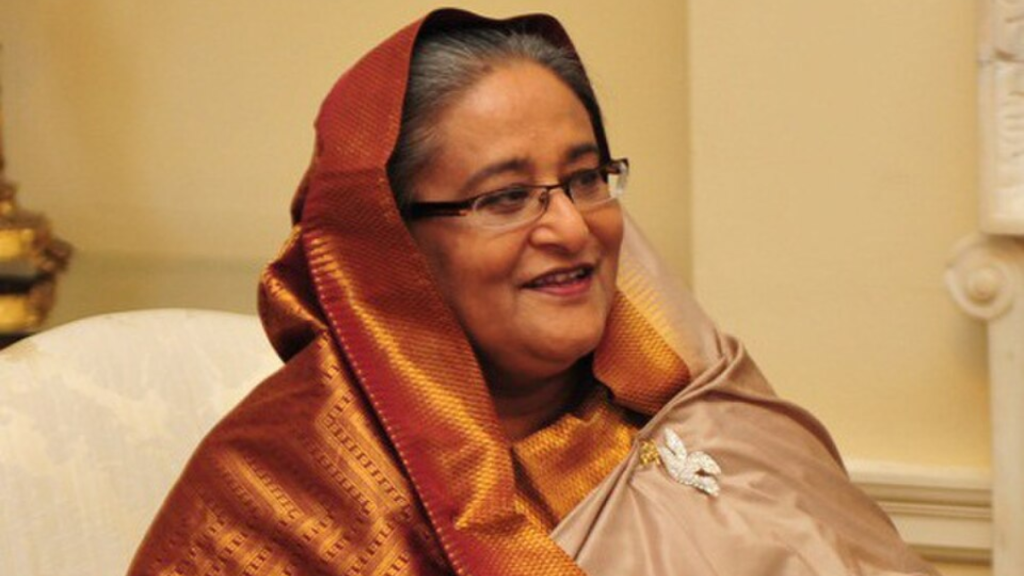
New Delhi: The deposed Bangladesh prime minister, Sheikh Hasina, had said in an interview with Reuters that she was planning to return to Bangladesh in December, nearly two years after leaving the country and taking shelter in India following a student-led uprising that saw her government fall. Her interview has brought the possibility of her return back to the centre of India-Bangladesh ties, particularly as Dhaka continues to seek her extradition and has objected to her political statements from Indian soil.
Hasina has not announced a specific date but has made clear that she wants to go back on her own rather than wait indefinitely for an extradition arrangement. She also said she could be arrested or imprisoned after returning, but concerns about her personal safety would not stop her from going back.
In a recent interview with Wion, Hasina said she continues to follow developments in Bangladesh, including its politics, economy, law and order and the situation of minorities. She also spoke about reading her father Sheikh Mujibur Rahman’s writings, including his unfinished memoir, saying that reading history and politics has been part of her preparation while living away from Bangladesh.
What could Hasina face on returning
The most immediate challenge for Hasina would be her legal position on returning to Bangladesh. She has been convicted in absentia by a Bangladesh court and sentenced to death, while her political party remains banned, charges and proceedings that she has described as politically motivated.
A return would put her directly within the reach of the legal proceedings that have so far been conducted in her absence. She has also said that she could be arrested or imprisoned if she returns, underlining the legal risks she could face in Bangladesh.
On the issue of her safety, Hasina referred to several attempts on her life, including the 21 August 2004 grenade attack that killed 24 people and injured more than 300. She said she had survived several such attempts over the years.
In the interview, Hasina recalled that India provided her safety and shelter after the 1975 assassination of her father and most of her family, giving the question of her present stay in India a much deeper personal and political context.
Hasina in India complicates Dhaka ties
Dhaka has already shown how politically sensitive Hasina’s presence in India remains. When she addressed a media event from New Delhi in August, Bangladesh objected to her use of Indian territory for political messaging, while India made clear that the event was organized by a private media entity and that the government had no involvement or endorsement of her remarks.
RNA Media had earlier reported that Bangladesh home minister, Salahuddin Ahmed, described India’s continued handling of the “Hasina card” as contradictory to the pursuit of friendly relations with Dhaka. Another RNA report noted that Dhaka was seeking a “propitious environment” before the Bangladesh prime minister, Tarique Rahman, India visit, with Hasina’s extradition among the issues complicating the bilateral reset.
Dhaka subsequently said there was no rush for Rahman’s India visit, with Bangladesh stressing that substantive issues needed to be addressed before a high-level engagement. RNA Media’s reporting also linked the delay directly to the wider trust deficit surrounding Hasina and her continued presence in India.
That reaction shows why Hasina’s December plan cannot be viewed only as a personal decision. Her presence in India has become part of the political conversation between the two governments.
Why India is caught in the middle
New Delhi has maintained a deliberately cautious position. When asked about Hasina’s plan to return, the MEA spokesman, Randhir Jaiswal, said there had been no change in India’s approach and described any extradition matter as a legal issue that would be dealt with accordingly.
That position becomes important if Hasina chooses to return voluntarily. India would not technically be sending her back under an extradition decision if she leaves on her own, but New Delhi would still be closely associated with what happens to Hasina who has been living under Indian protection since August 2024.
New Delhi has continued engaging with the government led by Tarique. India invited him for a bilateral visit and separately for the BRICS outreach session, indicating that engagement with the current government is continuing even as the Hasina issue remains unresolved. New Delhi has an interest in maintaining working relations with the government in Dhaka while also dealing with the fact that Hasina remains in India and has now publicly announced her intention to return.
Why Bangladesh matters to India
Bangladesh is particularly important for India because it is a direct neighbouring country sharing a border with five Indian states, West Bengal, Assam, Meghalaya, Tripura and Mizoram. Its location makes developments in Bangladesh directly relevant to India’s border security, the northeast and regional connectivity.
This relationship has another significance with regard to economy and connectivity as well. The trade and connectivity initiatives with Bangladesh allow India to connect with its northeastern states, making it vital for the country to have a stable relationship with the neighbouring nation.
The wider regional environment adds another layer to the relationship. Bangladesh has been seeking closer engagement with China, while its ties with Pakistan have also been growing at a time when India Pakistan relations remain strained. Dhaka has also shown interest in joining the Mecca pact along with Pakistan, Turkiye and Saudi Arabia, adding to India’s interest in how Bangladesh positions itself within the wider region.
Hasina’s return tests bilateral ties
During Hasina’s tenure, the two countries saw closer cooperation in areas such as connectivity, trade and security, while India remained an important partner for her government. Hasina also has a long association with India, which provided her and her sister Sheikh Rehana shelter after the assassination of Sheikh Mujibur Rahman and most of their family members in 1975. Her presence in India since August 2024 has added another dimension to the issue, especially with Dhaka still seeking her extradition.
The Hasina issue has repeatedly emerged as an obstacle when India and Bangladesh have sought to discuss or advance other areas of bilateral ties.
The most recent interview by Hasina has introduced yet another factor into the picture, with the former prime minister asserting her plans to visit Bangladesh in December.
The exact date, time and point of entry, however, have not yet been announced. Until those details are clear, the circumstances of her proposed return and what follows after she reaches Bangladesh remain uncertain.