


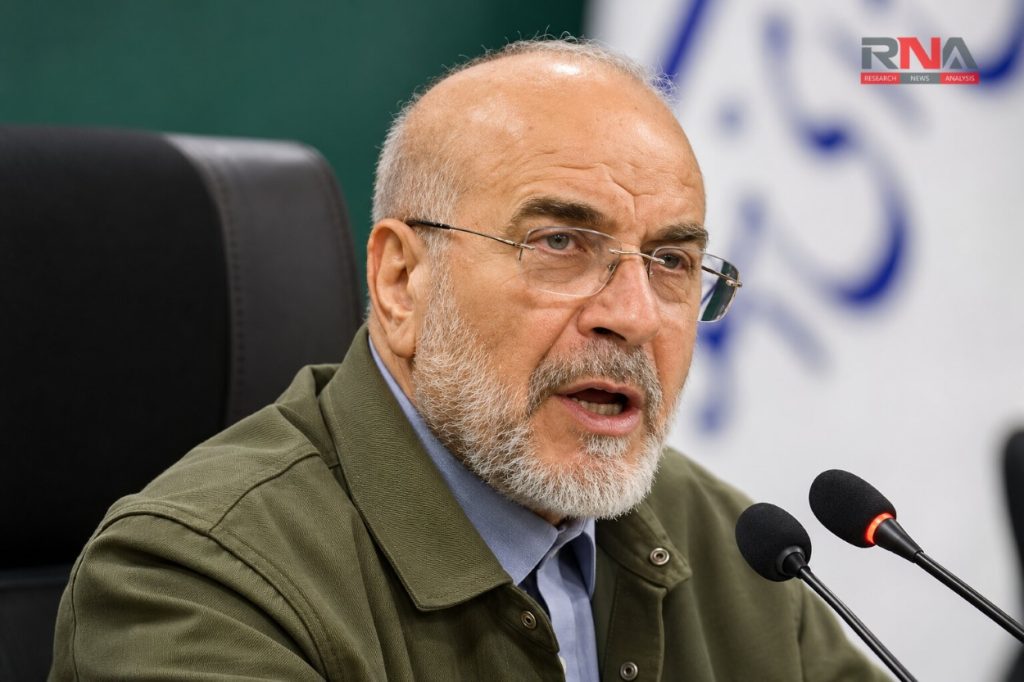
New Delhi: Iran has ruled out fresh negotiations with the United States until Washington fulfils seven conditions laid down by Tehran for ending the conflict in West Asia, deepening the diplomatic impasse between the two countries. The warning came on Tuesday from Iran’s parliament speaker and chief negotiator, Mohammad Bagher Ghalibaf, a day after the Donald Trump administration imposed sweeping new sanctions targeting the Islamic Republic’s international financial networks.
Addressing an open session of the Iranian parliament on Tuesday, Ghalibaf dismissed Washington’s military threats and mounting economic pressure as signs of desperation rather than strength. He also warned that Iran was prepared to retaliate decisively against any fresh military action, suggesting that renewed hostilities could spread beyond the existing theatre of conflict.
According to Iran’s semi-official Tasnim News Agency, Ghalibaf asserted that Tehran’s position remained unchanged despite recent warnings from the US president, Donald Trump, and the treasury secretary, Scott Bessent. He maintained that there would be no diplomatic or practical engagement with Washington until Iran’s demands were fulfilled.
The remarks assume significance in the wake of Trump’s warning on Sunday that the US could launch another round of military strikes against Iran after the New Year if the two countries failed to reach an agreement. The competing positions have further complicated efforts by regional mediators to prevent a return to full-scale warfare.
What are Iran’s seven conditions?
Tehran’s demands go beyond securing a ceasefire and encompass economic rehabilitation, long-term security guarantees and a restructuring of maritime arrangements in the Persian Gulf. Iranian officials have argued that merely suspending military operations without addressing the underlying causes of the confrontation would leave the country vulnerable to another attack.
Based on statements by Iranian officials and details of Tehran’s proposals reported in recent weeks, the seven conditions broadly cover:
- Lifting the American naval blockade of Iranian ports.
- Removing oil-related and other economic sanctions imposed on Iran.
- Releasing Iranian financial assets frozen overseas.
- Ending hostilities across all fronts, including Lebanon, and formally declaring the war over.
- Providing credible guarantees against renewed military aggression and addressing Iranian demands for war reparations.
- Recognizing a maritime management arrangement involving Iran and Oman in the Strait of Hormuz.
- Reducing the American military presence around Iran and establishing alternative regional security arrangements.
Although Ghalibaf did not individually enumerate the seven conditions on Tuesday, their broad contours have emerged through earlier statements and interviews by senior Iranian officials. Tehran maintains that several of these demands arise from commitments made under the Islamabad memorandum of understanding signed in June.
As RNA Media reported earlier, the Iranian foreign minister, Abbas Araghchi, recently disclosed that Tehran had proposed a two-day framework for reopening Hormuz and commencing negotiations. Washington reportedly rejected the arrangement, under which it would have been required to implement specified commitments before Iran restored maritime access.
Washington targets Iran’s financial lifelines
Ghalibaf’s latest intervention followed the announcement of another round of American sanctions on November 23, 2026, targeting more than two dozen Iranian currency exchange houses, intermediary companies and individuals. The measures form part of Washington’s Operation Economic Outcast, an economic campaign launched in August to further isolate Iran from the international financial system.
The US treasury department alleges that these networks facilitate billions of dollars in transactions, enabling Iranian entities to obtain foreign currency and conduct overseas trade despite existing restrictions. By dismantling these channels, Washington hopes to deprive Tehran of revenue and increase pressure on the Iranian leadership to accept an agreement.
According to a Reuters report, American financial intelligence authorities identified nearly $15 billion in transactions potentially associated with Iranian shadow banking between January 2025 and August this year. Bessent has indicated that Washington intends to continue targeting these financial mechanisms.
However, Tehran’s response suggests that Washington’s economic pressure has yet to produce the diplomatic concessions it seeks. Instead, Iran has increasingly linked the restoration of international commercial shipping through Hormuz to the removal of restrictions on its own maritime trade.
Strait of Hormuz remains principal flashpoint
Meanwhile, Iran’s military leadership has indicated that restrictions on navigation through the Strait of Hormuz could intensify further. Iran’s army chief, Major General Amir Hatami, on Monday directed his naval forces to tighten control over the strategic waterway until Washington accepted Tehran’s conditions.
The Islamic Revolutionary Guard Corps (IRGC) also claimed that three oil tankers had caught fire after striking naval mines despite American aerial protection. However, according to Euronews, the Joint Maritime Information Centre said the claims remained unconfirmed.
The developments underscore the limitations of Washington’s efforts to restore normal commercial navigation while maintaining its blockade of Iranian ports. As RNA Media has previously reported, recurring attacks on merchant vessels and conflicting accounts from the opposing sides have complicated assessments of maritime security in the region.
Qatar steps up efforts to avert another war
Against this backdrop, the Qatari prime minister, Mohammed bin Abdulrahman Al Thani, held discussions in Washington on Monday with the US secretary of state, Marco Rubio, and the vice-president, JD Vance. Doha is attempting to revive negotiations before the confrontation escalates into another sustained military campaign.
The conflict, which began with joint American and Israeli attacks on Iran on February 28 has continued despite several diplomatic initiatives. A 14-point memorandum of understanding signed on June 17 failed to produce a lasting settlement, with both sides accusing each other of violating their commitments.
Further complicating negotiations is the unresolved question of Iran’s nuclear programme, particularly the future of its highly enriched uranium stockpile. Tehran has expressed willingness to negotiate over the material but has rejected proposals requiring its transfer overseas.
For India, the continuing confrontation carries significant implications for energy security, shipping costs and the safety of millions of Indian nationals living in Gulf countries. Any further disruption in Hormuz could increase India’s crude oil and liquefied natural gas import costs, putting additional pressure on inflation and its external trade balance.
The fundamental obstacle to a settlement remains the sequencing of concessions – Washington wants Iran to change its behaviour before easing pressure, while Tehran insists on tangible American concessions before returning to negotiations. Unless mediators can establish a mutually acceptable framework for implementing reciprocal commitments, the prospect of another major military confrontation will remain.