


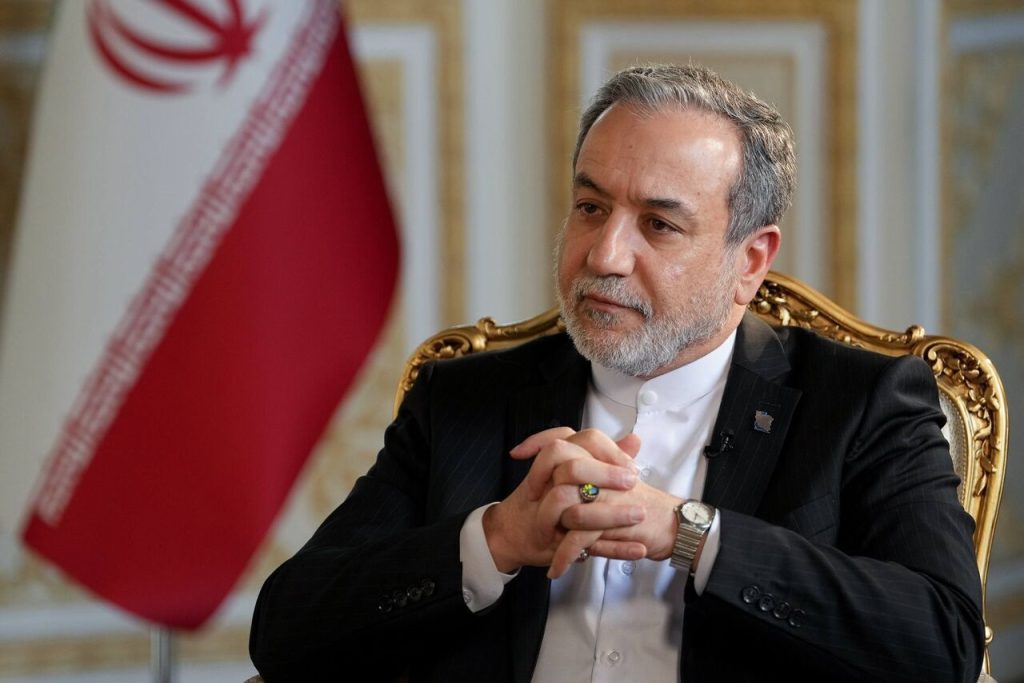
New Delhi: Iran has signalled its willingness to negotiate a comprehensive settlement with the United States to end their prolonged confrontation, but has made clear that any agreement must guarantee its security, protect its nuclear interests and prevent another outbreak of war. The Iranian foreign minister, Abbas Araghchi, said Tehran was seeking a durable diplomatic solution rather than a temporary arrangement that could collapse under renewed American military or economic pressure.
In an interview published by Iran Daily and reproduced by IRNA on Friday, Araghchi outlined Iran’s conditions for negotiations, including the removal of restrictions on its maritime trade, the reopening of the Strait of Hormuz and an acceptable settlement concerning its enriched uranium stockpile. His remarks suggested that Tehran remains prepared to explore diplomatic compromises, although significant differences with Washington continue to obstruct a negotiated end to the conflict.
The Iranian minister described the existing situation as an unsustainable condition of neither outright war nor genuine peace, arguing that continued uncertainty served neither country’s long-term interests. He nevertheless insisted that Tehran would reject an agreement that compromised its sovereignty or allowed Washington to portray Iranian concessions as an unconditional surrender.
Araghchi emphasized that negotiations inevitably required compromises from both parties but warned against arrangements that offered no credible protection against renewed hostilities. His central argument was that an agreement would have little value if military confrontation resumed within months of its implementation.
Iran reveals failed two-day proposal to reopen Hormuz
A significant disclosure concerned Iran’s previously undisclosed efforts to establish a timetable for reducing tensions and restoring maritime traffic through the Strait of Hormuz. Araghchi said Tehran had initially proposed a seven-day arrangement under which Washington would fulfil specified commitments before Iran reopened the strategic waterway and negotiations began on a final settlement.
The proposal was subsequently compressed into a two-day framework following discussions involving Qatari intermediaries, with American commitments to be implemented on the first day. Iran would reopen the strait and begin negotiations with Washington on the second day, although the United States ultimately declined to accept the arrangement.
According to Araghchi, the original proposal incorporated commitments associated with the Islamabad memorandum alongside additional Iranian demands concerning sanctions imposed during the conflict. Although the specific two-day offer was no longer formally on the table, he indicated that its underlying provisions could still serve as a basis for renewed negotiations.
The diplomatic deadlock has acquired greater urgency because the American naval blockade of Iran continues to restrict Iranian commerce, particularly oil exports. Tehran, meanwhile, has linked the restoration of normal navigation through Hormuz to sanctions relief, the removal of economic restrictions and assurances against renewed military attacks.
Nuclear stockpile remains main obstacle
Another contentious issue concerns Iran’s highly enriched uranium, which Western governments regard as a serious proliferation concern because enrichment to 60 per cent brings the material substantially closer to weapons-grade levels. Araghchi said Tehran was prepared to consider negotiated arrangements concerning the material but categorically rejected transferring the stockpile outside Iranian territory.
According to the International Atomic Energy Agency estimates, Iran possessed approximately 440.9 kilograms of uranium enriched to 60 per cent before the American and Israeli attacks on its nuclear installations in June 2025. The present condition and whereabouts of the entire stockpile remain uncertain, complicating international efforts to establish an independently verified assessment of Iran’s nuclear capabilities.
Araghchi suggested that a mutually acceptable formula could involve using or processing the material according to Iran’s domestic requirements, although he did not announce a specific technical arrangement. Possible approaches, including dilution under international supervision, would require agreement on verification, safeguards and the degree of access granted to inspectors.
The dispute also reflects a broader disagreement over Iran’s nuclear future, particularly whether the country should reconsider its existing nuclear doctrine following repeated attacks on its facilities. Araghchi acknowledged that influential voices were advocating a reassessment but maintained that Tehran’s official position remained unchanged, despite growing debate over the effectiveness of international safeguards.
The controversy has intensified as the IAEA seeks renewed inspections at damaged Iranian nuclear facilities. Western governments argue that credible monitoring is essential to preventing nuclear proliferation, whereas Tehran maintains that international oversight has failed to protect its installations from military attacks.
Trump rejects Iranian terms
Araghchi’s diplomatic overture came as the US president, Donald Trump, publicly questioned whether Tehran was prepared to accept terms Washington considered satisfactory. During a White House news conference on November 20, Trump acknowledged Iranian interest in negotiations but said the proposed conditions were unacceptable to his administration.
According to reports, indirect communications between the two governments have continued through intermediaries despite their conflicting public positions. Qatar has remained particularly active in seeking common ground, with diplomatic contacts focused on confidence-building measures and possible arrangements for reopening maritime trade.
The involvement of regional mediators reflects mounting concern that another escalation could threaten energy supplies, shipping routes and the security of Gulf countries hosting American military installations. The Associated Press reported that regional governments were exploring arrangements combining greater freedom of navigation with limited sanctions relief as a possible first step towards broader negotiations.
Why dispute matters for India and global energy security
For India, the confrontation has important implications extending beyond its diplomatic relations with Tehran and Washington, particularly in energy security, maritime commerce and regional connectivity. The Strait of Hormuz remains a critical passage for oil and liquefied natural gas shipments from the Gulf, making prolonged restrictions a concern for Indian importers, shipping companies and policymakers.
New Delhi also has an interest in maintaining access to Iran-linked connectivity projects, including Chabahar port, which supports India’s ambitions to strengthen trade links with Afghanistan and Central Asia. A sustainable settlement could reduce commercial uncertainty and maritime security risks, although the restoration of normal economic activity would depend heavily on the eventual sanctions framework.
The underlying challenge remains the gap between Iran’s demand for security guarantees and economic relief and Washington’s insistence on enforceable restrictions on Tehran’s nuclear activities. Unless negotiators establish a credible sequence for implementing reciprocal commitments, both governments could remain trapped in a confrontation that neither appears willing to resolve through unconditional concessions.
Araghchi’s latest statements therefore represent an opening for diplomacy rather than evidence of an imminent breakthrough, with the competing positions on uranium, sanctions and Hormuz still requiring substantial negotiation. Whether that opening leads to a lasting agreement will depend on the willingness of both governments to translate their stated preference for peace into mutually verifiable commitments.