


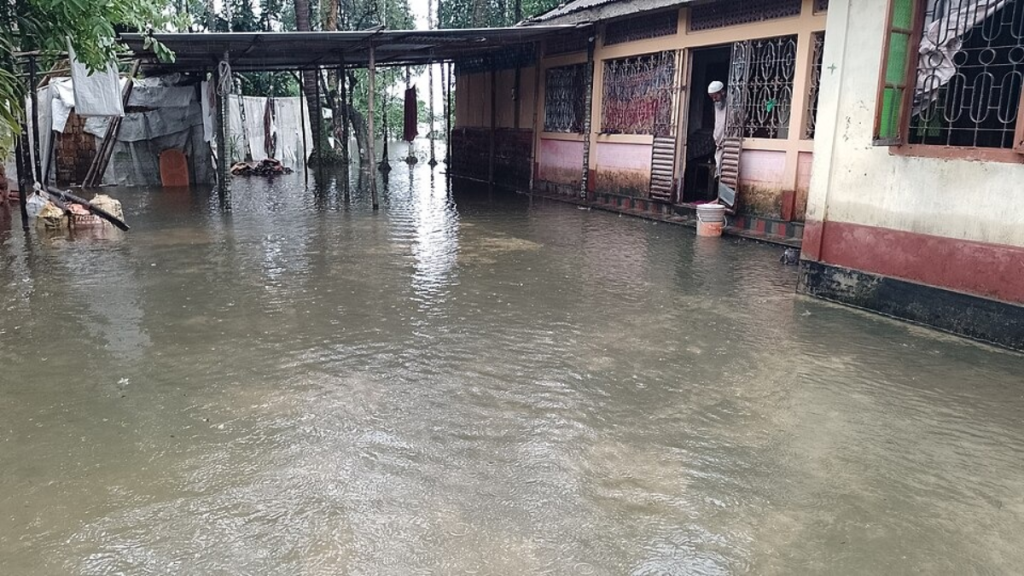
New Delhi: Assam’s flood crisis is shifting from mass rescue to a difficult phase of relief, damage assessment and reconstruction, but the emergency is not over. The death toll from this year’s floods reached 100 on Monday, even as the number of people currently affected fell substantially from the peak recorded in July.
A update on Monday based on the Disaster Reporting and Information Management System put active flooding across 10 districts, 28 revenue circles and 456 villages, affecting 1,37,590 people. Golaghat remained the worst-hit district with 68,239 people affected, followed by Sivasagar with 39,495 and Jorhat with 16,259. About 11,933 hectares of cropland remained under water.
Long road to recovery for affected
The latest figures underline an important change in the nature of the crisis. On July 23, RNA Media reported that more than 900,000 people across over 1,800 villages in 25 districts had been affected and the death toll stood at 41. The geographical footprint has since contracted sharply, but the cumulative loss of life has more than doubled.
RNA Media had also reported large-scale rescue efforts involving the Indian Army, Indian Air Force, National Disaster Response Force, Assam State Disaster Response Force and state agencies. Under Operation Jal Rahat, Army teams were deployed in Upper Assam, including Sivasagar, Charaideo and Jorhat, as boats, aircraft and drones were used to reach stranded communities.
Relief continues as families return
The challenge now is increasingly one of rehabilitation. The latest flood report listed 125 relief camps and distribution centres, including 52 camps and 73 distribution centres. Around 8,000 people were still staying in camps. Fifty-nine medical teams and 10 boats were operating across affected districts, while Sivasagar alone reported 516 damaged houses, including 176 that were fully or severely damaged.
The Assam government has begun a door-to-door damage survey in four of the worst-affected districts: Jorhat, Sivasagar, Charaideo and Golaghat with the exercise running from August 9 to 30. Officials are documenting damage to houses, livestock and other assets before compensation is finalised. The government has also provided interim assistance to affected families and announced additional support for families of those killed.
Rebuilding embankments and restoring infrastructure have become immediate priorities. In Jorhat, four of nine flood breaches had been repaired by August 10, with authorities targeting completion of the remaining works by August 15. Roads, bridges, schools and other public infrastructure have also suffered damage across the flood zone.
Centre’s assessment and continuing weather risk
The Centre activated its damage-assessment mechanism in July. The Home Ministry said an Inter-Ministerial Central Team visited Assam from July 7 to 10, while another visit was scheduled from July 25 to assess losses caused by incessant rain and flooding and determine further assistance.
The immediate concern is the weather. The India Meteorological Department’s August 10 forecast said isolated heavy rain was likely over Assam and Meghalaya from August 10 to 14, followed by the possibility of isolated very heavy rain on August 15 and 16. The Dhansiri was already flowing above danger level at Golaghat and Numaligarh, while the Kushiyara remained above the danger mark at Sribhumi.
Assam has therefore moved beyond the worst phase of widespread inundation, but not beyond danger. Falling affected-population figures show that water has receded in many areas; the rising death toll, damaged homes, submerged farmland and vulnerable embankments show how long the aftermath will last. For thousands of families, the next test is no longer evacuation, but rebuilding lives before another spell of heavy rain reverses the fragile gains.