


New Delhi: Two non-local labourers hailing from Chhattisgarh working at a brick kiln were killed in a targeted terror attack in south Kashmir’s Kulgam on Friday night.
While one labourer, identified as Deepak Ratray, 24, died before he could be taken to hospital, Bopinder, 28, the second victim, succumbed to his injuries at SKIMS hospital in Srinagar on Saturday morning. He was initially admitted to Government Medical College (GMC) Anantnag.
The attack took place in the village of Kilam in Kulgam. Both migrant workers killed in the attack were in their twenties and had travelled to Kashmir for employment.
The attack comes only ten days after a Jammu & Kashmir police head constable, Ashiq Hussain, was shot dead in Anantnag by militants. Following that incident, authorities in Jammu & Kashmir demolished the houses of two suspected Lashkar-e-Taiba (LeT) operatives in Anantnag district overnight, as reported earlier by RNA Media.
These attacks come at a time when the Amarnath Yatra season is underway. However, according to reports, the authorities suspended the Yatra along the Baltal route on Friday owing to bad weather and ongoing repair work on the track.
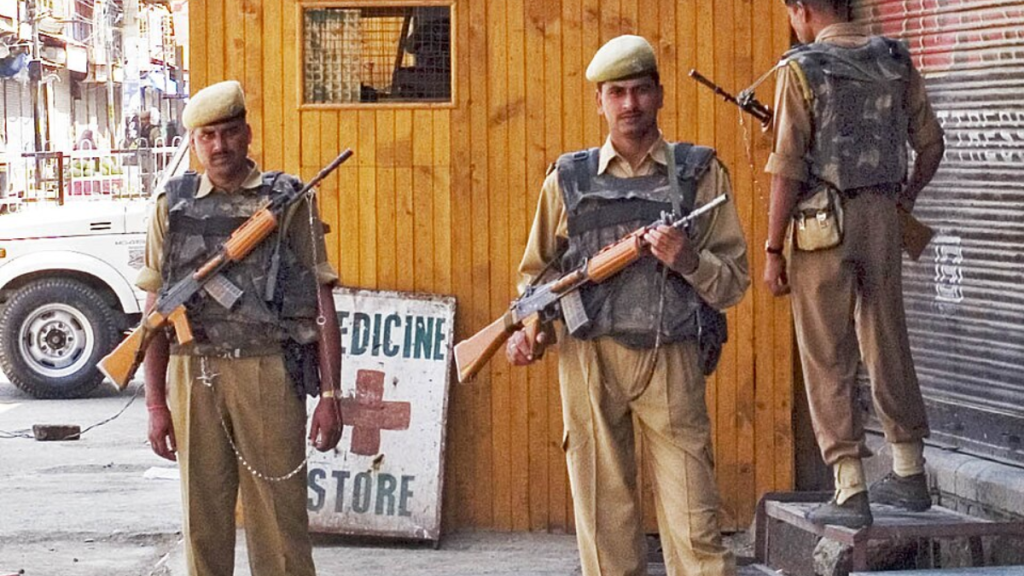
Jammu & Kashmir Lieutenant Governor Manoj Sinha, in a post on X, said he had spoken to the director general of police, Nalin Prabhat, and top security officials following the incident. He called it a “brutal terrorist attack in Kulgam” and said he “strongly” condemned the “cowardly act”. He added that he had directed security forces to step up operations to eliminate the militants responsible.
“J&K Police and security forces have cordoned off the area and launched an operation to bring the perpetrators to justice,” he said.
The ruling National Conference said, “These people are here to earn their livelihoods, and this unfortunate incident is in no way acceptable in any civilised society. It is shocking to witness such gruesome killings in spite of the claims made on the security apparatus.”
People’s Democratic Party chief and former chief minister Mehbooba Mufti said, “They work themselves to the bone far away from home only to feed their families. Unimaginably cruel to target them in such senseless acts of violence.”
The valley saw the targeting of non-local labourers in October 2024, when militants killed Ashok Chauhan, a 30-year-old worker from Bihar. Days later, a terror strike at the base camp of the Z Morh tunnel on the Srinagar-Leh highway killed six non-local workers and a Kashmiri doctor.
In 2021, militants in Jammu & Kashmir carried out a series of targeted killings aimed at migrant workers and members of the Kashmiri Pandit religious minority who had remained in or returned to the valley. Victims included street vendors, labourers from states such as Bihar and Uttar Pradesh, a prominent pharmacist and a schoolteacher, among others, with attacks concentrated particularly around October 2021.
These killings were widely seen as an attempt to spread fear among minorities and outsiders and to disrupt any sense of normalcy in the region following the 2019 revocation of Jammu & Kashmir’s special status. They caused significant panic, with some non-local workers and Pandit families fleeing the valley temporarily, and prompted increased security deployment by Indian authorities.
Over the last six years, more than 25 non-local workers have been killed in different parts of the valley, according to a report by The Indian Express.
The attacks also come at a time when neighbouring Pakistan-occupied Jammu and Kashmir (PoJK) is reported to be volatile, with several people said to have been killed there.