


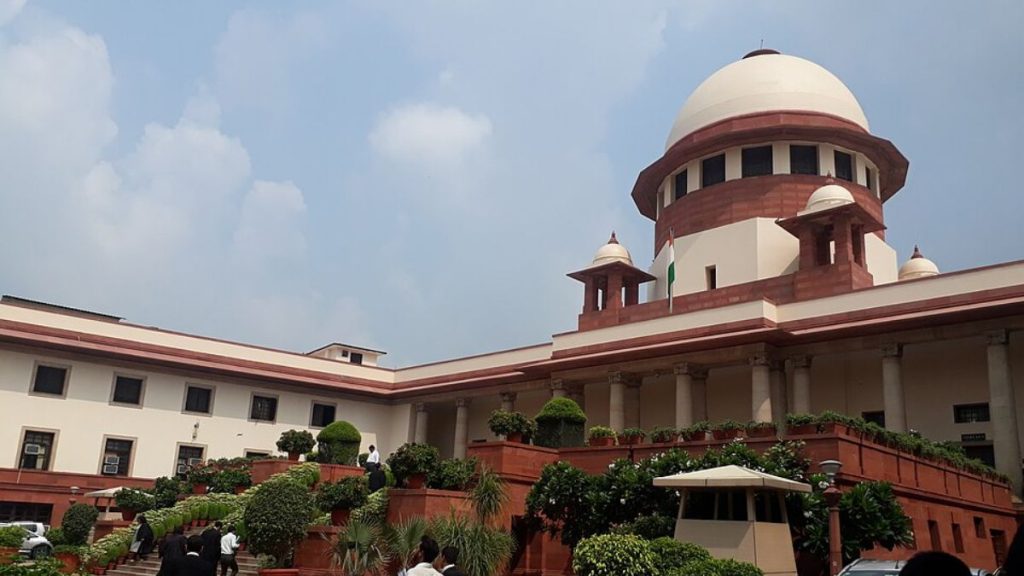
New Delhi: The Supreme Court has allowed certified green firecrackers to be burst in Delhi-NCR on November 7 and 8, subject to strict limits on timings and locations. The region-wide ban on firecrackers will return on November 9, as the capital grapples with worsening air quality ahead of Diwali.
The directions were issued by justices MM Sundresh and Prasanna B Varale in an October 29 order made public on Monday. Firecrackers may be burst only from 6am to 7am and from 8pm to 10pm on both days, with Diwali falling on November 8.
The order prohibits firecracker use within 300 metres of hospitals, nursing homes, primary and district health centres, old-age homes and notified silence zones. The restriction also applies to educational institutions, with authorities instructed to mark and publicize no-cracker zones.
Only manufacturers certified by CSIR-National Environmental Engineering Research Institute (CSIR-NEERI) and the Petroleum and Explosives Safety Organisation (PESO) may make approved green crackers between November 2 and 6.
The court directed authorities to temporarily restore cancelled traders’ licences from November 4 to 6. Sales are restricted to designated locations, while online transactions remain prohibited.
Approved products must be sold in sealed boxes carrying those products and batch specific QR codes showing manufacturers’ details, registrations and test certificates. Firecracker strings, known as ladis, products containing barium and conventional crackers remain prohibited.
Police and district authorities must patrol sales locations, inspect QR codes and check vehicles entering Delhi-NCR to prevent illegal supplies. Manufacturers and traders must also provide security deposits, liable to forfeiture for violations.
The restrictions come amid deteriorating air quality in the capital. As RNA Media reported earlier on Monday, Delhi’s citywide air quality index reached 314 at 10am on Monday, entering the “very poor” category as winter pollution-control measures intensified.
The court cited poor enforcement of earlier firecracker restrictions and noted that conventional products had continued to be sold under the guise of green crackers, despite the broader ban.
CSIR-NEERI says green crackers use modified formulations intended to reduce particulate emissions compared with conventional fireworks. They still release pollutants, and the court acknowledged the public-health risks associated with firecracker use.
The central pollution control board and regional agencies must submit daily air-quality reports covering November 2 to 30, alongside environmental samples and figures on post-festival hospital admissions. Compliance reports are due by December 14, with the next hearing scheduled for December 16.
The relaxation is temporary, with the full prohibition due to resume immediately after the two permitted days.