


New Delhi: India and Uzbekistan sealed a long-term agreement for the supply of uranium during a visit by the prime minister, Narendra Modi, to Tashkent, marking one of the most significant outcomes of a day packed with high-level engagements between the two countries.
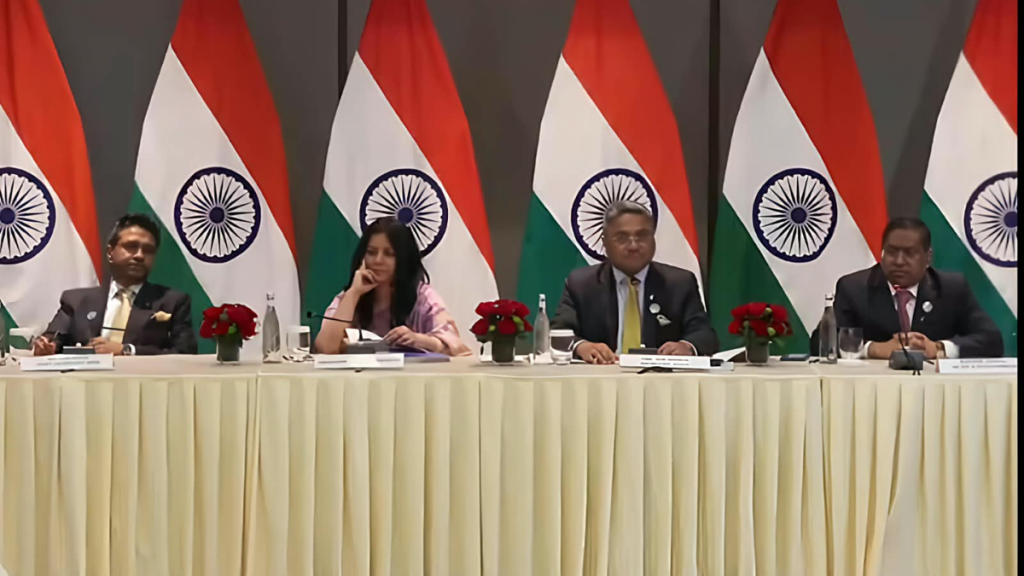
Briefing reporters on the visit, the secretary (west) in the Ministry of External Affairs, Sibi George, said the president of Uzbekistan, Shavkat Mirziyoyev, hosted Modi in Tashkent. The programme began with a yoga session in the morning, after which Modi was accorded a ceremonial welcome at the Presidential Palace. This was followed by delegation-level talks between the two leaders in the presence of ministers and senior officials from both sides.
Around 11 MoUs and agreements were exchanged during the ceremony, spanning economic, cultural and institutional cooperation. Besides the uranium supply pact, the two governments agreed to deepen economic engagement in mineral resources, textiles, healthcare and pharmaceuticals, and agriculture, and to reduce trade barriers, including on banking and payment connectivity.
The India-Uzbekistan Inter-Governmental commission was upgraded from the secretary level to the ministerial level, reflecting the growing scale of bilateral ties. According to George, Uzbekistan is an important partner for India in the Shanghai Cooperation Organisation (SCO) and the United Nations, besides being a partner country of BRICS, and the two sides exchanged views on regional and global developments and cooperation in multilateral forums.
On defence, India and Uzbekistan continue to hold the Dustlik joint military exercise annually, conducted alternately in the two countries.
As earlier reported by RNA Media, Modi announced a series of cultural initiatives, including a Hindi studies scholarship in Tashkent marking the 60th anniversary of the former prime minister, Lal Bahadur Shastri, and the establishment of an ICCR Sanskrit Chair at the Tashkent State University of Oriental Studies. India has also invited Uzbekistan to participate in Waves 2.0.
Separately, state-level agreements were signed involving Gujarat, Agra and Haryana, while Indian companies – including L&T – have already expanded their footprint in Uzbekistan.