


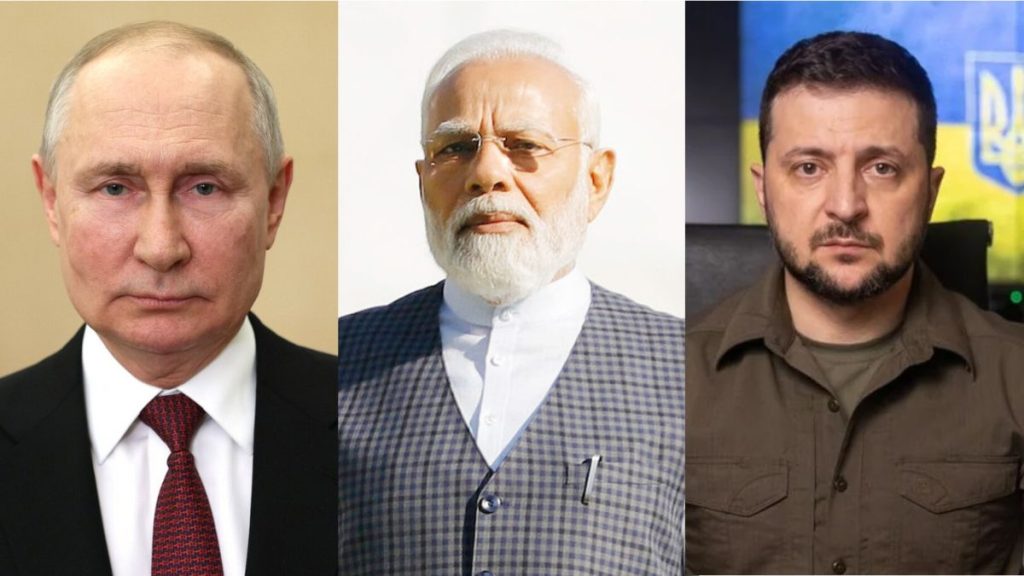
New Delhi: India has presented Russia and Ukraine with three proposals aimed at reducing the war’s economic and humanitarian impact as diplomatic efforts to end the conflict gather momentum. The measures focus on protecting critical infrastructure from attacks, maintaining grain and energy exports through Black Sea ports, and safeguarding merchant vessels and civilian crews.
The Ministry of External Affairs spokesman, Randhir Jaiswal, said on Tuesday that New Delhi had been engaging both Moscow and Kyiv on shipping safety, export disruptions and possible non-attack arrangements. India has also exchanged ideas with both sides on establishing food corridors, although the proposals have not resulted in an agreed ceasefire or jointly endorsed peace framework.
The proposals include halting attacks on energy facilities and critical infrastructure, ensuring the continued movement of grain and energy shipments, and preventing strikes on commercial shipping, the Economic Times reported. The measures seek to limit the conflict’s wider economic consequences without directly addressing the territorial and security disputes at the centre of the war.
India’s diplomatic efforts have developed over several months. During his September visit to Kyiv, the external affairs minister, S Jaishankar, discussed maritime security and peace initiatives with Ukrainian leaders, while on October 4 he publicly acknowledged India’s engagement with both sides on Black Sea shipping, grain and energy exports, and possible non-attack arrangements.
The latest proposals also build on India’s engagement at the G20 foreign ministers’ meeting in Atlanta in late October. Jaishankar identified the protection of civilian shipping, restoration of Black Sea grain exports and energy security as three priority areas, as RNA Media reported.
Ukraine responds to India’s proposals
The Ukrainian foreign minister, Andrii Sybiha, described India’s proposal as the broadest among four ceasefire initiatives received by Kyiv, including those from the United States, Turkiye and Egypt. He said Ukraine was prepared to consider a truce covering both energy infrastructure and the Black Sea, provided the two issues were addressed together.
However, Moscow has resisted partial ceasefires and continued to insist on a comprehensive settlement of the conflict. On Tuesday, Sybiha said proposals for a Black Sea ceasefire had been conveyed to Russia through India, Turkiye and Egypt, but Kyiv had yet to receive a response, Reuters reported.
Black Sea security and Indian seafarers
Protecting commercial shipping has become particularly important for India because Indian nationals serve aboard merchant vessels operating in the Black Sea region. Attacks on civilian ships have raised concerns over crew safety and disruptions to international maritime trade.
On November 3, Jaiswal said five Indian nationals had been killed and two remained missing following attacks on commercial shipping in the Black Sea region. An Indian sailor was also injured when the MV Royad Mammadov was struck on October 5, prompting New Delhi to reiterate its concerns over attacks on merchant vessels and seafarers.
India had earlier summoned Russia’s chargé d’affaires following a missile strike on the merchant vessel MV Golden Leo off Ukraine’s Odesa coast in July that killed four Indian seafarers. The vessel was carrying Ukrainian corn when it was attacked, prompting New Delhi to lodge a formal diplomatic protest, as RNA Media reported.
Days later, India also summoned Ukraine’s ambassador following an attack on the commercial vessel MV Omorfi that killed another Indian national. The Ministry of External Affairs condemned the attack and emphasized that targeting commercial shipping and endangering civilian seafarers was unacceptable.
Black Sea disruptions affect India’s imports
The Black Sea remains an important gateway for Ukrainian agricultural exports, and disruptions to shipping have increased concerns over global food security and supply chains. European Commission figures show that only about 10 per cent of Ukrainian grain, oilseed and related-product exports moved through Black Sea ports in September this year, compared with a cumulative share of 60 per cent since May 2022.
Around 90 per cent of these agricultural exports used the European Union’s solidarity lanes in September, including rail, road and inland waterways. The figures highlight the growing importance of alternative transport routes as maritime trade faces continued security risks.
The disruptions have also directly affected India’s edible oil imports, particularly sunflower oil shipments from Russia and Ukraine. India’s edible oil imports declined by approximately seven per cent in September, while sunflower oil imports fell to 108,837 tonnes, their lowest level since April 2022.
A 20,000-tonne shipment of Russian sunflower oil destined for India was cancelled in October following damage to Black Sea port infrastructure, while approximately 60,000 tonnes of additional shipments were delayed, Reuters reported. The disruptions prompted Indian importers to increase palm oil purchases and consider alternative supplies amid concerns over freight costs and delivery schedules.
Modi, Zelenskyy discuss food corridors
The prime minister, Narendra Modi, discussed the conflict with the Ukrainian president Volodymyr Zelenskyy during a telephone conversation on Monday and reiterated India’s support for dialogue and diplomacy. The conversation came ahead of the US-brokered negotiations in Abu Dhabi, with New Delhi reaffirming its willingness to contribute to peace efforts without announcing a formal mediation role, as RNA Media reported.
Zelenskyy said the two leaders discussed restrictions on Ukrainian grain exports through the Black Sea and that Kyiv was counting on Indian assistance in establishing food corridors. Although the Ukrainian president described India as ready to mediate, New Delhi has not publicly announced a formal mediation arrangement.
The external affairs minister, S Jaishankar also spoke with Russian foreign minister, Sergey Lavrov on Monday about the conflict and ongoing diplomatic initiatives. The parallel engagements with Moscow and Kyiv reflect India’s efforts to maintain communication with both sides while supporting measures that could reduce the war’s wider consequences.
Abu Dhabi negotiations resume
India’s diplomatic outreach coincides with the resumption of US-mediated negotiations involving Russia and Ukraine in Abu Dhabi on Tuesday, the first trilateral round since February. The opening session lasted nearly four hours, while disagreements over territorial control in Donetsk and future security guarantees remained unresolved, as RNA Media reported.
The negotiations focused on humanitarian issues, including prisoner exchanges and the return of detained civilians, alongside proposals for future security guarantees. The US secretary of state, Marco Rubio, described the discussions as productive, while Zelenskyy called them constructive and substantive, Associated Press reported.
However, significant differences remain over territorial control and security arrangements, with Moscow demanding Ukrainian concessions and Kyiv insisting on credible guarantees against future attacks. India is not a participant in the trilateral negotiations, and its proposals on shipping safety, essential exports and non-attack arrangements have yet to produce a publicly confirmed agreement