


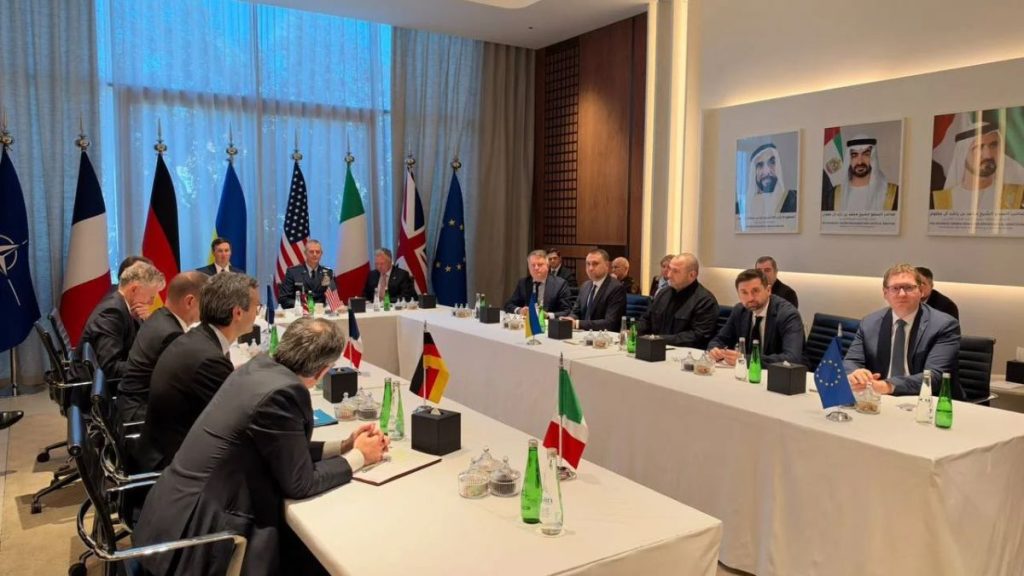
New Delhi: Ukraine, Russia and the United States resumed peace negotiations in Abu Dhabi on Tuesday, their first trilateral round since February. The opening session ended after nearly four hours, with US officials claiming limited private flexibility over territory despite continuing disagreements over Donetsk and postwar security.
US envoys, Steve Witkoff, and Jared Kushner, joined delegations led by Ukraine’s foreign intelligence chief Rustem Umerov and Kremlin aide, Vladimir Medinsky. Senior Ukrainian officials Kyrylo Budanov and Davyd Arakhamia attended, alongside Russian deputy foreign ministers, Sergei Ryabkov and Mikhail Galuzin.
Donetsk remains central obstacle
Russia wants Ukraine to surrender the remaining Kyiv-held parts of Donetsk, within the wider Donbas region, while Kyiv rejects ceding territory its forces defend. A US official said both sides had shown “a little bit of flexibility, privately”, but a senior Ukrainian official denied considering concessions and said territorial questions belonged at the leaders’ level.
Washington believes territorial disputes cannot be settled separately from guarantees against renewed war. “They will not solve the Donetsk issue and the territorial issue until they know what the security architecture is going to be after the war. And keep in mind, we’re not going to be able to finalize one without the other,” the official told the BBC.
The proposed framework includes military consultations, crisis hotlines, reciprocal de-escalation and possible revival of the largely dormant Nato-Russia council. For Kyiv, security means credible assistance against another invasion; Moscow wants broader limits on Nato’s role in eastern Europe, proposals that have not been accepted by the alliance.
Europe demands role in negotiations
Europe’s exclusion from the central negotiating table remains contentious, despite separate consultations with Ukrainian and American officials in Abu Dhabi. Representatives of Britain, France, Germany, Italy, the European Union and Nato said any settlement must respect Ukrainian sovereignty, provide credible guarantees and preserve Nato’s central role in collective defence, according to an EU statement.
Russia has resisted immediate European participation, arguing that a continent-wide security arrangement should be central to the talks. The Washington is proposing a wider negotiating format that would bring European governments into discussions on the continent’s security architecture. “Hopefully we’ll get the Russians on board,” a US official told the BBC, acknowledging Moscow’s reluctance to involve European representatives.
“Our key priorities are a cessation of hostilities, reliable post-war security guarantees, economic recovery and development of Ukraine, and humanitarian steps. We are working to make as much progress as possible on these issues and bring peace closer,” Umerov wrote on social media.
“An important part of this process is encouraging all parties to begin thinking seriously about what comes after the war,” Kushner wrote on X. He also told delegates that recent diplomatic contacts had narrowed differences, without suggesting an agreement was imminent.
Fighting continues despite diplomacy
Negotiations resumed while Russian strikes continued against Ukrainian energy infrastructure and Ukraine attacked targets inside Russia. The Ukrainian president, Volodymyr Zelenskyy, said Ukrainian battlefield gains were strengthening Kyiv’s negotiating position, although Moscow has not publicly softened its territorial demands.
Ukraine’s foreign intelligence service confirmed that the first day’s discussions had concluded and would resume on Wednesday. No ceasefire, territorial settlement or security agreement has emerged, leaving the next session focused on whether the three sides can narrow their differences.