


New Delhi: The US president, Donald Trump, said American and Iranian officials had met on Tuesday, hours after he threatened to “annihilate” the Islamic Republic unless an agreement was reached to end their nearly seven-month war. The disclosure followed a United Nations General Assembly address in which he defended the conflict and opposed international restrictions on artificial intelligence.
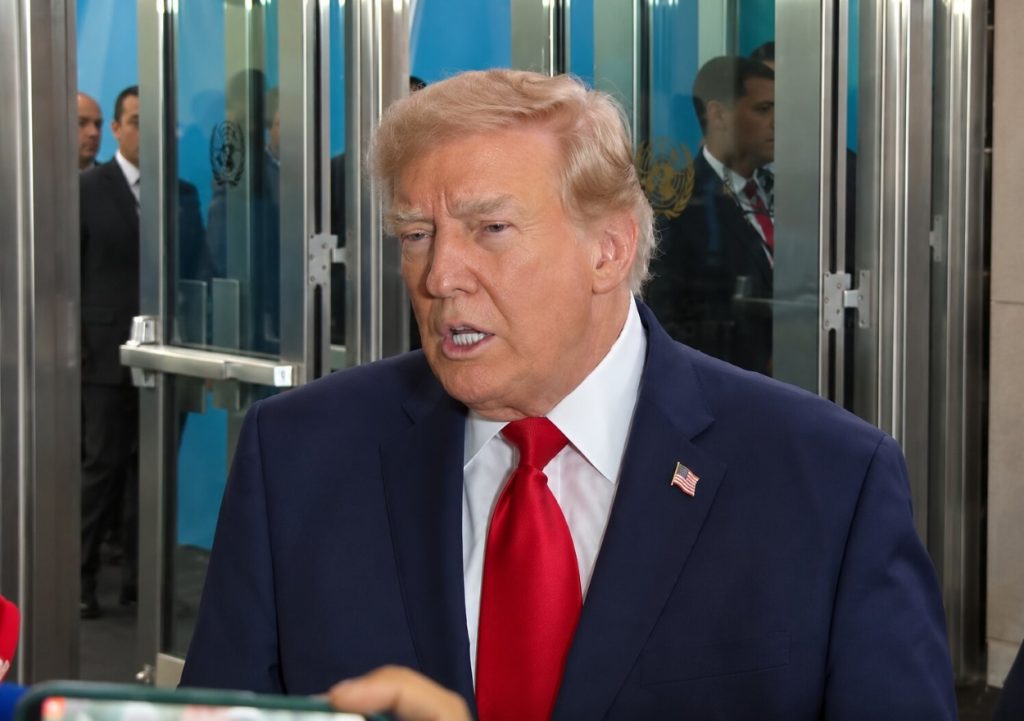
Speaking to reporters, Trump described the encounter as “a very good meeting” but provided little information about the participants, substance or arrangements. The US secretary of state, Marco Rubio, separately said Trump was willing to meet the Iranian president, Masoud Pezeshkian, during the gathering in New York.
The reported contact offered a possible opening after diplomatic efforts had struggled to regain momentum following the collapse of a ceasefire brokered on June 17. American and Iranian negotiators subsequently held separate discussions with Qatari and Pakistani mediators in Doha in early July.
At the UN podium, however, Trump maintained that military pressure had fundamentally weakened Iran, claiming US and Israeli attacks had devastated its armed forces and weapons production. He presented Tehran with a choice between an agreement allowing reconstruction and further American military action, while insisting that Iran would never acquire nuclear weapons.
Trump also urged other countries to intensify Iran’s economic isolation, arguing that coordinated pressure would eventually bring down energy prices. As RNA Media had reported on Tuesday, most members of Iran’s delegation left the chamber during his criticism of their country.
The economic consequences of the conflict remained central to the diplomatic discussions, with Brent crude trading around $100 a barrel compared with roughly $70 before the war. Although commercial traffic through the Strait of Hormuz had improved, continuing threats to shipping and energy infrastructure were sustaining uncertainty over supplies.
Qatar, which has sought to revive negotiations, identified distrust between Washington and Tehran as a major obstacle. Its foreign ministry spokesperson, Majed al-Ansari, argued that a negotiated settlement would ultimately be necessary and that delay would only increase casualties and destruction.
Trump’s defence of the campaign also included a rejection of reports that prolonged fighting had strained American weapons reserves. However, a study by the Center for Strategic and International Studies indicated, as RNA Media had reported, that some heavily used missile and interceptor stocks could take three to four years to replenish.
Beyond Iran, Trump rejected international controls on artificial intelligence and said Washington would adopt the term “super intelligence” in place of AI. He portrayed rapid development as essential to American technological leadership, dismissed safety warnings as a “hoax” and said US law-enforcement agencies could intervene when necessary.
That dismissal contrasted with concerns emerging from within the technology industry itself. Recently, senior figures at leading AI companies had supported calls for a slower pace of development, while American lawmakers from both parties had proposed regulatory measures. Trump had earlier rejected those concerns as well, as RNA Media had reported.
Trump also renewed his prediction of a settlement in Ukraine and urged countries to withdraw from the International Criminal Court. His remarks combined support for American military and technological power with criticism of international institutions that he portrayed as constraining US interests.
On the sidelines, he signed an agreement with Denmark and Greenland expanding American military access to the Arctic territory. The pact updates their 1951 defence arrangements and preserves Greenland’s role in decisions affecting its territory, adding another security negotiation to a gathering dominated by war and energy concerns.