


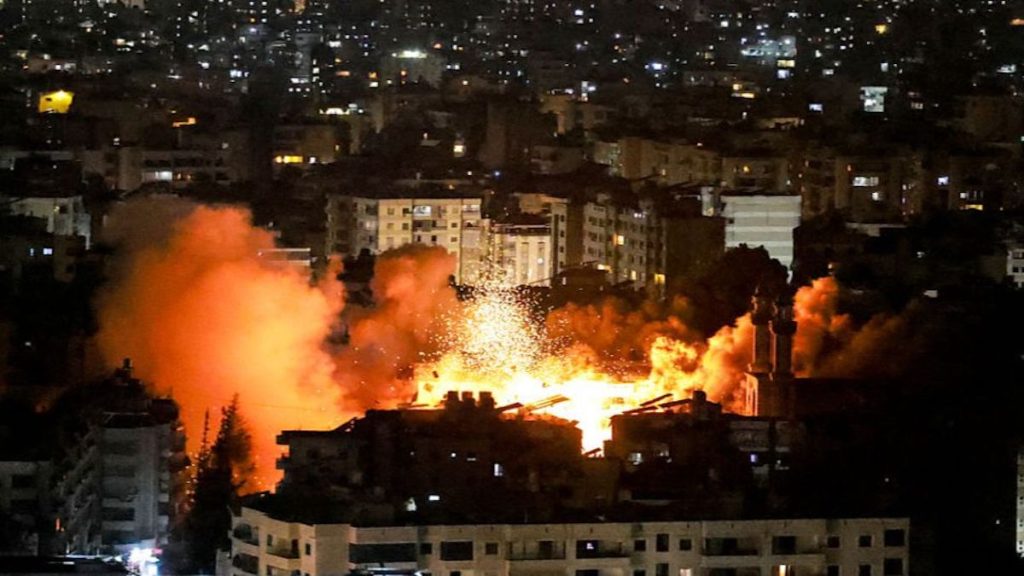
New Delhi: The next phase of the fragile United States-Iran peace process is expected to move forward in Switzerland on Saturday despite fresh uncertainty triggered by Israeli military strikes in Lebanon. Israel’s strikes, which have killed dozens of innocent civilians, have cast doubt over the durability of the recently signed memorandum of understanding (MoU) between Washington and Tehran.
US special envoy Steve Witkoff and other American officials are expected to arrive in Switzerland for talks aimed at translating the broad political framework agreed earlier this week into a more detailed roadmap. However, the negotiations remain overshadowed by Tehran’s growing frustration over Washington’s inability to halt Israeli military operations in Lebanon, which Iranian officials view as a direct challenge to the spirit of the agreement.
The MoU, signed after months of indirect diplomacy and following the devastating regional conflict that erupted earlier this year, envisages a 60-day window for negotiations on outstanding issues, including sanctions relief, regional security arrangements and Iran’s nuclear programme. Yet its future has been thrown into question after renewed Israeli strikes in southern Lebanon killed several people despite a ceasefire arrangement intended to stabilize the situation.
Read also: Vance rebukes Israeli critics of US-Iran deal, warns against attacking ‘only powerful ally’
Iran has so far stopped short of confirming full participation in the Swiss talks. Iranian officials have repeatedly argued that the ceasefire agreement applies across all fronts linked to the wider conflict and have accused both the US and Israel of undermining the de-escalation process through continued military action in Lebanon.
The uncertainty was reflected on Thursday when the US vice-president, JD Vance, postponed a planned trip to Switzerland, with the White House citing unresolved logistical issues. American officials, however, insisted that Washington remained committed to launching the technical phase of negotiations at the earliest opportunity.
According to diplomatic sources cited by multiple international media outlets, Tehran has made clear that developments in Lebanon have become a “make or break” issue for the continuation of negotiations. Iranian representatives are reportedly waiting to see whether the ceasefire on the Israel-Lebanon front holds before fully committing to the next round of discussions.
Read also: US-Iran peace deal – Israelis react angrily, prominent voices express concern
The US president, Donald Trump, has publicly defended the agreement despite criticism from both domestic political opponents and some Israeli leaders. Trump has also said he urged Israel to support efforts aimed at preserving the ceasefire and preventing further escalation.
The latest violence in Lebanon underlines the challenge facing diplomats attempting to separate regional conflicts from the broader US-Iran negotiations. While Israel is not a party to the MoU, Tehran maintains that continued Israeli military action directly affects the viability of any long-term understanding with Washington.
The human cost of the conflict continues to mount. Among the latest casualties was Mona Khalil, one of Lebanon’s best-known environmental campaigners and a pioneer in sea turtle conservation. Khalil died from injuries sustained in an Israeli strike on her home in southern Lebanon earlier this month, drawing tributes from environmental groups and conservationists across the region.
Despite the diplomatic turbulence, mediators from Qatar and other countries are understood to be working intensively to keep the US-Iran process alive. The diplomatic push has also drawn in regional actors.
Pakistan’s interior minister, Mohsin Naqvi, arrived in Tehran on Saturday for meetings with senior Iranian officials aimed at reviewing the status of the US-Iran peace process, according to Iranian state media agency Irna. Naqvi has made several visits to Iran since the outbreak of the conflict earlier this year and is expected to discuss recent developments with key Iranian leaders as efforts continue to preserve momentum behind the fragile negotiations.
The Swiss talks, if they proceed as expected, could provide the first indication of whether the ceasefire framework can survive regional tensions and evolve into a broader settlement after months of war that has destabilized much of West Asia.