


New Delhi: The US vice-president, JD Vance, has publicly rebuked Israeli politicians and commentators on Thursday for criticizing the US-Iran memorandum of understanding (MoU) the presidents of the two countries – Donald Trump and Masoud Pezeshkian – signed on the same day. Vance warning that Israel should be careful about attacking the Trump administration, which he described as the Jewish state’s strongest remaining international supporter.
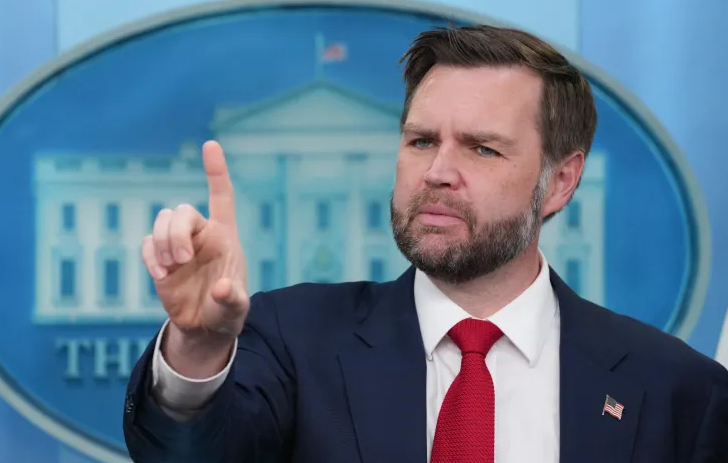
Speaking during a media briefing in the Brady Briefing Room of the White House on Thursday, Vance delivered an unusually blunt message to Israeli critics of the agreement that aims to end the West Asia war that began on February 28 this year, when Israel and the United States launched a major military campaign against Iran.
“President Trump is the only head of state in the entire world who is sympathetic to the nation of Israel at this moment in time,” Vance said.
He then went on to caution Israeli officials against publicly attacking Washington over the agreement.
“If I was in the cabinet of the Israeli government, I might not be attacking the only powerful ally that I have anywhere left in the entire world,” he said. Vance also stressed that much of Israel’s defensive capability had been financed by American taxpayers and supported by US military assistance.
The remarks represent one of the strongest public criticisms of Israeli political discourse by a senior member of the Trump administration since the war began and underscore growing tensions between Washington and the government of the prime minister, Benjamin Netanyahu.
Israeli ‘freakout’
The White House comments followed an earlier interview with the New York Times, in which Vance criticised what he described as the Israeli “freakout” over the agreement.
In that interview, he argued that opponents of the deal were reacting emotionally and often on the basis of incomplete or inaccurate information about its provisions. Reuters, which reported the interview, said Vance dismissed the backlash and urged critics to recognize the strategic realities facing both Israel and the wider region.
The vice-president’s decision to return to the issue publicly from the White House suggests the administration is increasingly concerned by efforts within Israel to mobilise opposition to an agreement that Trump has portrayed as a major diplomatic achievement.
Growing Israeli unease
As RNA Media had reported earlier, the US-Iran accord has generated significant criticism across sections of the Israeli political establishment.
Critics argue that the agreement does not require the immediate dismantlement of Iran’s nuclear infrastructure, does not directly address Tehran’s ballistic missile programme and provides economic incentives without securing sufficient guarantees against future Iranian military activity.
Israeli officials have also expressed concern that sanctions relief and the gradual reintegration of Iran into the global economy could strengthen Tehran’s position after more than three months of war.
The criticism has emerged at a particularly sensitive political moment for Netanyahu, whose government has faced mounting questions over both the conduct of the war and Israel’s future relationship with Washington.
What the MoU contains
The memorandum signed by Washington and Tehran establishes a 60-day negotiating period during which the two sides will attempt to convert the framework into a broader and more durable settlement. According to Vance, the 60-day clock formally began on Thursday.
The agreement is designed to end hostilities, reopen regional trade and shipping routes, and create a framework for negotiations on issues including Iran’s nuclear programme, sanctions relief and regional security arrangements. The full text has yet to be publicly released.
Vance has repeatedly argued that the agreement places the burden on Iran to comply with its commitments, saying Tehran will receive no long-term economic benefits unless it fulfils its obligations under the deal. During Thursday’s briefing, he said the Iranians “have to perform” if the process is to move forward. ([eNCA][1])
Rare public disagreement
The significance of Vance’s remarks lies not merely in their substance but in their tone. Successive US administrations have generally sought to manage disagreements with Israel behind closed doors. However, by publicly warning Israeli politicians against attacking Trump and by describing him as Israel’s only major ally, Vance highlighted a level of frustration within the administration that is rarely expressed so openly.
The comments also point to an emerging divergence between Washington and Jerusalem over how to deal with Iran after the war. While the Trump administration is seeking to consolidate the ceasefire and build a broader diplomatic framework, many Israeli officials remain sceptical that negotiations can adequately address the long-term threat they believe Iran poses.
For now, the US-Israel alliance remains intact. However, Vance’s remarks have exposed one of the most visible public disagreements between the Trump administration and the Netanyahu government since the conflict began, illustrating the political challenges that could complicate implementation of the agreement in the weeks ahead.