


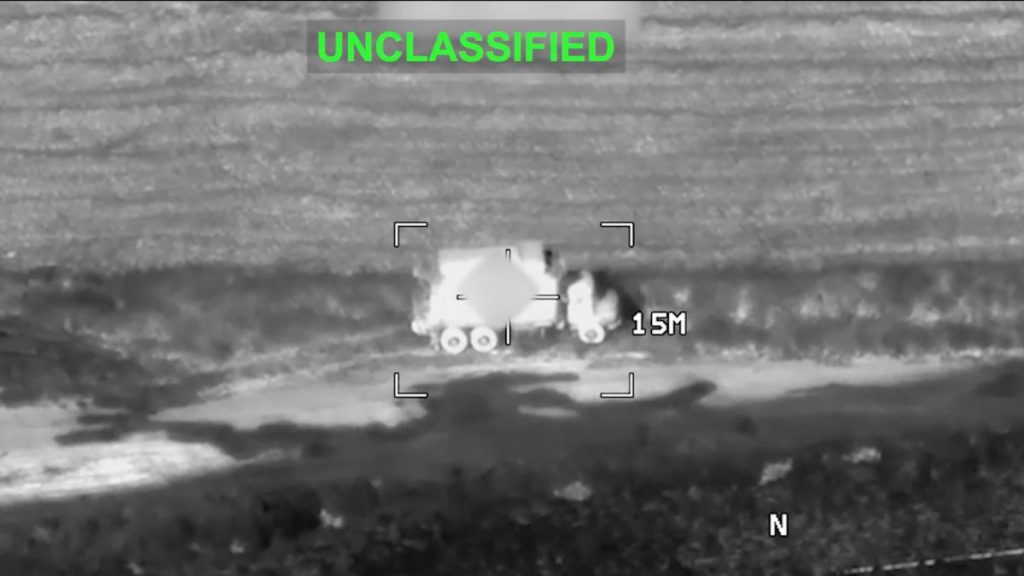
New Delhi: The US carried out a fresh wave of airstrikes against Iran on Wednesday night, targeting dozens of Islamic Revolutionary Guard Corps (IRGC) facilities. The strikes came in retaliation for Iran’s ballistic missile attack on US forces in Jordan and its actions against ships in the Strait of Hormuz a day earlier.
The US Central Command (Centcom) said its forces completed a “heavy wave” of strikes against Iran at 10pm US Eastern Time (7.30am IST, Thursday), targeting dozens of IRGC sites across the country.
The confrontation marks a sharp reversal after several days of relative calm had raised hopes that Washington and Tehran might return to the negotiating table.
This is the second major flare-up in less than a week. Days earlier, the US and Saudi Arabia had already struck Iran-backed militias in Iraq after an Iranian missile attack, as reported by RNA Media. That round also saw Houthi attacks on Saudi shipping and Iran claiming to have intercepted tankers in the strait.
A war without an end date
When the US and Israel first launched strikes on Iran back in February, the US president, Donald Trump, predicted the war would last only a few weeks. Five months later, there is still no resolution in sight.
The conflict has moved through several phases of escalation and pause. Most recently, Trump suspended an intensive US bombing campaign last Friday, after 13 consecutive nights of strikes on Iranian weapons and military sites in which scores of people were reported killed.
That pause appeared to open space for diplomacy. Trump described the ensuing talks as “very friendly negotiations”, though Iranian officials publicly denied any negotiations were taking place at all.
The calm broke down quickly. A day before Wednesday’s strikes, the US and Saudi Arabia carried out their first publicly acknowledged joint military operation, bombing Iran-backed militia positions in eastern Iraq. Centcom said the strikes were a response to more than 30 IRGC-directed drone attacks on Saudi energy infrastructure over the previous 72 hours.
Iraq’s Popular Mobilization Forces, an umbrella group dominated by Iran-backed Shia militias, said at least 20 of its members were killed. Iraq’s presidency condemned the bombing as “an unacceptable attack and a blatant violation of Iraq’s sovereignty.”
Trump, however, told Fox News the operation had actually been “coordinated with the Iraqi government”, leaving two conflicting versions of the same event on record. Saudi Arabia’s defence ministry separately said the kingdom “does not seek escalation but will respond to any aggression.”
What Triggered Wednesday’s Strikes
According to Centcom, Iran responded to the Iraq operation with what it called an “attempted surprise attack” on US forces at around 5.45pm ET on Tuesday (3.15am IST Wednesday). It fired multiple ballistic missiles toward American positions and moved against tankers in the Strait of Hormuz in the same window.
Jordan’s military said it intercepted five of the incoming missiles before any damage occurred. Centcom confirmed no American troops or installations were harmed, though forces remained “vigilant and at a high state of readiness”.
Iran’s IRGC gave its own account through state media. It said its Aerospace Force had launched several ballistic missiles at “a US airbase and the US military’s Central Command headquarters” in Jordan, calling it a response to “the acts of aggression of the American child-killing army.”
The IRGC also said its navy had halted three oil tankers in the strait, claiming the vessels had “violated our warnings and continued sailing along an unsafe and unlawful route.” It warned that further “unlawful interference” by US forces “will not go unanswered.”
Hours before the American counterstrike, Trump warned reporters at the White House that retaliation was imminent. “We’re going to be hitting them very hard because it’s our turn to hit them,” he said. “They know it’s coming. They asked us not to do it.”
Inside Wednesday’s US Operation
Once the strikes concluded, Centcom called them “a powerful response to yesterday’s attempted Iranian attacks on US forces based in the Middle East.” It listed the targets as military command centres, missile and drone facilities, coastal surveillance and defence sites, and maritime military capabilities tied to the IRGC.
This marks the first direct US strike on Iranian territory since Washington called off its two-week nightly bombing campaign around the strait the previous weekend.
Notably, Iran fired first in this round, rather than responding after an initial US strike, the more common pattern through much of this conflict. A CNBC report quoted Seth Krummrich, vice president at security firm Global Guardian and a retired US Army colonel, saying this shift suggests Tehran may be growing more aggressive and relying less on diplomacy.
Oil Markets and Shipping Disruption
The renewed hostilities have hit oil markets hard, with prices surging on fears of further supply disruption. Roughly a fifth of the world’s oil transit passed through the Strait of Hormuz before the conflict began.
Vessel traffic through the strait remains heavily depressed compared with pre-war levels. The Trump administration also sanctioned two Iranian firms this week accused of running an IRGC-backed extortion scheme that forces commercial vessels to buy mandatory “insurance” to transit the strait.
Diplomatic Signals Amid the Fighting
Even as strikes escalated, signs emerged that some parties were still pushing for de-escalation. Axios reported, that Saudi defence minister, Prince Khalid bin Salman, told, the US vice-president, JD Vance, that Saudi Arabia favours de-escalation with Iran, despite joining the strikes on militias in Iraq. A US official later told Axios that Khalid conveyed the same message directly to Trump in a separate meeting.
That puts Riyadh in a dual role, striking Iran-backed threats alongside the US one day, while pushing for calm through direct talks with Washington the next.