


New Delhi: The fragile pause in fighting between the United States and Iran came to an abrupt end on Wednesday after American and Saudi forces carried out joint airstrikes against Iran-backed militias in Iraq, hours after Tehran launched a fresh barrage of ballistic missiles at US military positions in the Middle East. The latest exchange has renewed fears of a wider regional conflict and heightened concerns over the security of the Strait of Hormuz.
According to US Central Command (Centcom), Iran fired multiple ballistic missiles at American forces in the region following several days of relative calm. The US military said all incoming missiles were intercepted and no American personnel or installations were hit, adding that its forces remain at a high state of readiness amid the renewed tensions.
Soon after the missile attack, US and Saudi fighter aircraft launched coordinated strikes on several logistics and weapons facilities used by Iran-backed militias in eastern Iraq. Centcom said the targeted sites had been used to coordinate more than 30 drone attacks against Saudi Arabia’s energy infrastructure over the previous 72 hours.
The US military warned that Iran’s Islamic Revolutionary Guard Corps (IRGC) and its allied militias must halt attacks on American forces and regional partners or face further military action. Saudi Arabia, while confirming its participation in the operation, said it does not seek escalation but would respond decisively to any threat against the kingdom.
Iraq’s Popular Mobilization Forces (PMF), an umbrella organization of mostly Iran-backed armed groups, said several of its headquarters were hit during the operation. The PMF’s Nineveh command claimed that eight members were killed and four others wounded in the strikes. Images circulating on social media showed flames and thick smoke rising from sites in Nineveh and Basra provinces, although the footage could not be independently verified.
Iran rejected accusations that it had directed recent drone attacks on Saudi oil facilities. An Iranian defence official described attempts to link Tehran to the attacks as a “major miscalculation”, while the Islamic Resistance in Iraq, another Iran-backed umbrella group, also denied involvement and suggested Yemen’s Houthi rebels were responsible.
The latest military action followed reports from Saudi Arabia that its air-defence systems had intercepted several drones targeting petroleum facilities in the kingdom’s eastern region for a second consecutive day. The Iraqi prime minister, Ali al-Zaidi, ordered an investigation into the alleged drone launches, while Iraq’s military reiterated that its territory should not be used as a base for attacks against neighbouring countries.
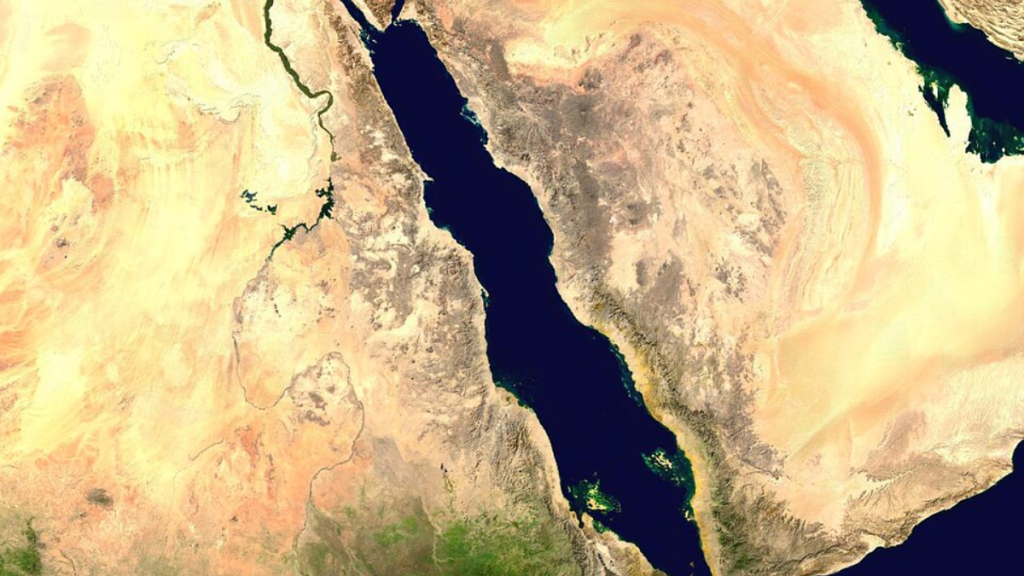
In another sign of expanding regional tensions, the Iran-backed Houthis claimed they had targeted the Saudi oil tanker NCC Ghazal in the Red Sea, forcing it to reverse course. The group said the attack formed part of its self-declared blockade of Saudi shipping. Separately, the United Kingdom Maritime Trade Operations (UKMTO) reported that a commercial tanker heard explosions while transiting the southern Red Sea but said the vessel and its crew were safe.
Iran also claimed its naval forces had stopped three oil tankers in the Strait of Hormuz after accusing them of following what it described as an “unsafe and illegal route”. The IRGC warned that ships operating under what it called unlawful US military guidance in the strategic waterway would face consequences. The claims could not be independently verified.
The Strait of Hormuz has remained a major flashpoint since the conflict intensified earlier this year. Iran had previously threatened commercial shipping and attempted to control vessel movements through the narrow passage, prompting many ships to shift towards routes closer to Oman under the protection of US naval forces. Any disruption in the strait has global consequences, with some one-fifth of the world’s traded oil passing through the waterway.
The resumption of fighting has had an immediate impact on world energy markets, with oil prices jumping more than $3 a barrel on fears of supply disruptions. At the same time, Oman has proposed a Gulf-backed mechanism for jointly managing navigation through the Strait of Hormuz, while Washington has maintained that the international waterway must remain open to commercial shipping.
The latest escalation also coincided with Israeli prime minister, Benjamin Netanyahu’s visit to the White House, where he met US president, Donald Trump, for the first time since the conflict with Iran began earlier this year. Both leaders described their discussions as productive, while Trump reiterated that the United States would “finish the job” if Tehran refused to negotiate an end to the conflict.