


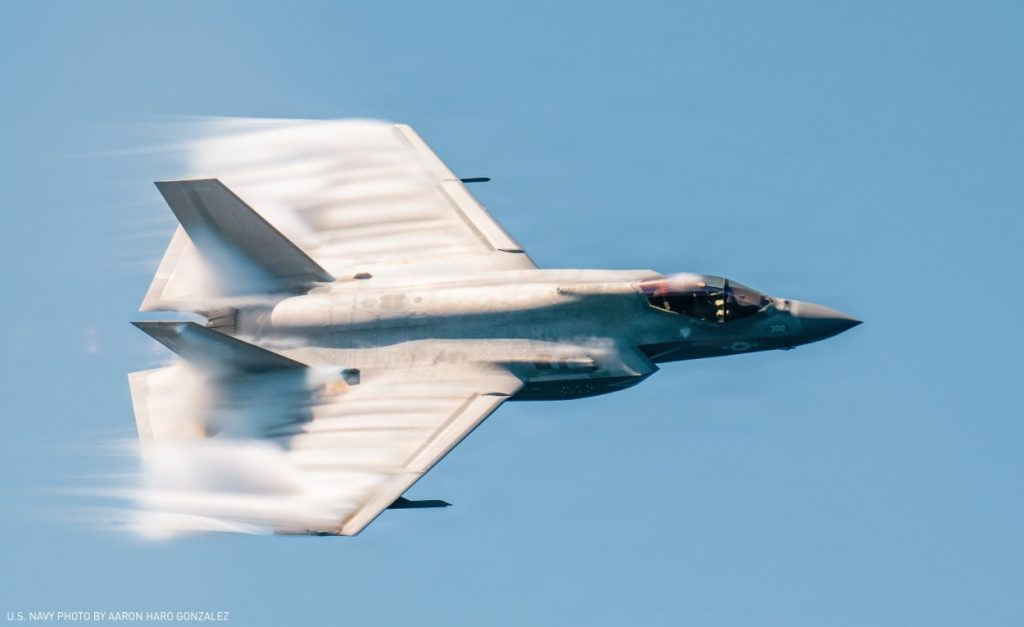
New Delhi: US intelligence officials have warned that a proposed sale of F-35 fighter jets to Saudi Arabia could give China opportunities to obtain sensitive American military technology, according to a New York Times report. The warning has gained urgency since Washington approved a potential $24.3 billion package for Riyadh, although the aircraft have yet to be sold or delivered.
The proposed sale covers 48 Lockheed Martin F-35s, 49 Pratt & Whitney engines, communications equipment, spare parts and support services, Reuters reported. The US state department announced its approval on September 17, moving the proposal to congressional review and bringing a longstanding Saudi request closer to a decision.
The intelligence concern is about what could happen after the fighters enter Saudi service, rather than an allegation that Riyadh has passed American technology to Beijing. According to the Times account, as detailed by AeroTime, a Defense Intelligence Agency assessment examined Chinese access to Saudi military bases and whether facilities holding F-35 equipment could be kept secure.
Read also: $24.3 billion F-35 sale to Saudi Arabia amid China concerns – What’s in the US-Saudi deal?
The aircraft’s radar and surveillance systems are among the technologies that US officials are particularly concerned about protecting, the report said. It also raised questions about who would be allowed into facilities associated with the jets and whether Saudi Arabia would limit contact between Chinese military or intelligence personnel and those sites.
Chinese telecommunications equipment presents a separate security question. The reported assessment asked whether Saudi authorities would remove equipment supplied by Huawei and ZTE from networks and infrastructure linked to F-35 facilities; it did not establish that such equipment had compromised an aircraft or a US system.
For Washington, the issue is difficult because Saudi Arabia is both a major buyer of American weapons and a country with growing ties to China. Riyadh has sought to diversify its defence and technology partnerships while continuing to rely heavily on the United States for combat aircraft, training and support.
The F-35 would add capabilities to a Saudi fighter fleet that includes American F-15s and European Typhoons and Tornados. Its appeal lies partly in its reduced visibility to radar and its ability to gather and share information, making the security of the aircraft, its support systems and the facilities around them consequential to any sale.
The proposal also revives a question about the regional balance of air power. Israel is currently the only country in the Middle East operating the F-35, and US decisions on arms sales to the region must take account of its qualitative military edge.
The Saudi embassy in Washington welcomed the proposed sale as a step in defence cooperation with the United States, according to Reuters. Riyadh has pursued the fighter for years, while Washington has viewed closer security ties with the kingdom as part of its wider policy in the Middle East.
There is a precedent for technology concerns complicating an F-35 transfer to a Gulf partner. A proposed sale to the United Arab Emirates stalled after disagreements that included US concerns over Abu Dhabi’s relationship with China, although the circumstances of that deal do not determine the outcome of the Saudi proposal.
Congress must now consider the Saudi package alongside questions about technology protection, Israel’s military advantage and the broader US relationship with Riyadh. The intelligence assessment identifies risks that officials will have to address if the sale proceeds; it is not evidence that China has obtained F-35 technology through Saudi Arabia.