


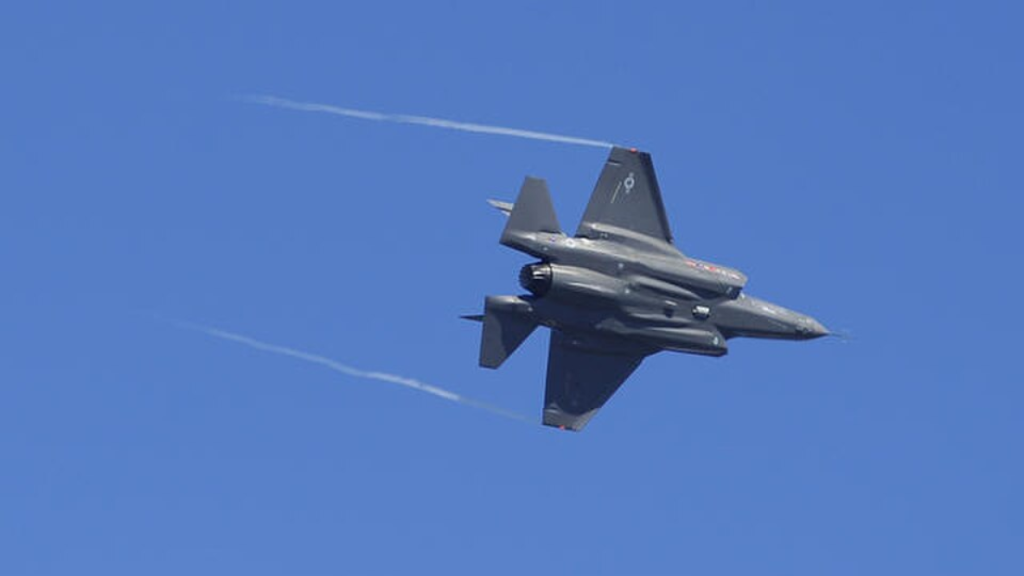
New Delhi: The United States has approved a potential $24.3 billion sale of 48 F-35 fighter jets to Saudi Arabia, giving Riyadh access to one of Washington’s most advanced combat aircraft despite concerns over China’s growing defence ties with the kingdom. The proposed deal comes at a particularly significant moment as Washington has said it will not directly intervene in Saudi Arabia’s ongoing conflict with Yemen’s Houthis.
The US state department’s approval covers 48 F-35 Lightning II aircraft and 49 Pratt & Whitney F135-PW-100 engines, including one spare, along with training, simulators, secure communications, electronic warfare support, software, maintenance, spare parts and other logistical support. The official estimated value of the proposed package is $24.3 billion.
The F-35 would significantly expand Saudi Arabia’s high-end air capabilities, combining stealth, advanced sensors and electronic warfare systems with air-to-air and air-to-ground capabilities. The state department said the sale would strengthen Saudi homeland defence, improve interoperability with US and other allied forces and enhance Riyadh’s ability to deter future threats.
Why the deal is controversial
The biggest concern in Washington is China. US intelligence assessments have reportedly warned that Saudi Arabia’s expanding military and technological relationship with Beijing could create opportunities for sensitive F-35 technology to be compromised, particularly because Chinese personnel and technology are present in parts of Saudi Arabia’s defence and communications infrastructure.
Democratic members of the US house intelligence committee, has opposed the sale on those grounds, arguing that it could expose highly sensitive American military technology to China. The concern is significant because the F-35’s advantage depends not only on its stealth design but also on its sensors, software, electronic warfare systems and other classified technologies.
Can Congress stop it?
The proposed sale will now face congressional scrutiny, with lawmakers having 30 days to review the notification and potentially introduce a joint resolution of disapproval. However, blocking the deal would require congressional action, and overriding a presidential veto would require a two-thirds majority in both the House and Senate.
That means Democratic lawmakers cannot stop the sale on their own. The deal could therefore become a test of how much bipartisan congressional opposition can be assembled around concerns over China, Saudi Arabia and the transfer of advanced US military technology.
Why the Houthi conflict makes the timing significant
The announcement comes just days after the US held direct talks with Houthi representatives in Oman as fighting between the group and Saudi-backed forces intensified along Yemen’s Red Sea coast. RNA Media earlier reported that Washington had decided against directly intervening in the Yemen-Saudi Arabia conflict after the talks, with the Houthis assuring US officials that the 2025 ceasefire with Washington remained in place.
The reported US position creates a notable contrast with the F-35 decision. Washington is not committing American forces to fight alongside Saudi Arabia against the Houthis, but it is simultaneously moving ahead with a long-term deal that would give Riyadh a highly advanced American fighter fleet.
The F-35s would not provide an immediate solution to the current fighting because production, training and delivery would take years. The deal is instead aimed at strengthening Saudi Arabia’s long-term ability to defend its territory and respond to future threats, according to the State Department.
What about Israel?
The sale also raises questions about Israel’s longstanding qualitative military edge in the Middle East. Israel is currently the only Middle Eastern country operating the F-35, meaning Saudi Arabia’s acquisition would end its position as the region’s sole operator of the aircraft.
Israel is itself expanding its F-35 capability, with its defence ministry approving another squadron in May. The proposed Saudi fleet would not necessarily have identical configurations, weapons, software or operational capabilities to Israel’s F-35I aircraft, allowing Washington to continue factoring Israel’s military advantage into regional arms transfers.
The US state department has also explicitly said the proposed Saudi sale would not alter the military balance in the region. The final impact, however, would depend on the configuration and support provided to Saudi Arabia, as well as how the kingdom integrates the aircraft into its wider air force.
What Saudi Arabia is getting
The proposed package goes well beyond the 48 aircraft. It includes 49 F135 engines, secure communications and cryptographic equipment, electronic warfare database support, training systems and simulators, classified and unclassified software, technical documentation, maintenance and modification support, spare parts and wider engineering and logistics assistance.
Lockheed Martin Aeronautics and Pratt & Whitney Military Engines have been identified as the principal contractors. The official release said there would be no adverse impact on US defence readiness from the proposed sale and that Saudi Arabia would be able to absorb the equipment and associated services into its armed forces.
For Washington, the deal would deepen a longstanding defence relationship with one of its biggest arms customers while tying Saudi Arabia more closely to the US military ecosystem. For Riyadh, the proposed acquisition would provide a major new high-end air capability at a time when it is facing renewed pressure from the Houthis and broader regional security threats.