


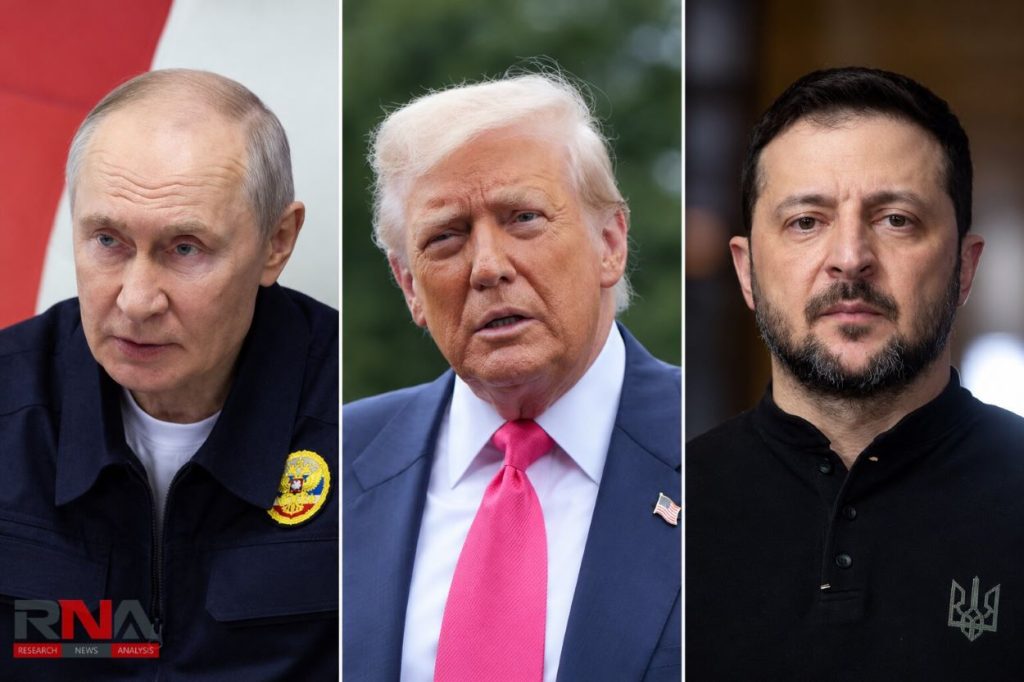
New Delhi: The US president, Donald Trump, claimed on Sunday that Russia and Ukraine had agreed to an immediate “energy ceasefire”, announcing a halt to attacks on energy infrastructure without explaining its terms. However, The Ukrainian president, Volodymyr Zelenskyy, disputed that an agreement had been communicated to Kyiv, but said Ukraine would accept a reciprocal truce if Russia committed to it.
Trump announced the purported agreement on Truth Social, presenting it as already in force and warning both countries against violating it. However, the White House did not immediately provide further details, and Moscow had not publicly confirmed its participation in the initial reporting after the announcement.
The announcement left unanswered how long the proposed pause would last, which facilities it would cover and how compliance would be monitored. Without those details, the president’s statement did not establish the practical arrangements needed to distinguish an operational ceasefire from a diplomatic proposal.
An energy ceasefire would restrict attacks on designated infrastructure rather than necessarily stop fighting along the front line. Its immediate significance would lie in protecting Ukraine’s electricity system before winter while limiting Ukrainian strikes on Russian refineries supplying domestic and international fuel markets.
Trump’s claim follows dispute over Russian diesel
Trump’s intervention followed a worsening disagreement with Kyiv over his decision to ease restrictions on Russian diesel exports. As RNA Media reported on Saturday, he presented the arrangement with the Russian president, Vladimir Putin, as a way to increase fuel availability and reduce prices.
Zelenskyy opposed the move, arguing that additional export earnings would help Moscow sustain its military campaign while Russian attacks on Ukrainian infrastructure continued. He nevertheless indicated that sanctions relief linked to a genuine halt in energy strikes would be a different proposition from allowing more Russian fuel onto the market without reciprocal restraint.
The disagreement became personal on Saturday, when Trump called for Ukraine to replace its president and accused Zelenskyy of failing to reach a peace settlement. He also blamed Ukrainian refinery attacks for restricting diesel supplies and increasing costs for American farmers and ranchers.
However, the pressure on fuel prices extends beyond Ukraine’s attacks on Russian refining capacity. The Associated Press reported that disruptions to oil supplies from the Middle East following the Iran war had also raised international energy prices, complicating Trump’s effort to attribute the problem principally to Kyiv.
Zelenskyy rejects claim of an agreed truce, offers reciprocal halt
Responding to Trump’s announcement, Zelenskyy told Axios that the ceasefire declaration “was news for me”. He said Kyiv would agree if Moscow accepted the same restraint and asked Washington to clarify when the arrangement would begin.
His response challenged Trump’s assertion that both parties had already consented, while keeping the door open to negotiations. The distinction matters: Ukraine was expressing conditional willingness to participate, rather than confirming that a negotiated agreement had entered into force.
Earlier, in an interview with ABC News, Zelenskyy defended the refinery strikes as a response to Russia’s repeated attacks on Ukraine’s energy infrastructure. He urged Trump to press Moscow to stop those attacks, saying Ukraine was prepared to suspend its own campaign in return.
That position predates the latest dispute over diesel exports. Following his September 22 talks with Trump in New York, Zelenskyy had offered reciprocal restraint on energy strikes, while making clear that Ukraine had not agreed to abandon refinery attacks unilaterally.
Zelenskyy also said any new arrangement would require credible guarantees, according to Reuters. Trump had announced a similar energy ceasefire in September, but neither Russia nor Ukraine confirmed that an agreement had been reached.
Addressing Trump’s demand for a leadership change, Zelenskyy said Ukrainians must choose their own president and offered to organize elections if Russia observed a complete 60-day ceasefire. Ukrainian law currently prohibits elections under martial law, making that proposal dependent on a broader cessation of hostilities than the limited energy pause Trump announced.