


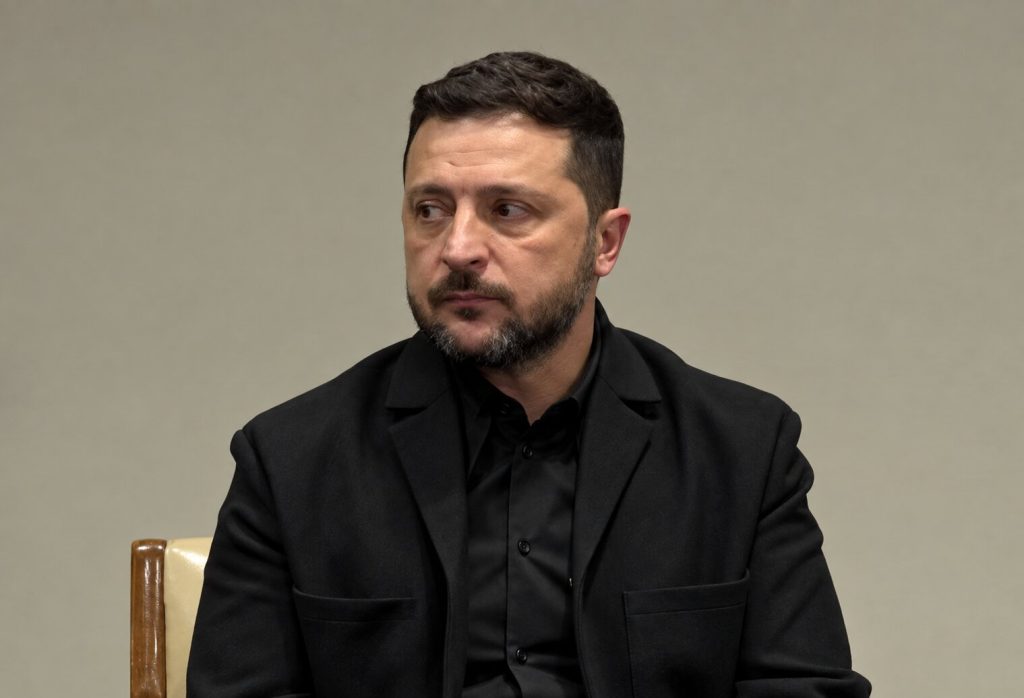
New Delhi: Ukraine’s president, Volodymyr Zelenskyy, has offered to halt attacks on Russian energy facilities if Moscow stops striking Ukraine’s energy infrastructure, renewing a push for limited de-escalation before winter. The proposal followed talks with the US president, Donald Trump, in New York on Tuesday, as Kyiv sought American help to revive negotiations and strengthen its air defences.
Speaking after their approximately 40-minute meeting on the sidelines of the United Nations general assembly, Zelenskyy said Ukraine was open to different arrangements for an energy ceasefire. He stressed, however, that the discussions had not involved Ukraine unilaterally abandoning its attacks on Russian oil refineries.
The proposed restraint would cover a particularly damaging part of the conflict, with Kyiv seeking protection for electricity, heating and water supplies as colder weather approaches. An agreement confined to energy targets would leave the wider fighting unresolved but could offer a starting point for further negotiations.
Zelenskyy said he remained willing to meet the Russian president, Vladimir Putin, alongside Trump, and hoped Washington could persuade Moscow to enter talks. His comments described Ukraine’s negotiating position rather than an agreed settlement, with Russia’s willingness to accept the proposed terms still uncertain.
The initiative comes as energy infrastructure has become increasingly central to both the military campaign and diplomatic bargaining. Trump has criticized Ukrainian refinery strikes for contributing to higher diesel prices, while disruptions associated with the Iran war have added pressure on international fuel supplies.
Washington’s efforts to secure a broader settlement have stalled in recent months as its attention has shifted towards the conflict with Iran. Meanwhile, Russia and Ukraine have expanded long-range attacks affecting energy installations, industrial facilities, ports and shipping in the Black Sea.
Zelenskyy also used his visit to press for stronger economic pressure on Moscow, including an end to Russian energy purchases by India, China and Turkey. In an interview with The Wall Street Journal, he argued that revenues from those countries were sustaining Russia’s economy and that cutting them off could force Moscow to stop fighting.
Separately, Zelenskyy said he had urged Trump to enlist the president of China, Xi Jinping, in efforts to influence Putin. He also requested a winter package of Patriot missiles and licences to manufacture them, linking the diplomatic initiative with Ukraine’s immediate need to protect critical infrastructure.
Kyiv has yet to receive a firm American commitment on additional Patriot supplies, Zelenskyy said. The Associated Press reported that extensive use of interceptors against Iranian attacks on American and allied bases had contributed to shortages.
The British prime minister, Andy Burnham, discussed the proposed energy ceasefire and Ukraine’s winter preparations with Zelenskyy in a separate meeting. According to Downing Street, both leaders agreed that sanctions pressure should increase to bring Putin into meaningful negotiations.
Alongside the diplomatic exchanges, Nato’s deputy supreme allied commander Europe, Air Chief Marshal Sir John Stringer, warned that Putin was becoming more willing to take risks as the war continued. Speaking to reporters at a security conference in Tallinn, Stringer said Moscow was seeking to divide western allies and cautioned against responses that could produce the overreaction Russia wanted.
The warning did not amount to an assessment that a conventional Russian attack on Nato was imminent. The president of Latvia, Edgars Rinkevics, said Russia remained absorbed in Ukraine and that no military buildup had been observed near Latvia’s borders, while Stringer distinguished Moscow’s capacity to escalate from a decision to do so.